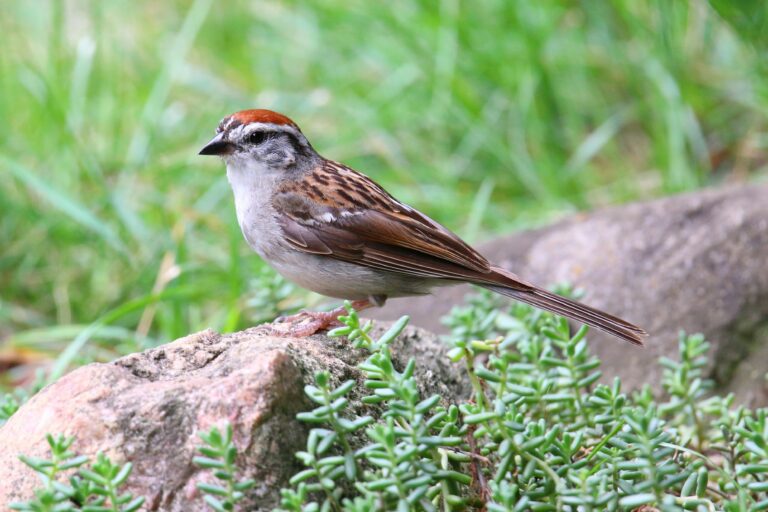






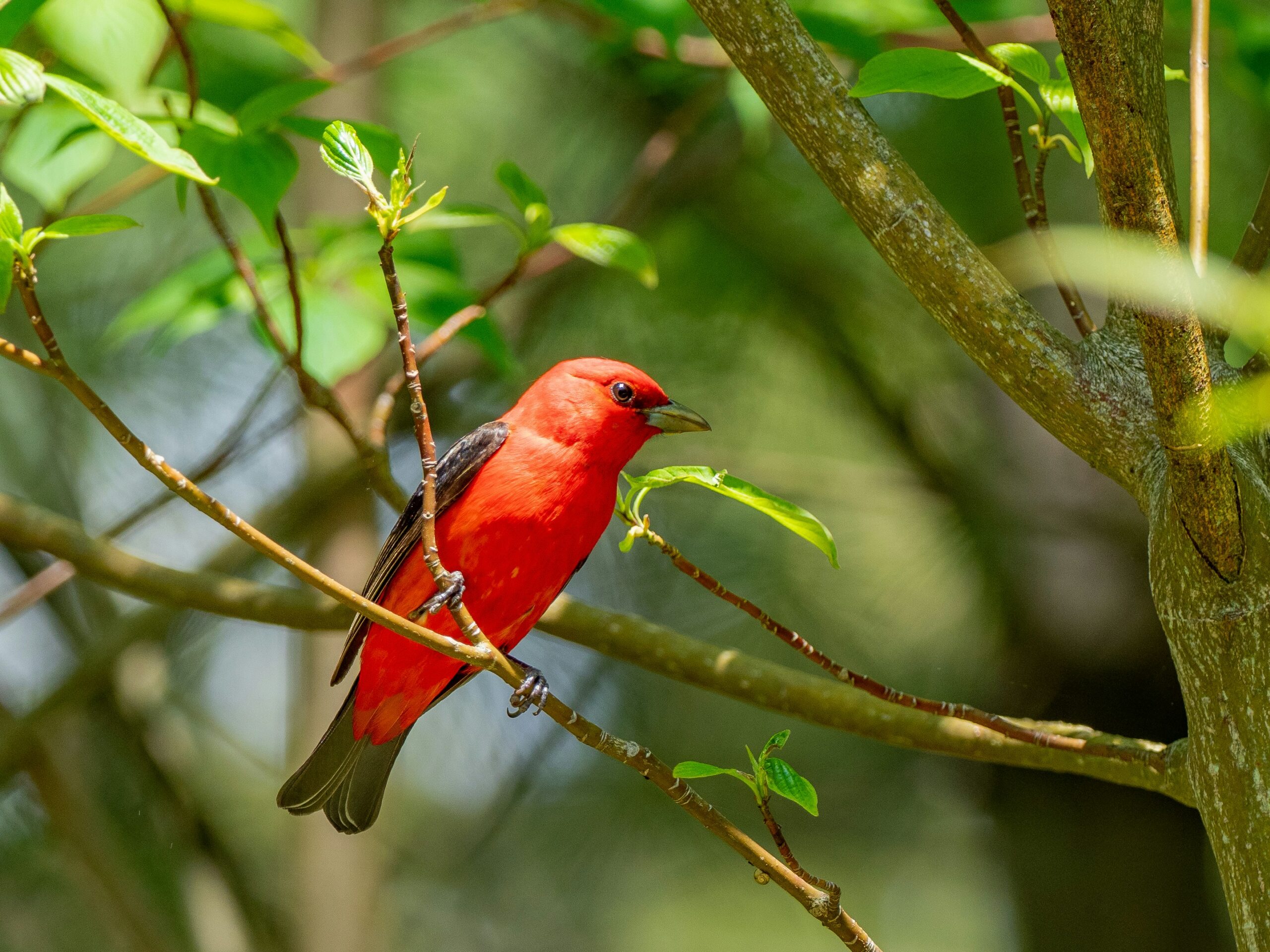
The scarlet tanager with its brilliantly red coloring is remarkably hard to spot as they prefer to remain high in the treetops. This perch among the green leaves and in bright sunlight can actually mute their coloring.
The scarlet tanager male has a bright red body with jet-black wings and tail. The bright colors make the bird look like it is better suited in a tropical location. Females and nonbreeding males are olive yellow. After molting, the male can have a splotchy green and red look, usually in late summer. They grow to about 7 inches tall and weigh around one ounce.
The best time to see a scarlet tanager is in the spring before the leaves have fully emerged.
The diet of the scarlet tanager includes berries, beetles and insects. They will sometimes hover while gathering food.
The song is similar to that of a robin, but it has a rough edge to it. Some describe it as a robin with a store throat. It sounds like chip-burr.
Migratory breeders, the birds arrive in May and favor large tracts of undisturbed woods. Scarlet tanagers winter in South America and return to this area in mid-April to late-May. They are usually gone by mid-October.
Nests are built on horizontal limbs, and they can remain concealed in foliage. They can be found 20 to 50 feet up and consists of a woven cup of twigs, weed stems and other plant material.
Scarlet tanagers lay three to five bluish green eggs which are incubated by the female for 13 to 14 days. Fledglings leave the nest at 9 to 15 days.
Their lifespan in the wild is between five and ten years. Predators include hawks, snakes and squirrels.
Next is the Acadian flycatcher.