


In the 1800s, the Delaware State Fair was held in September, unlike current day when the event is held in July. In that era, the fair was held in Wilmington and visitors had to travel by stagecoach or horse and buggy, although train travel made it easier by 1898. Yet, a report in the Delaware Gazette and State Journal, published, September 22, 1898, announced “attendance at the State Fair yesterday (September 15) was larger than the preceding day” before reporting on a tragedy that occurred on the horse track.
“A chaotic scene disturbed the afternoon’s pleasure toward the close of the races,” the report read. “One man is dead and another injured, and five vehicles are total wrecks.”
On September 14, 1898, William T. Moore of Sudlersville, Maryland, was driving a sorrel mare, Topsy Russell, in the 2:30 race. There were two other starters in the race – W.P. Biggs riding his horse, Breeze, and Henry Dutton driving Sheely. Two heats had been won by Breeze and the third was on. They were just coming into the homestretch when Moore’s sulky appeared to strike something. Moore was seen to turn a complete somersault over the head of his horse, and she fell upon him. The other horses continued with Breeze winning the race.
It appeared both Moore and his horse were dead. Spectators raced to the accident and carried Moore to a place under the trees on the side of the track. Dr. James P. Lofland of Milford and Dr. E.R. Brown of Wyoming along with other physicians worked to revive Moore. A veterinarian worked to revive the horse. For more than an hour, the doctors worked on Moore until the fair closed for the day. Moore remained unconscious and there was little hope of his recovery.
Moore’s wife, who was at the fairgrounds, was nearly crazed with grief, a report read. Other friends and family members of Moore were kept back by the police so they would not interfere with the work of the doctors.
After the fair closed, Moore was taken to the ticket office and reported as “sinking rapidly.” Doctors reported a concussion of the brain. His wife, in a state of hysteria, was taken away by a physician and two attendants.
Meanwhile, the roaming crowds frightened several horses near the grandstand, and a spirted pair attached to Joseph Rash’s hack tore across the stretch toward the main entrance, shattering teams of Walter McGuinniss and John Horn, running over a Camden man and fracturing his leg and then demolishing two gates and damaging the ticket office.
William Wood, who was bicycling on the racetrack, was run down by a team and his leg was severely bruised.
After the horses were loosened from the hack, they crashed into a carriage of Leo Reed of Dover, destroying it. Several other horses ran away, also causing damage.
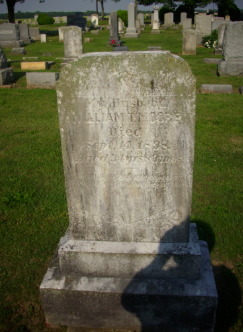
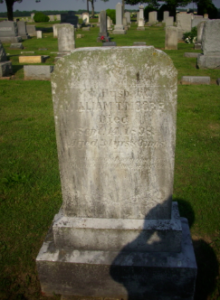
Moore was pronounced dead at 9 PM that evening. No information could be found on whether the horse survived. He is buried in Sudlersville and his gravestone reads “My Husband William T. Moore Died Sept. 14, 1898 Aged 34 years and 9 months “No pains, no grief, no anxious fear can reach our loved one sleeping here.”