




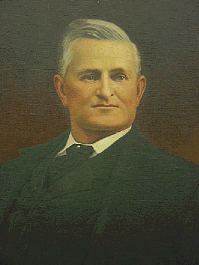
A letter to the editor, written by Dr. Nathan Pratt, in the Delaware Gazette and State Journal dated October 30, 1890, told an interesting tale about the Democratic candidate for governor that year Robert “Bob” J. Reynolds. The article is titled “Charges False and Vile: Dr. Pratt Knocks the “Stuffing” Out of them.” This historical account indicates that news media has faced criticism almost from its inception.
“He produced a card from the Milford Hotel men vindicating Mr. Reynolds against the calumnies of the town papers,” a subheading read. “Editor Gazette: The following extract from the Milford Chronicle was published in the Morning News of Monday, the 20th of October.”
According to the October 30 article, the Milford Chronicle published a paragraph on September 17 regarding Reynolds.
“Bob” J. Reynolds spent Saturday and Sunday last in Milford,” Pratt wrote. “On Saturday, he could be seen loafing around the barrooms, spending money and treating the [African Americans] and class of whites that frequent such places. His movements were truly disgusting to the more respectable citizens and to respectable Democrats.”
On October 17, the Chronicle again referred to a visit to the town by Reynolds on October 11, according to Pratt.
“It will be seen to be in the same strain and not at all complimentary to the farmers who come in large numbers to Milford on Saturdays and whom Mr. Reynolds came to meet,” Pratt wrote. “The article says his associates here are constantly being invited to take a “Reynolds” drink and when Rober tJ. Has been a few hours in the midst of a Milford Saturday crowd, there are always a great many people who have tangled feet and a muddled tongue that are not capable of properly performing their duties.”
However, the hotel proprietors of Milford told Pratt the charges were not true. A paper signed by clerks and proprietors, including F. H. Kramlich and V. Harrington of the Central Hotel along with J.M. Gundy, H.W. Satterfield and J.E. Gundy of the Dorsey House. Mr. Hazzard of the Milford Hotel declined to sign a document attesting to the falsehood but stated that Reynolds had never been in his barroom or hotel.
“I heard that someone called there and asked for him, but finding him absent, they left,” Hazzard is reported as saying.
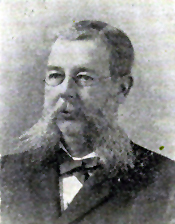
Hazzard also stated in front of Orion Cameron and John O. Truitt that the statements were false. This was attested to by the clerk at the Milford Hotel, George Russell. The statement signed by the other hoteliers and clerks read as follows:
“We the undersigned hereby certify that Robert J. Reynolds, Democratic candidate for governor of Delaware, has never, at any time on the day referred to by the Chronicle, or has since, been inside the bar-rooms of our hotels, or drank anything himself, or treated or paid for any drinks for himself or for any other person or persons, white or colored; and further that neither Mr. Causey nor Mr. Reynolds has furnished any or either of us, directly or indirectly, any money or other consideration for that purpose.”
The Gazette then wrote that the Chronicle had been guilty of falsehoods about Reynolds.
“There is so little confidence in this community fo the truth of any unsupported statement emanating from that source, that it has not been thought worthwhile to notice it; but since the statements have been published in other papers, this notice of the matter has seemed necessary, as a matter of simple justice to Mr. Reynolds,” Pratt wrote. “As to the proprietors and clerks of the hotels, who have signed the statement, they are well-known to hundreds of travelling men as truthful and honorable men, as well as to the citizens of this town.”
Pratt stated that an ancient maxim fit the actions of the local paper, writing “false in one thing, false in all.”
“Here we say that the slanderous lies published by the Chronicle and News that John W. Causey has said that ’75 cents is sufficient for a day’s work and that fish, potatoes an corn bread is good enough food for a working man,’ is of the same character as the statements about Mr. Reynolds,” Pratt wrote. “No man who has known Mr. Causey and knows of his kindness to the poor will believe one word of it, and those who have been in his employ longest have the highest praise for him.”
Pratt was indignant with the reports in the local papers about Reynolds and Causey, stating that the comments published were contrary to the characteristics of the two men.
“The editors of the Chronicle and the News know these are slanderous lies,” Pratt wrote. “I shall have something to say in a day or two about the charge that Mr. Causey attempted to bribe the trustees of the colored M.E. Church here, and which charge was repeated by Causey’s friend the Rev. J.S. Willis, recently at Georgetown and at the Opera House in Wilmington and in other places.”
Reynolds was nominated at the Democratic State Convention on August 12, 1890. Causey was nominated to run for the U.S. House of Representatives. Reynolds ran against Republican Harry A. Richardson and won the election by just 543 votes, 50.4 percent. Causey’s challenger was Henry P. Carmon. Causey won with 50.6 percent of the vot