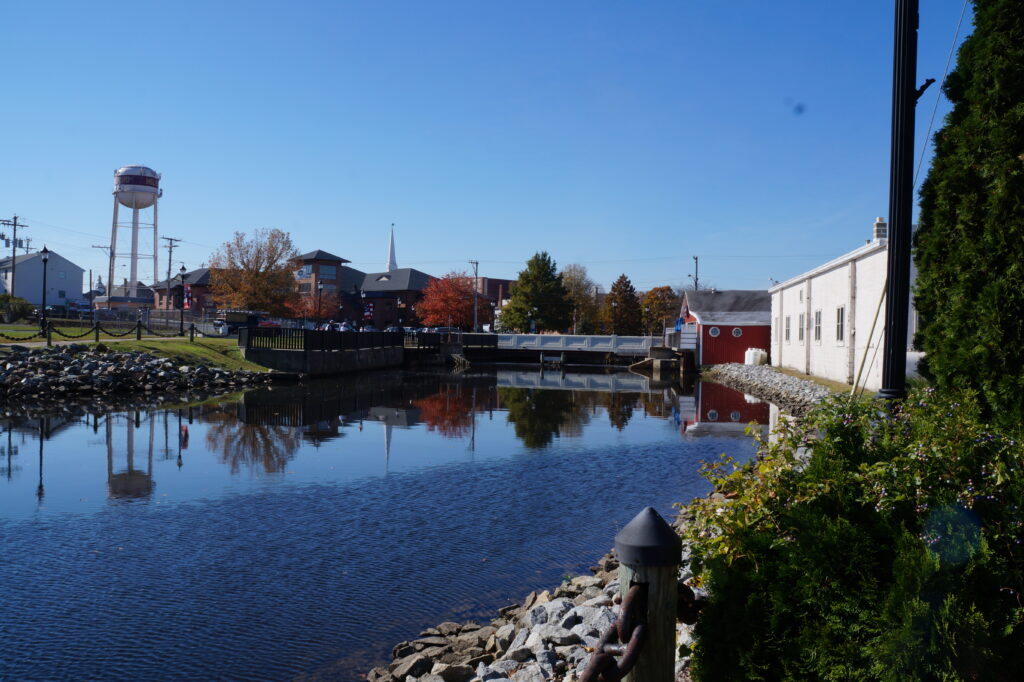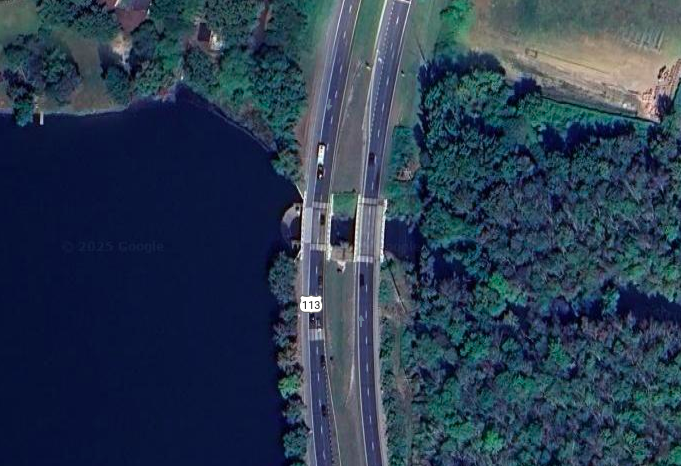


The two bridges that cross Haven Lake on Dupont Highway are undergoing rehabilitation by DelDOT starting in late August. The bridges, which carry vehicles north and southbound on the highway were found to have structural issues related to their age. The two bridges were built in 1962.
“They are similarly designed steel beam bridges, each with six I-beams with an integral concrete deck,” Jonathan Moore, a bridge maintenance and construction engineer with DelDOT said at a recent council meeting. “In 2023, we did a painting contract on these bridges and part of that project was to clean the steel down to bare metal and then recoat. When we were doing that, we found some of the bridge bearings in a lot worse shape than originally anticipated.”
Moore explained that the bridge bearing carries the steel I-beams transferring the load from the I-beams to the deck down to the super- and sub-structure of the bridge. When the painters sprayed the bridge with high pressure machinery, the bearings were worn away more than DelDOT anticipated.
“When this happened, the bearings lost a section of their end of the steel and created a floating bearing scenario,” Moore explained. “The steel beams are all tied into the concrete deck and it acts as a system. That system is essentially holding those ends of steel beams up and, when traffic goes over it, it bounces, creating a slamming motion. I want to reiterate it is not a hazzard to vehicles. The bridge is not going to come down. It’s not going ot create a traffic disaster of some sort, but what it will do is advance the deterioration of the bridge if we do not address it.”
Moore provided photos of other areas where the worn bearings were impacting the function of the bridge. In addition, the south side of the northbound bridge has some deteriorated concrete slope paving and that is allowing a loss of fill which is leading to sinkholes in the roadway. This is also leading to something called “spall,” general concrete deterioration along the edge of the bridge. Moore explained that DelDOT would be addressing the issues in several phases.
“The first phase is to close the outside lanes in both directions, shifting traffic to the inside lane then closing the inside lanes and shifting traffic out. This means Route 113 will be down to one lane in each direction while this is going on,” Moore said. “The biggest part of this is we are going to replace the bearings which requires us to install hydraulic jacks and physically lift the bridge to get these out. Once the bearings are in, we lower the bridge back down.”
It was important to note, Moore stated, that all the work would be done with traffic on the bridge so the jacks would serve as the bridge bearings. Once the bridge has been lowered, DelDOT will install new rebar cages, strip seal armoring’s and glands before repouring concrete for the deck ends, approach slabs and bridge rails. DelDOT anticipates that the project will be complete in the spring or early summer. Councilman Dan Marabello asked if DelDOT had used jacks to lift bridges in the past.
“I did this exact same procedure on Route 1 if you remember the two bridges over the Mispillion a few years ago,” Moore said. “That is how it is going to work with cars traveling over it as we lift it. We do what is called a rolling roadblock where there is like a five-minute temporary stop, usually in the middle of the night, where the bridge is lifted slightly and then the jack is locked so cars can travel across again. That will continue each night until the bridge has been raised enough for repairs.”
City manager Chris Coleman asked if this would impact emergency vehicles or the train that ran near that area.
“This will not impact the train. The railroad is essentially the highest form of transportation authority, so I have no authority to dictate what the train does,” Moore said. “As far as emergency vehicles, the lane shift will still accommodate any emergency vehicles. The reason we inform all of you about this is so that emergency vehicles can start mapping out alternative directions in the area. Once this work begins, cars will naturally start dispersing to other areas so they can avoid sitting in construction traffic.”