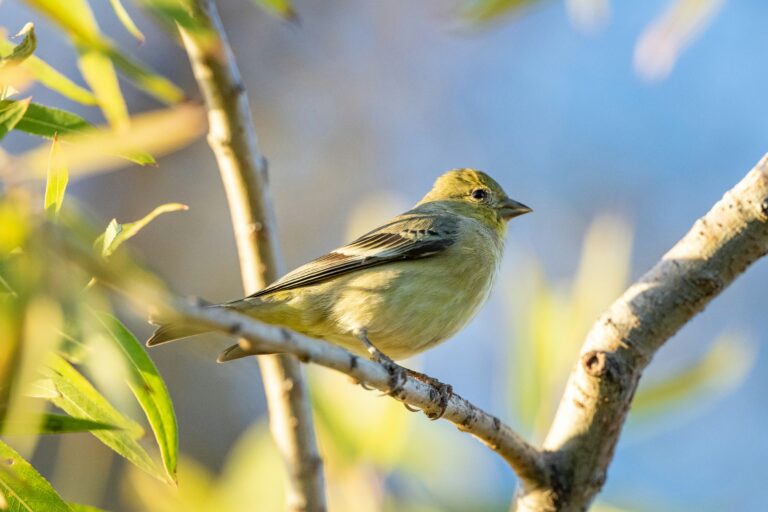






This is the first in a series designed to help readers identify the different wildlife and foliage they may have in their backyard. Birds are the first that we plan to identify, but if there are specific creatures or plants you would like to learn more about, please send us an email

One of the most common birds seen in Milford backyards is the chickadee. Although the Carolina is the most common, it is possible to see black-capped chickadees as well. The two species look almost identical, but the best way to identify the difference is by their sound. A black-capped chickadee’s namesake call, “chick-a-dee-dee-dee” is slower and sung at a lower tempo while Carolina’s have a more rapid and higher pitched chick-a-dee call.
The scientific name for the Carolina is “poecile carolinenis” while the black cap is poecile atricapillus. Both species are about five inches tall and weigh less than half an ounce. Their lifespan is two to three years, although there have been instances of them living longer.
Black-capped chickadees have prominent white edges on the wing feathers in a “hockey stick” pattern while Carolina chickadees have plain, very faint, dull gray or silver edges. ON a black-capped chickadee, the white cheek patch is larger and pure white, extending around the back of the neck while Carolina chickadees have a smaller cheek patch that fades into a dingy grayish-white at the back of the neck.

Chickadees are year-round residents and common visitors to backyard feeders. They eat insects, small fruits, spiders and seeds. In breeding season, chickadees tend to eat mostly protein, such as caterpillars, but in winter, they include more berries and seeds. At backyard feeders, they prefer black-oil sunflower seeds and suet. The birds make many trips back and forth from the feeder to trees where they cache seeds in bark for later.
Chickadees nest in rotted wood in forests but will nest in a box or birdhouse. They line the nest with moss, weed stems and animal fur.

Black caps usually lay four or five eggs that are incubated by the female for 12 to 13 days. The fledgling leaves the nest in about 16 days. Carolinas lay between five to eight eggs, and the female incubates them for about 12-15 days. Fledglings leave the nest at about 16 to 19 days. Eggs for both species are white with reddish spots.
Chickadees sometimes flock with other songbirds like titmice and nuthatches. They are small, social birds with darting movements and are very intelligent. They are capable of remembering food locations and adjusting their strategies to forage based on the season.
Predators for these common backyard birds are hawks, owls, snakes and domestic cats. Carolina chickadees adjust their calls depending on the type and urgency of the threat, adding more “dee” notes to signal higher danger levels to the flock.
Next week, we will focus on a bird that often has special meaning to people – the Northern Cardinal.