




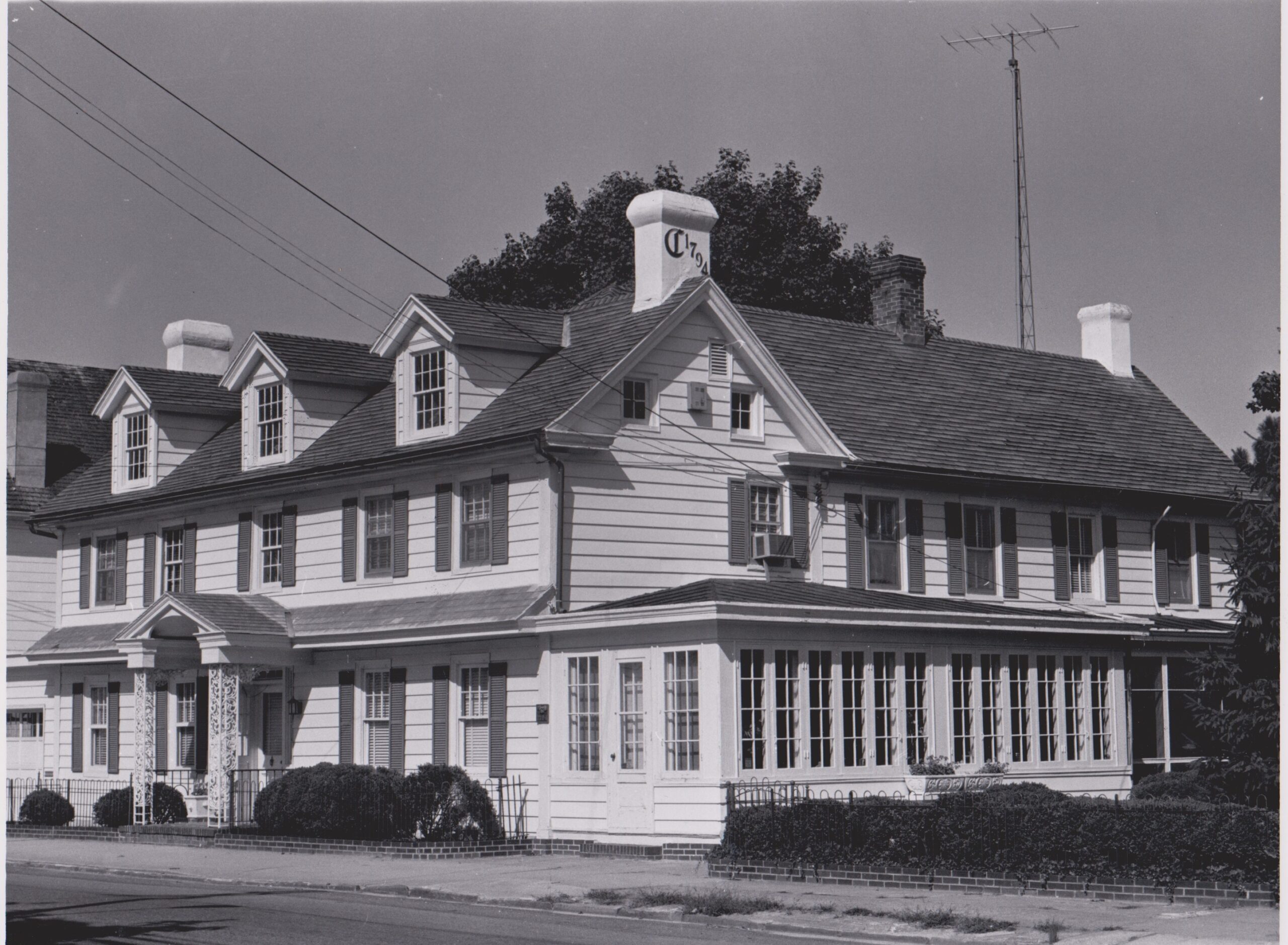


Thomas Winsmore moved to Milford from Millstone Landing and purchased a lot on what is now Southeast Front Street. On this lot, the shipbuilder constructed a home around 1794. At the time, Milford was known as Saw Mill Range and this land was owned by Parson Sydenham Thorne. Parson Thorne died in 1793, and he left the land to his wife, Betty Crapper, sometimes written as Cropper, his widow.
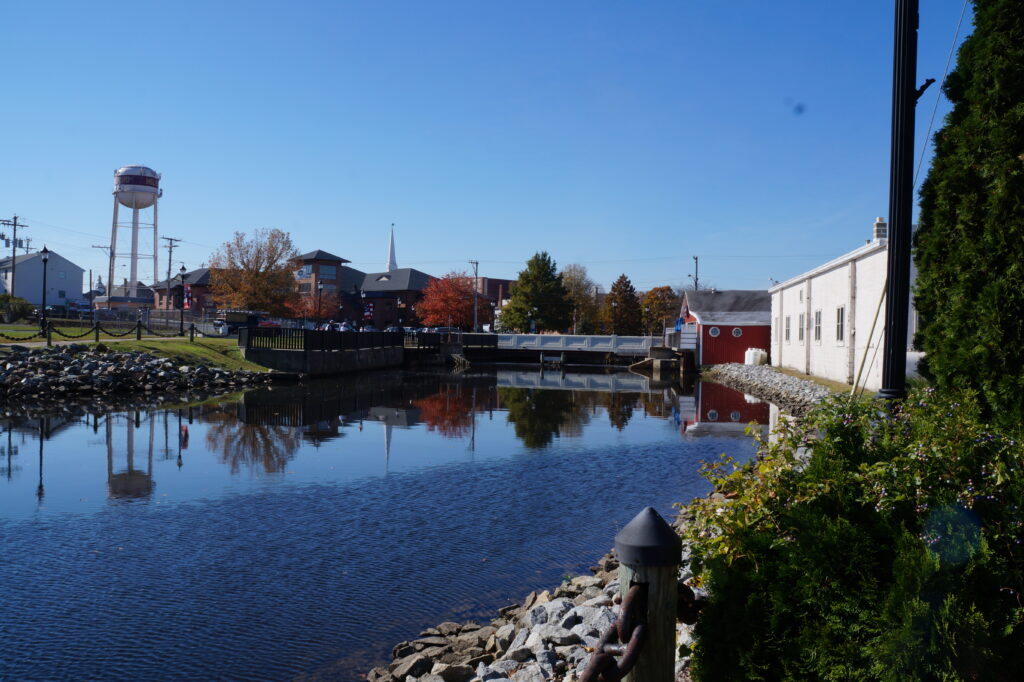
When David West arrived in Milford in 1818, he purchased the home and made extensive improvements. West built nine sailing ships at a shipyard on the south bank of the Mispillion River until his death in 1832.
In 1828, Peter F. Causey took a mortgage on the house and shipyard property before selling it to Manlove Carlisle and William Reville in 1833. The two men built 29 ships at the David West yard under the business name Carlisle and Reville.
Reville retired in 1853 and Manlove Carlisle continued building sailing ships. In 1855, he formed a partnership with his younger brother, Thomas. Together, they built 19 more ships until 1877 when Manlove retired at the age of 60.
The home underwent extensive renovation while Manlove lived there. A large addition was added along with a portion of a boxwood garden that still exists today. The shipyard stood behind the home along the Mispillion River.
The house is a two-story, five-bay, frame building with a gable roof with dormers. It has a two-story rear wing and two side wings. One is a conservatory and the other a garage. It has a pent roof across the front with a pedimented entrance hood supported by paired Doric order columns. The framing techniques and interior joinery are reminiscent of the shipbuilding technology most likely employed at the Carlisle shipyards.
Manlove lived in the West home on Southeast Front Street until 1855 when he built his own home next door. He married the widow of his late wife’s sister, Ruth Tharp Watson Carlisle. Ruth’s husband Bethuel and Manlove’s wife, Ann Watson Carlisle, died in a typhoid epidemic. After their marriage, Manlove moved into Ruth’s home now located at 12 Northwest Front Street, living there until his death in 1881.
He sold the home to his brother Thomas Roland Carlisle. Carlisle Lane was named for Thomas Roland. He married Elizabeth Shockley and they had one daughter.
On Monday, November 14, 1881, a notice in the Daily Republican announced the death of “prominent shipbuilder Manlove R. Carlisle.” According to the report, he died of gangrene after an injury.
The Morning News wrote on October 17, 1882, that “Moore & Sipple have just placed in position over the grave of Manlove Carlisle a very fine monument. It has a dark granite base 4 feet square; on that a heavily moulded [sic] sub-base wit hthe name “Carlisle” in large raised letters; then the die or inscription block with raised and moulded [sic] panels with simple inscription in square sunken letters above that moulded [sic] plinth and resting on that spire. The whole is surmounted by a cross; whole height about 15 feet.”
Thomas died in June 1890 at the age of 79. An article in the News Journal reported on June 30, 1890, Thomas died from an abscess of the liver. The report stated that he had been confined to his home and room for several years due to his health.
“He was a very enterprising man and will be greatly missed in this community,” the report read. “He now has a vessel in course of construction.”
The home became the property of his wife, Elizabeth. In 1893, the Delaware Gazette and State Journal reported the marriage of Anna and Darwin S. Collins on February 16, 1893.
“Miss Annie Carlisle, oldest daughter of the late Thomas Carlisle, a well-known ship builder of this town, was married yesterday afternoon at 3 o’clock to Darwin S. Collins of South Dakota by the Rev. I. Holwell Geare, rector of Christ Church. The ceremony was performed at the home of the bride’s mother, on South Front Street in the presence of only the relatives and most intimate friends of the contracting parties.”
The report continued that the interior of the house was beautifully and tastifully decorated with holly.
“And to add to the striking effect was lighted with candles, daylight being entirely shut out,” the report read. “Mr. and Mrs. Collins were the recipients of many useful and costly presents. They had silver in abundance, China of every design and for every purpose for which it is used. They left on the 4:34 PM express for Philadelphia from whence they will proceed north on an extended tour. Before their return, they will also visit Baltimore and Washington.”
The announcement explained that Darwin Collins was well-known in Delaware where he lived until accepting a position under the general government at Pine Ridge agency, South Dakota, “the scene of recent trouble with the Indians.”
“This position he resigned about two years ago to go into the cattle business. At the time of the Indian trouble, he was in the midst of it but was in no way molested by them,” the announcement reads. “He speaks their language fluently, having been overseer of a large Indian reservation at the Pine Ridge. They will reside in Milford; Mr. Collins having given up all business in Dakota.”
The Collins’ added more to the boxwood garden. Darwin was the owner and proprietor of Delaware Nurseries for many years. The couple had one son, Thomas Carlisle Collins who became an insurance agent.