


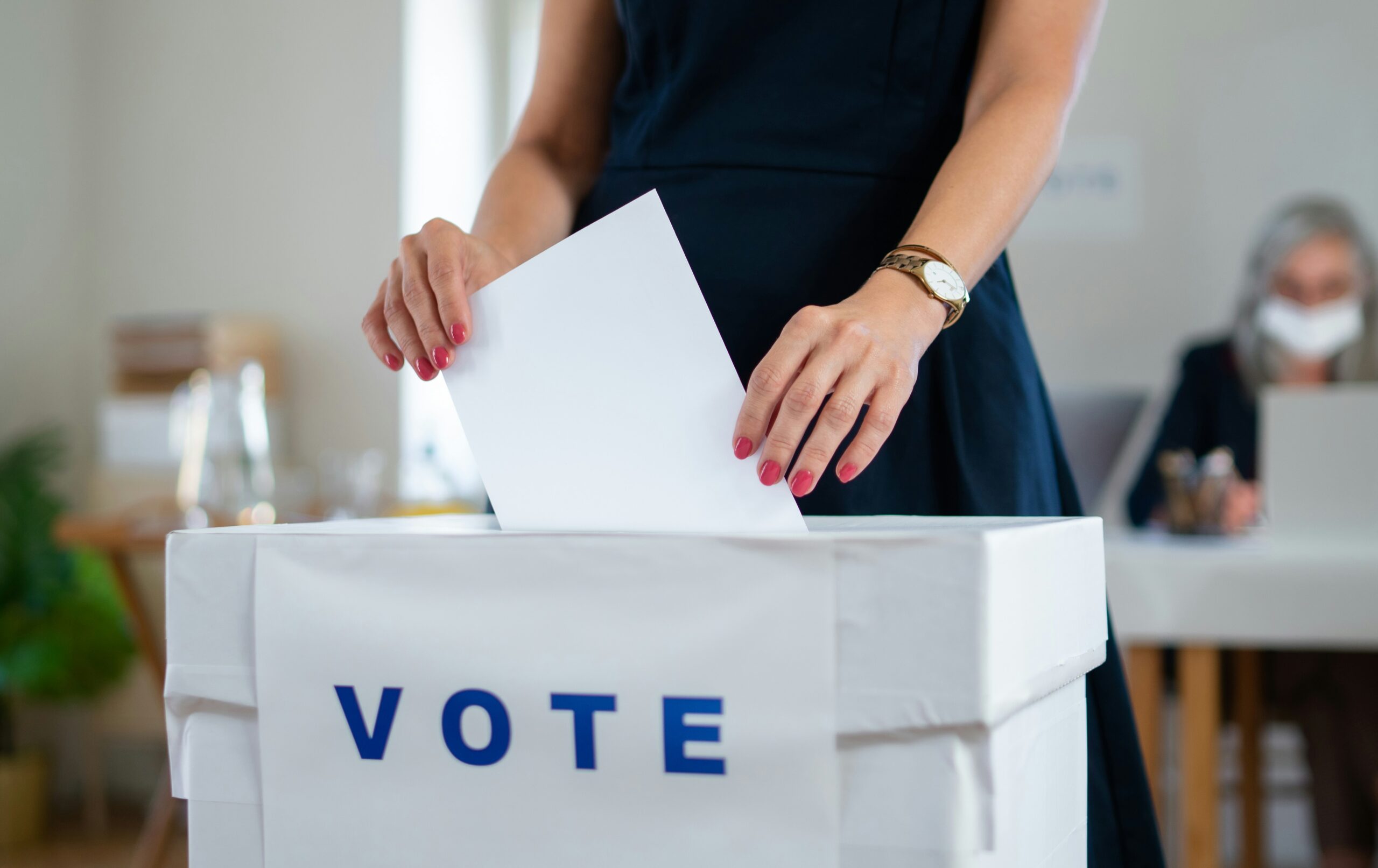


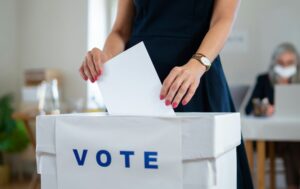
A primary election change could be coming to Delaware if House Bill 188 passes in the legislature. The bill, sponsored by State Representative Mike Smith, was released from a House committee last week. If passed, it would allow non-affiliated voters to participate in primary elections.
A primary election is held when multiple candidates from the same party run for elected office. The primary chooses which of the two would compete in the general election in November. When there is no challenger for the general election, the candidate who wins the primary is elected to the office.
Delaware currently has a closed election which means only voters registered to a political party cast ballots in the primary and only for the candidates in their party. For instance, those registered as Republican cannot vote for anyone on the Democrat party ticket. Those who are registered as independent or undeclared are unable to vote in the primary at all.
HB 188 would allow unaffiliated voters to vote in primary elections but Republicans and Democrats would be limited to only voting in their party’s races. Smith introduced the bill as many races are effectively decided in the primary as there are no challengers for the general election. In his opinion, this basically shuts unaffiliated out of the election process.
In Delaware, only about 21 percent of voters are not affiliated with a party, although some believe a state law passed in 2023 will increase those numbers. Delaware’s Automatic Voter Registration statute automatically registers people to vote when they apply for a driver’s license. They can also do so through Department of Labor or Department of Health and Social Services. Unless the individual selects a party, they are automatically registered as independent. In the last general election, less than one percent of voters were registered as independent.
“As we look at Delaware’s numbers since January 1, 2026, there has been a reduction of roughly 20,000 affiliated Democrats and 10,000 affiliated Republicans,” Smith said in a press release. “Non-affiliated voters have grown by 17,000 during that time. Non-affiliated voters are 60,000 voters away from being the majority voting bloc in the state of Delaware.”
Not everyone is supportive of this bill, however.
“I oppose this,” Cheryl Manna commented on a social media post about the change. “The unaffiliated, green and independent parties should not be able to sway primary elections. They need to pick a lane.”
Jeff Juice Gennusa also felt each party should be able to choose their own candidate.
“The primaries are designed for the party to choose a candidate they want to represent them for the general election,” he commented. “If you are not in the party, you shouldn’t get to choose who represents the party. This is basically saying we should just eliminate primaries and only have a general election where everyone does already have a choice to vote for whomever is on the ticket.”
Others felt that this would be a way for both Republicans and Democrats to sway an election in the primary, making it easier for their candidates in the general election.
“Seems to me that is a way for the opposite party to vote for who they think will be the easiest candidate for their party to beat in the general election, not necessarily who is the better candidate,” Kathy Hamlin Friel commented. “The unintended consequences might be more detrimental than the current situation.”
Debra DeLuca explained that there is a difference between independent and non-affiliated voters. An independent is actually considered a member of the Independent Party of Delaware while non-affiliated have decided not to choose a party.
“Primary elections are how political parties choose their own nominees. If someone decides they don’t want to join a party, that’s their choice, but it also means opting out of that party’s candidate selection process,’ DeLuca wrote. “And the fix is incredibly simple. If you want to vote in a party’s primary, join the party. You can change your registration in about the same time it takes to order a pizza. We don’t need to rewrite the rules of the party primaries because some people want the benefit of membership without being members. Participation is already open. Voters just have to take part.”
Scott G. Rivette, who came from Northern Virginia where there is an open primary option, pointed out flaws he saw with the system.
“I had a lot of friends who were Democrats who would vote in the Republican primaries (and urge their friends to do the same) in order to have the Republican candidate who would fare worst against their mostly established Democrat nominee,” Rivette commented. “This has led to nearly unanimous Democratic party control of that huge population region. As a registered Republican, I don’t want non-party registrants to vote for our party’s nominee. I’d hope the Democrats would want the same. And I’d hope that independents would understand that those in each party should be the ones picking their nominees.”
There were comments in support of the measure, however.
“We are supposed to be a constitutional republic, not a two-party democracy,” Bryan Sherkey said. “Stop participating in the two-party system.”
Heather Duffy felt that the independent voice was a real voice and should have a place in the primaries. Tommy Lee felt that independent voters pay taxes and should be given the same opportunity as those registered to a party.
“Registered voters should be allowed to vote in all elections,” Lisa Loveland said. “I was going to change to independent myself but have not due to not being able to vote in certain elections. I’m a registered Democrat but I have not voted for many Democrats in years, so it doesn’t matter what party a person is registered in because we have the freedom to vote for whoever we choose.”
Nic Civarelli posted that he felt some decided to register as un-affiliated to save face when they argued politics but still tended to vote for one party. He felt that more people should hold party candidates accountable rather than claim independent.
“I think this is a great idea! An opportunity to possibly get some new blood/energy in the elections,” Trish Shields said.
The bill received bipartisan support and has been placed on the House Ready List, making it eligible for a vote by the full chamber. If passed by the House and Senate, it would not take effect until January 1, 2028.