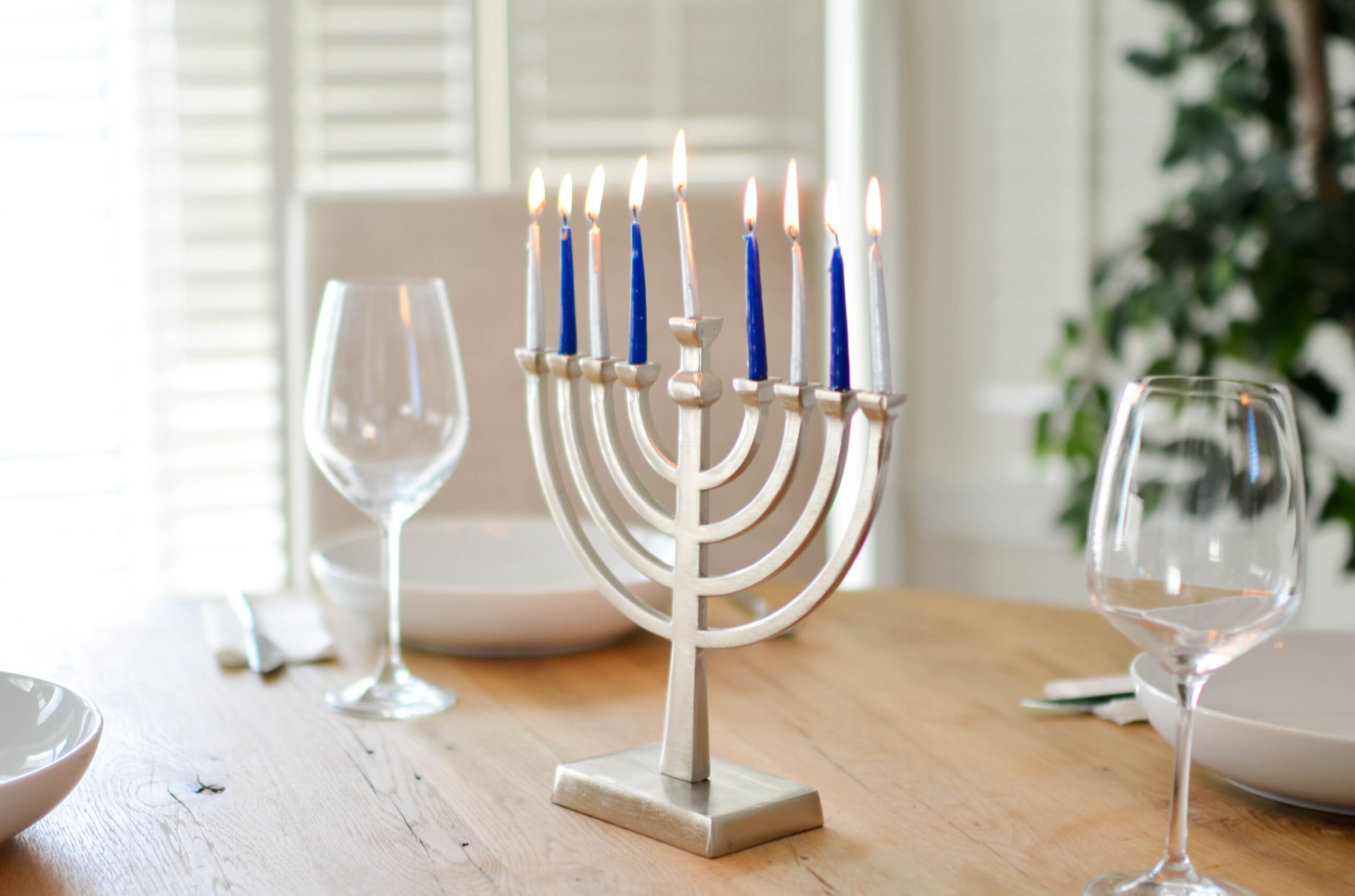


Celebrating what is also known as the Festival of Lights in the Jewish faith, Hannukah began on December 14 and continues until December 22 this year. In an interview in 2023, Robert Vogel of Chabad of Southern Delaware, explained that the holiday is considered a rabbinic holiday which means it has fewer restrictions than Passover or Sukkot. However, the holiday does have specific traditions that have lasted for centuries.
“The story of Hannukah takes place during the Second Temple era around 300 BC,” Vogel said. “The Jewish people were under Greek rule. And, at that time, there was a lot of the Hellenistic movement, so anti-Semitism was pervasive in the entire culture. That was starting to seep into Jewish customs as well. There were also oppressive rules and restrictions by the Greek Empire over the Jewish people, forbidding them from following certain commandments they had.”
According to Vogel, some of the rules created by the Greek Empire were nonsensical, such as allowing Jewish people to keep the Sabbath as a day of rest but changing the day to any day of the week rather than Saturday as the Jewish faith required. One of the most oppressive rules was that when a Jewish girl was to marry, the army would be permitted to “inaugurate” the woman before the marriage.
“It came to the point where there was the head of the Maccabees, the Hasmonean Dynasty,” Vogel said. “His daughter was getting married and a general was coming to “inaugurate” her. The father was having none of it and the general ended up being killed. This provoked the Maccabee revolt. The Hasmonean people revolted. The Maccabees, an acronym for Matityahu haKohen ben Yochanan, essentially means “but who is mighty in the strength of God” in Hebrew.”
During the battle, the Jewish temple was overtaken, and that day became the first day of Hanukkah. This was because the Jewish people could serve God the way they wanted in the temple. However, one of the main commandments in the temple is to light a candelabra every single day. The menorah in this temple needed a special type of olive oil in order to light it.
“In Judaism, we have spiritual impurities and when something becomes impure, we cannot use it,” Vogel said. “We need a specific type of oil that would be found in a clay jug, sealed with the seal of the high priest and that was how they showed the oil was intact and pure enough to use in the menorah. After taking back the temple, the Jewish people could not find any of the oil they were required to use until they found one small jug.”
The jug of oil was enough to light the menorah for one day, but it took seven days to go into the fields, reap the olives, press them, filter the oil and bring it back to the temple. The decision was made to use the oil and light the menorah for one day, then figure out what to do when the oil ran out.
“The miracle was that the oil that should have only lasted one day, actually lasted for eight,” Vogel said. “This did not end the war, as it lasted for many years after that, but it demonstrated God wanted the temple used to serve Him.”
According to Vogel, today most Jewish people light their own menorah in their own home. A candle is lit on the first day, with another candle lit each day until all eight are lit.
“That is how we actually practice it and then customs have come along on the way,” Vogel said. “This story incorporated oil, so now we remember in a fun way that keeps it going. We eat foods that are associated with oil, such as latkes, or potato pancakes fried in oil. We also have donuts which are fired in oil. We also have cheesy foods because there was a different story that took place associated with cheese.”
Even the dreidel game is steeped in legend.
“The dreidel is a spinning top and the story behind it, allegedly, is that they did not allow us to study the Torah,” Vogel said. “A Jew can’t live without studying the Torah, so we were not going to just sit back and do nothing. We hid in caves,” Vogel said. “And we had a teacher who gathered a few students and taught them the Torah from the scrolls. The issue is that the Greeks would not just make a rule, they would look to enforce it, so Jewish people were on the lookout. Anytime the Greeks entered one of the caves, the tradition says they would hide the scrolls and take out the spinning top, pretending to play a game.”
Vogel stated that this was legend that had been debated but seemed to make the most sense.
“Written on the four sides of the dreidel are four letters in Hebrew, the Nun, the gimel, the Hey and the Shin. Those four letters are all the beginning of a different word meaning Nes Gadol Haya Sham, which translates to “a great miracle happened here,” Vogel said. “It is just a fun way of keeping it alive and remembering the miracles. It is a way we can continuously thank and praise God for all the miracles He has done and for the miracles He continues to do.”
Hannukah traditions have not changed much over the years as the menorahs, dreidels and length of the celebration has not changed. Vogel stated that people have incorporated other fun things in their own way to modernize and adapt the holiday. However, in most Jewish households, the food they eat, and the menorah remains.
Chabad Southern Delaware is located at 17032 Minos Conaway Road in Lewes. They can be reached by calling 302-377-1162 or through email.