


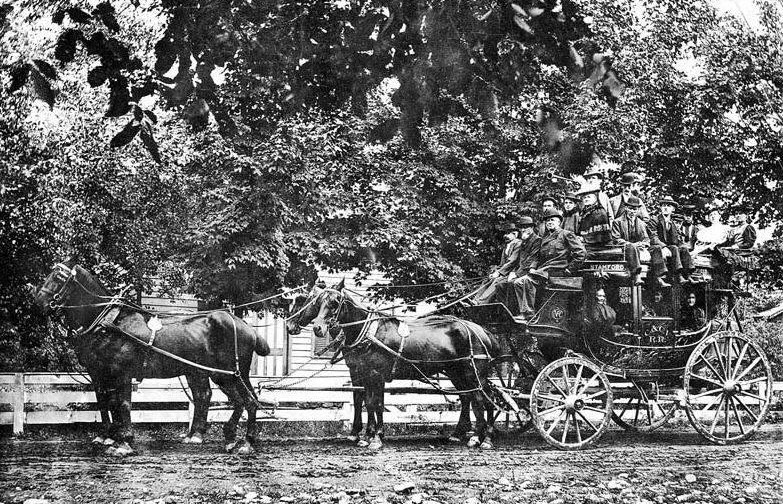

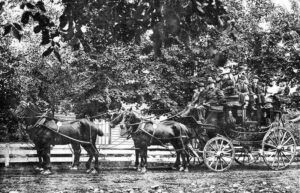
 Before the arrival of the railroad in 1859, Milford residents traveled to various points in Kent, Sussex and New Castle County by stagecoach. These horsedrawn carriages traveled to Wilmington, Georgetown, Lewes and other towns throughout the state as well as to points outside the boundaries of Delaware.
Along these routes were stagecoach stops which were often spaced every 10 to 15 miles so that horses could be swapped out. With the arrival of the railroad, these stops faced a rapid, system-wide obsolescence as the trains completely broke the monopoly on passenger transportation. Railroad stations became the stops where passengers were a blet o get something to eat or take a break from travel.
Stops that were located deep in the countryside far from railroad tracks vanished almost overnight as travelers no longer pulled up to their doors. There were often taverns located at the stops and those owners could no longer make a profit as passenger visits disappeared almost immediately. Unfortunately, many of these historic locations were abandoned, demolished or converted into private family dwellings over the years.
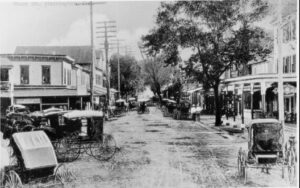
Some stagecoach stops were able to adapt as they were lucky enough to be located near the new railroad. One example of this is Benjamin Clark’s tavern in the 1850s which was where Clark’s Corner got its name. When the north-south line of the Delaware Railroad was laid out, this stagecoach stop was chosen due to its critical junction. This allowed Clark’s Tavern to transition from a horse-and-carriage stop to a railway junction and the area around the tavern boomed. This area eventually became the town of Harrington.
In some cases, stagecoach lines re-oriented since trains did not go to every small town. Stagecoaches became feeder lines and some of the stops livery stables. The coaches waited at stations in Milford or Clark’s Corner to pick up passengers arriving by train and taking them to their final destination or local hotels.
For the town taverns that survived the advent of train travel, many became hotels or rest stops for travelers while others transitioned into local community centers. They became neighborhood saloons, local political meeting halls and community gathering places. Some, however, vanished entirely.
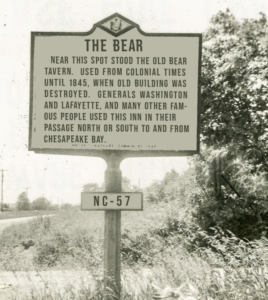
The Bear Tavern, located at Bear Crossroads, was one of the most prominent colonial stagecoach stops in northern Delaware. When the railroad arrived in 1832, major railroad lines bypassed the crossroads completely and the tavern was eventually torn down. There is an historical marker on the site today.
In Odessa, Cantwell’s Bridge Hotel and Tavern was established in 1822 as the town was a booming commercial hub at the time. Known as Cantwell’s Bridge at the time, the town sat along a vital shipping and passenger route. In 1855, the railroad deliberately bypassed Cantwell’s Bridge, laying tracks several miles to the west through Middletown instead. In a desperate bid to save the economy, the name of the town was changed to Odessa after the great Russian port, but the name change was not successful. The once bustling town experienced an almost immediate economic collapse. Cantwell’s Tavern still stands today, but Odessa is no longer the vital transit node as it was in the 1800s.
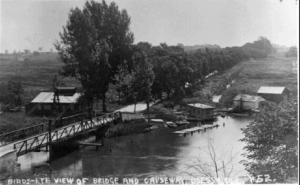
Aiken’s Tavern in what is now Glasgow was also located at a major crossroad. It was a popular stop for the military during the Revolution and stagecoach travelers. Much like Odessa, the rail lines bypassed Glasgow in favor of nearby Newark and Middletown. While the intersection is historically listed as Aiken’s Tavern Historic District, the physical tavern is no longer standing.
In Sussex County, the area known as The Wildwood along the roads leading from Milford to Georgetown as well as the road to Lewes had many unnamed “halfway houses” and licensed log-cabin taverns. They were staging stops where horses could be swapped to handle the heavy, shifting sands of southern Delaware. With the advent of the railroad, these stops vanished quickly, some within a matter of months.
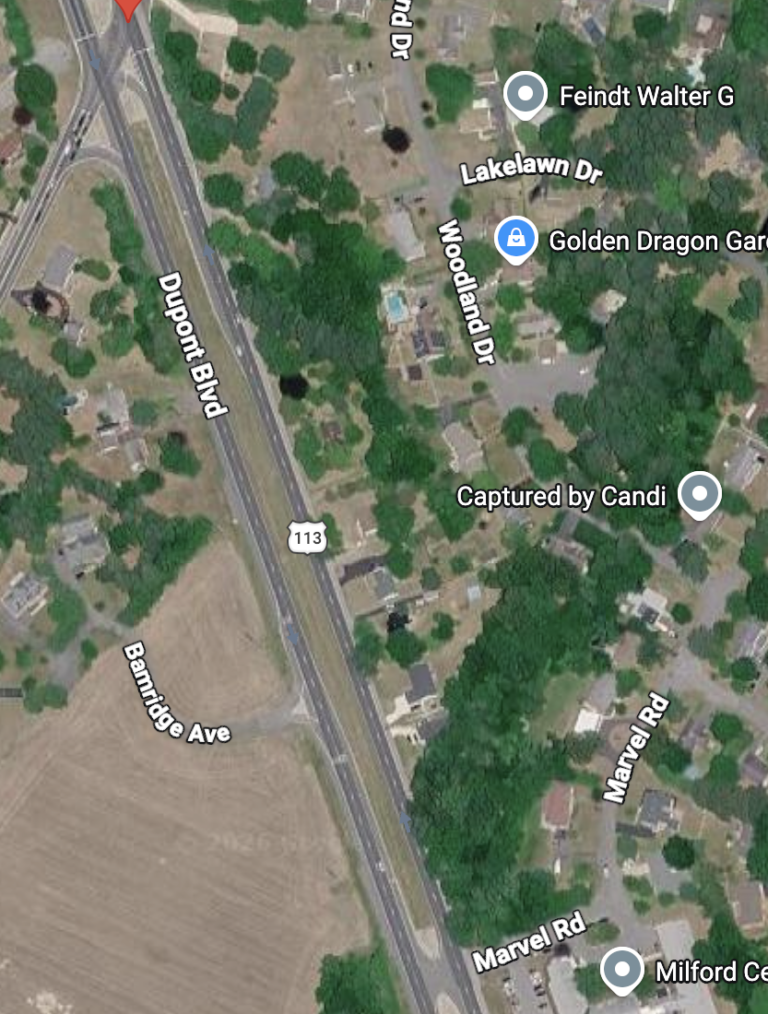
One of these stops, Fleatown, was located southeast of Milford and north of Ellendale on the corner of what is now Old State Road and Fleatown Road. It was eventually renamed Federalsburg, but the local population never took to the name change.
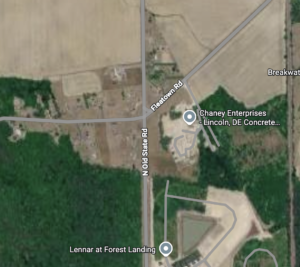
Fleatown was a booming, rowdy and crucial oasis for weary travelers making the long horse-and-carriage journey from Milford to Georgetown. Although the county seat was no more than 16 miles from any location in Sussex County, stagecoach travel was uncomfortable, difficult and dangerous. Breaks were necessary for the comfort and safety of both passengers and horses.
The entire economic ecosystem of Fleatown was built around two legendary, competing taverns. The Fleatown Inn was owned by Milloway White while Warren’s Hotel, operated by Samuel Warren, stood directly across the road. The rivalry between the two was fierce and historical records note that travelers were treated to some of the finest food, cleanest beds and most lavish accommodations on Delmarva. However, the two taverns were also known for wild orgies and drunken, late-night rowdiness among the locals as well as traveling guests.
When the railroad came to Milford and headed south toward Georgetown, the new tracks were laid slightly to the south and west of Fleatown. The official depot in the area was built in Ellendale. When the depot opened in 1866, Fleatown began a rapid decline. Travelers no longer had to travel the bumpy, slow Old State Road as faster passenger trains stopped in Ellendale. Both taverns closed permanently soon after the arrival of the railroad.
The area known as Fleatown faded into an agricultural ghost town. The legendary Fleatown Inn sat rotting and abandoned until it was torn down in 1895. Today, the area is not a town or commercial center. It sits between Lincoln and Ellendale as agricultural land with the only remaining acknowledgement to the once-booming stagecoach stop is the name of the road that now runs through it – Fleatown Road.
In the fourth and final part of our series, learn more about the towns that owe their existence to the railroad.