


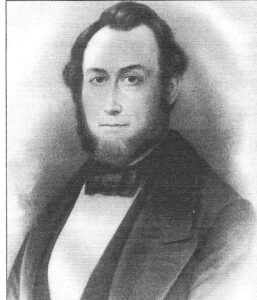
This week, we begin a series on the formation of the Junction and Breakwater Railroad. Part 1 will focus on the resistance to the railroad before it was established and the efforts of Governor Peter F. Causey to bring this project to completion.
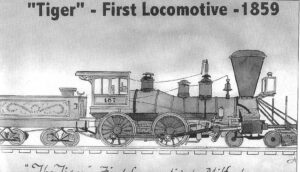
October 3 marks the 169th anniversary of the formation of the Junction and Breakwater Railroad which included a branch from what was then Clark’s Corner but is now Harrington to Milford. This endeavor, however, was not met with approval by many prominent Milfordians.
Economic skepticism, intense political debates and concerns about land ownership were at the forefront of the resistance to the new branch of the railroad. Those against the railroad were merchants, shipbuilders and vessel captains who saw the railroad as a direct threat to their industry. They argued that investing in a railroad was risky when water transport worked well.
This resistance led the legislature to order railroads to locate tracks ten miles away from river towns like Milford, Smyrna, Dover, Frederica, Milford and Milton. Small towns began to sprout up around the railroad just as fast as the tracks were laid.
“To the people of Sussex County particularly, it is all important, and a better opportunity in all probability, never be offered its citizens to procure a road that will add so much value to every acre of land in the county,” the Smyrna Times argued in May 1857. “We cannot understand how men can be so blind to their own interests as to refuse to assist to its construction. WE don’t think, however, there are any who will deny their aid when directly appealed to.”
The cost of the railroad was another deterrent and many local investors were unwilling to join those who supported the railroad. Many in the area felt that the railroad would benefit cities like Wilmington and Philadelphia. In addition, farmers were concerned that smoke and sparks from the trains would set fire to their crops, that trains would scare livestock and that the state would step in to take land for tracks without adequate compensation.
During this era, people often traveled to other towns and villages, but the method of transportation was either horse and buggy or stagecoach. One commonly used stagecoach trail was between Milford and Clark’s Corner, then known for a tavern owned by Benjamin Clark. Although only nine miles, the road between the two towns was not pleasant.
Today, Milford Harrington Highway roughly travels the same path that stagecoaches travelled in the 1800s. The low-lying topography was prone to flooding, especially in the spring and during frequent summer thunderstorms. Stagecoaches often became severely stuck or overturned when steep, muddy drop-offs were encountered. In the dead of summer, dirt baked into shifting sand that would snap wooden carriage axles or exhaust horses to the point of collapse, leaving travelers stranded.
The area between Clark’s Corner and Milford was rural with mostly forests, marshes and scattered homesteads. If an axle snapped or a passenger suffered a medical emergency, there was no quick help. It was particularly dangerous traveling at night as there were no clear markers or lighting, leading drivers to lose the road, collide with trees or wander into swampy ditches.
Animals were another concern as wolves, foxes and large feral hogs posed a threat to passengers. In addition, because the road was so exhausting, travelers relied on stagecoach stops like Clark’s Tavern or Delaner’s Tavern in what is now Houston, which offered refuge from the roadway but were also rowdy establishments. Often, stagecoach drivers left the tavern in intoxicated states, leading to additional accidents.
According to A History of Milford, compiled by the Milford Historical Society, the stage fare from Milford to Harrington cost as much as the train fare from Harrington to Wilmington. Many took the harrowing trip from Milford to Harrington just to get the train to other parts of the country.
Agriculture was another factor that pushed men like Causey to promote the railroad. Trains could deliver perishable produce to markets faster than they could travel by ship or stagecoach. Some of these arguments were used by Causey to bring the railroad to fruition. He also used a unique combination of political leverage, personal capital and direct corporate leadership to achieve his goals.
Despite being formed in 1857, funding was still a problem for the railway line. In 1858 Causey threw his weight behind infrastructure expansion and, with aid from the state legislature, which Causey helped facilitate, was able to see construction begin, connecting what was then the Delaware Railroad in Clark’s Corner to Milford.
Causey achieved his goal by forming a power coalition of town leaders. He established and served on the first Board of Directors for the Junction & Breakwater, serving with Trusten P. McColley, John Houston and Henry B. Fiddeman, all very prominent men from Milford. By uniting this group of men along with other wealthy merchants, Causey diluted the political power of the maritime faction that adamantly opposed the railroad.
Causey’s term as governor ended in 1859 and he transitioned to the president of the board for the railroad. This allowed him to remain hands-on, giving him an executive role over construction when the property rights argument threatened to derail the project.
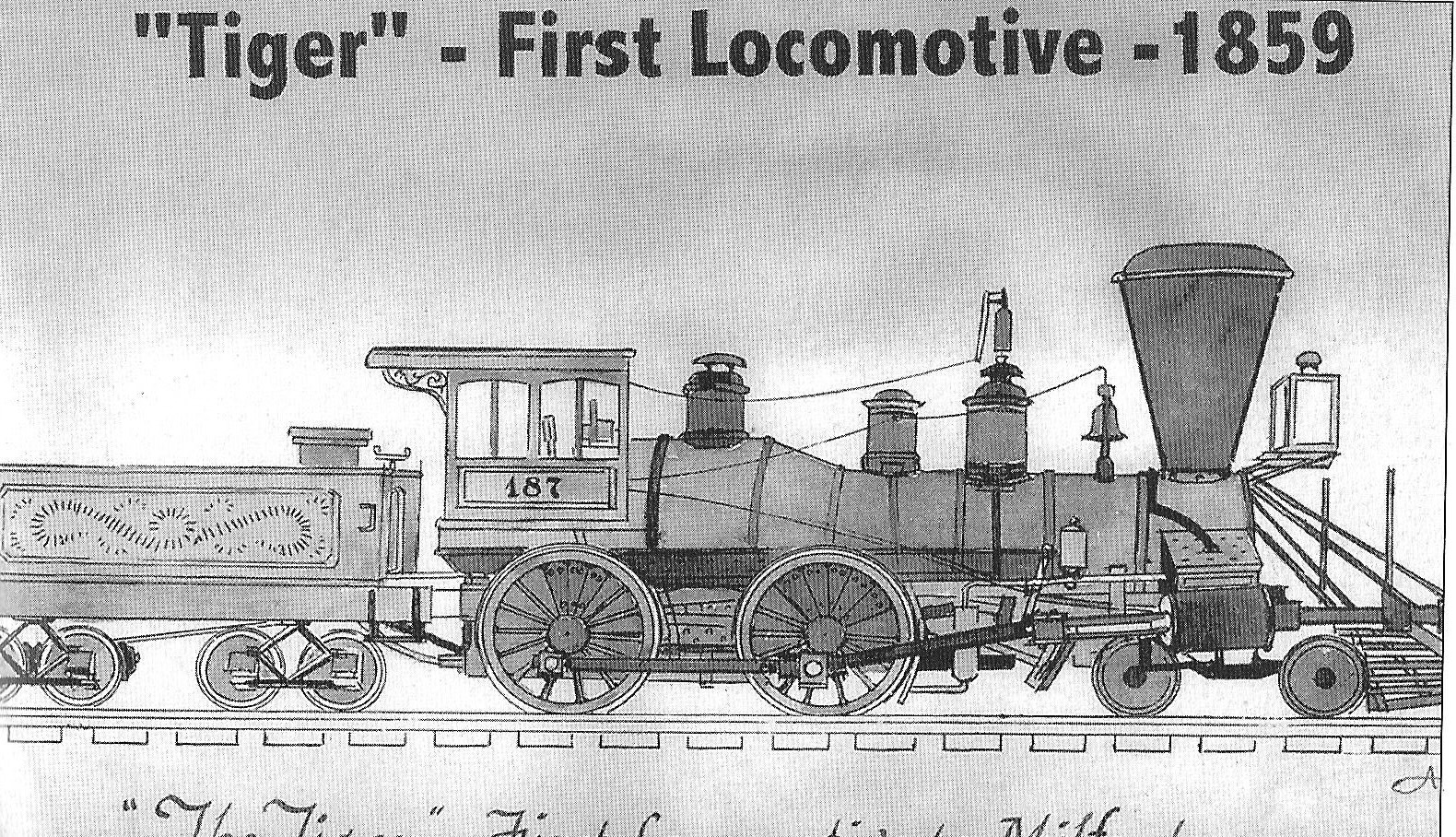
It took two years for the section of railroad between Milford and Clark’s Corner to be completed. On August 25, 1859, Causey drove the last spike into the track. He did not do this in secret but staged it as a major event at 6 PM in front of a massive crowd. He stood with Governor William Burton, his successor in the governor’s office and Governor William Tharp, both also from Milford. Traffic between Milford and Clark’s Corner began September 7, 1859 with the arrival of the Tiger.
In Part 2 of the series, learn more about how the railroad changed industries in Milford, both positively and negatively.