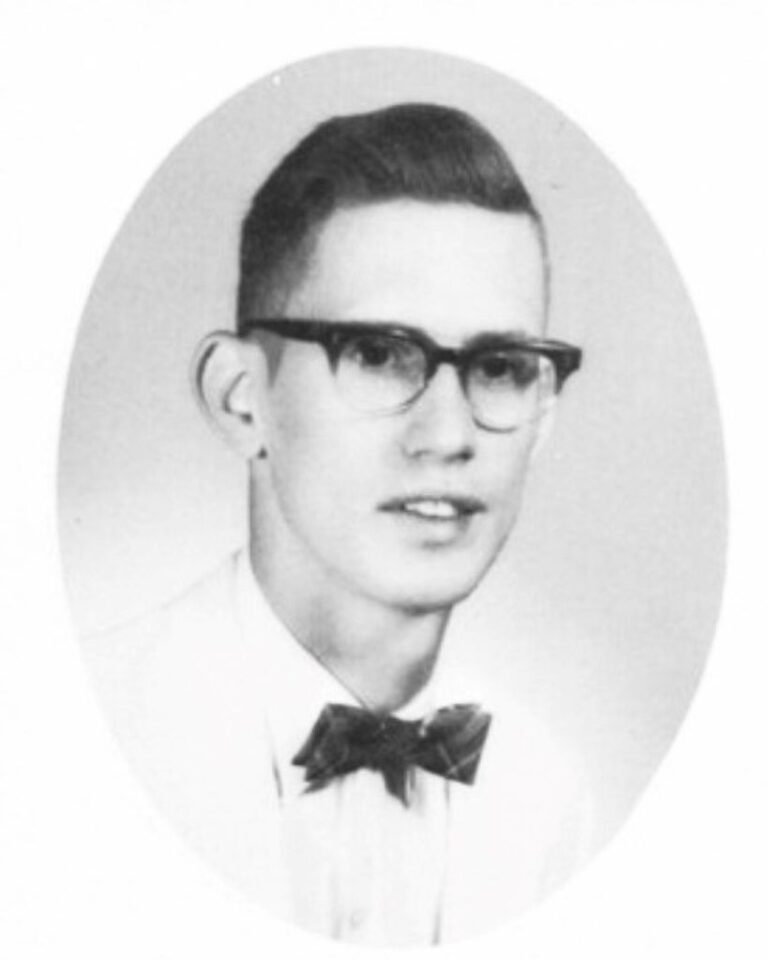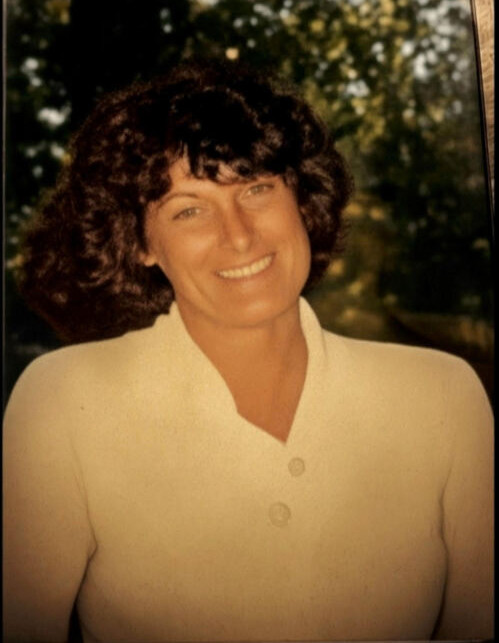




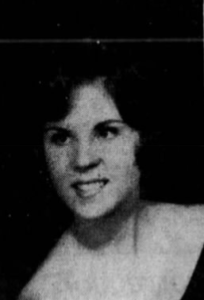
September 25 marks the 41st anniversary of the end of a murder case that gripped Milford for more than a decade. The case began when the body of Serita Hughes was found in her driveway on August 31, 1976.
On that day, news reports announced that the body of a 27-year-old mother of two was found strangled in the driveway of her Woods Haven home. Serita, a registered nurse, worked the 3-11 shift at Milford Memorial Hospital the night before. When her husband, Robert “Bob” Hughes, woke up at 6:30 AM, he discovered her body. Bob Hughes was a teacher at Milford Middle School.
“A rope was draped around the victim’s neck, police said,” a report in the News Journal read the next day. “State police detectives are investigating.”
The investigation later revealed that Serita had been strangled with a clothesline and beaten over the head with a blunt instrument. Her husband stated that he and the couple’s two sons were asleep, telling police he had gone to bed around 10 PM. He said he did not know his wife had not returned home until he discovered her body.
The death was the second strangulation death in Milford in less than a year. The other slaying was also a Milford Memorial Hospital employee and that murder still remains unsolved today.
On September 2, 1976, Hughes was arrested and charged with killing his wife. The news shocked the community. The Hughes’ came to Milford after graduating from Alderson-Broaddus College in West Virginia. Bob, who was 28 at the time, was a well-respected teacher and that there had been no reports of problems between Bob and Serita.
A hearing was set for September 9 to determine if there was enough evidence to hold Hughes for the murder. At that hearing, charges were dropped against Hughes as there was not enough evidence to submit to a grand jury.
After his release from jail, Hughes went to his parent’s home in Pennsylvania before returning to Milford where he hoped to get his children back on a normal schedule. On November 9, 1976, he quietly returned to his position as a math teacher at Milford School District. His parents sold their Pennsylvania home and moved into the Woods Haven home to help raise the children.
In August 1977, the parents of Serita through the Justice for Serita Hughes Fund, offered a $1,000 reward, about $5,500 today, for any information that would lead to the arrest and conviction of the murderer of their daughter. In a newspaper article about the reward, police revealed some of the details of the investigation.
“Extensive tests followed with police trying to place the scene of the crime inside the couple’s kitchen,” the report read. “Blood was found around the sink and toilet of the home, but tests later showed it was menstrual blood, not from the murder.”
On December 6, 1978, newspapers announced that Hughes had been arrested for the murder of his wife. Hughes was now living in Thousand Oaks, California, teaching at Ascension Lutheran School. The arrest was after an indictment by a Kent County Grand Jury.
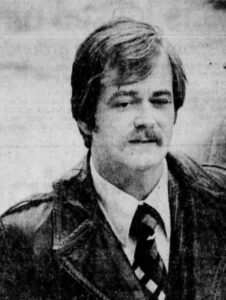
Then Deputy Attorney General Kenneth Abraham stated that there had been a misunderstanding about some of the evidence. The police had recently reevaluated that evidence which led to the indictment. One interesting aspect of the case was that Hughes visited a hypnotist in California who determined that he was innocent of killing his wife. Bail for Hughes was set at $150,000, about $770,000 today.
Hughes fought extradition from California but eventually returned to Delaware to face charges.
“He not only surrendered voluntarily, he returned to Delaware at his own expense,” his attorney Gerald I. Street said at the time. He had to return to California soon after his appearance in Delaware as his wife’s parents had filed for custody of his two sons. Bail was lowered to $100,000 cash which was posted after friends and family raised the needed amount. In the custody suit, Hughes’ parents were awarded custody of his sons.
Hughes returned to California where he resumed his teaching position. The school was aware of his wife’s murder and that he had been a suspect in the case. Hughes also stated that before his arrest in California, he was aware that the police had renewed the investigation into his wife’s murder.
The trial began in January 1980. Hughes would not face the death penalty as it was not reinstated until after his wife’s murder. The case was prosecuted by Charles M. Oberly III and Bartholomew J. Dalton. The testimony at the trial was emotional, especially when Robert Herman Bell, Serita’s father, testified that his daughter was strangled by rope he tied to his grandson’s wagon the week before the murder. According to Bell, he created a loop with the rope so his grandson could pull the wagon.
Police contend that Serita was strangled and then her body moved to make it look like she had been surprised by a robber.
One expert defense witness testified that there was no evidence that Serita had been moved after she was strangled and that appeared she was attacked from behind. She struggled with her assailant, leading to her middle and index finger being caught under the rope. Dr. S. Stefan Bjornson testified that Serita died on her back noting that blood from a forehead wound ran down both sides of her head.
Hughes claimed he had gone to bed around 10 PM, but an employee of a nearby convenience store testified that he and his children were in the store at 10:20 PM that night. Serita’s body was discovered on the couple’s anniversary and testimony indicated they had planned dinner with friends in Rehoboth. One neighbor reported that Hughes showed no emotion the next day when his son asked where “mommy” was while another neighbor reported him as being visibly upset.
Leona Horning testified that Serita had told her of severe menstrual problems the day before she died. Hughes claimed blood on his hands and in the house was menstrual blood. John Cantwell, another neighbor, testified that Hughes came to his house the evening after the murder and wanted to see the newspaper.
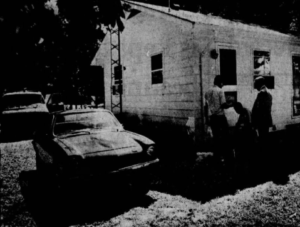
“I tried to keep him from looking at it but he insisted,” Cantwell testified. Cantwell also stated that his son, Tommy, had arrived home around 12:30 AM the day of the murder and Hughes said, “I hope he didn’t see anything.”
During the trial, a letter was read that Hughes had written to his mother-in-law, proclaiming his innocence. Serita’s mother testified that they had visited their daughter, who was their only child, in Milford often until the fall of 1975 when they no longer felt welcome in the home. The last time Bell spoke to her son-in-law as in 1977 in a conversation recorded by the police without Hughes’ knowledge. She asked about insurance money and credit cards. Hughes replied he received $22,000 in life insurance, about $130,000 today.
When the case went to the jury, Oberly told them they could find Hughes guilty of first-degree murder, guilty of second-degree murder or not guilty. The jury was instructed that a second-degree verdict could indicate that during a fight with his wife, Hughes panicked, struck her and then strangled her. The jury found him guilty of first-degree murder and Hughes was sentenced to life in prison.
Hughes showed no emotion at the verdict and sentencing. Serita’s mother, Lucille, felt that the nightmare was finally over.
“He took our daughter from us, she was all we had in the world,” Bell said. “I have waited for this day to come.”
On February 12, it was revealed that a lie detector test seen by chance by a Delaware State Trooper at a seminar in Chicago, was the “new evidence” that led to his subsequent arrest. According to police, Hughes went to Michigan a few months after the murder and took a lie detector test at a private institute. In 1978, a Camden trooper attended a lie detector lecture in Chicago where the instructor handed out polygraph readings stating, “these are results where I obtained confessions.”
At the top of one of those polygraphs was the name Robert D. Hughes of Delaware. The trooper mentioned that the case involved an unsolved murder in Delaware and the instructor immediately took back the documents. Delaware justice officials tried to obtain the results but were unsuccessful. However, this polygraph test rekindled interest in the case. Detective Sgt. Robert H. Collison was named the official investigator in 1978 and he brought in new people with “fresh eyes” to look over the evidence.
An officer who had been a medic in Vietnam pointed out things related to Serita’s body that had not been noticed before. Others pointed out that a person would not admit something under hypnotism they would not reveal normally. A polygraph taken by Hughes immediately after his wife’s murder was inconclusive, but “less than truthful.” A third taken after the one in Michigan also showed Hughes was not being truthful.
Polygraphs were not admissible in court and were not mentioned during the trial, but it led investigators to look more closely at the case.
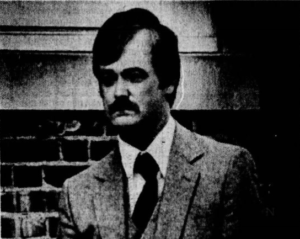
Attorneys for Hughes immediately began planning an appeal. On November 18, 1981, the conviction was overturned by the Delaware Supreme Court. Multiple errors were discovered during the trial including improper statements to the jury that were highly prejudicial and that the prosecution clearly misstated evidence related to blood on Hughes. In addition, Hughes was called a “liar” which the Supreme Court determined to be prejudicial. In the ruling, Justice John McNeilly concurred with the majority.
“Although my overview of the blood and lies issues differs from that of the majority, I find the prosecutor’s rebuttal summation to the jury on the blood issue troublesome and not unlikely to have caused prejudice to the defendant,” McNeilly said. “I also agree that comments by the prosecutor about defendant’s courtroom demeanor were improper, as weas the prosecutorial characterization of the two-year investigation prior to defendant’s arrest. Therefore, I am impelled to agree that the cumulative effect of the prosecution’s conduct calls for a speedy retrial.”
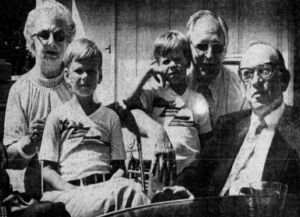
After the conviction was overturned, Hughes was released from jail. He returned to California where he was met by his parents, two sons, Chad and Brock as well as his fiancé, Barbra Olson.
The retrial began in June 1982 and the focus this time was on possible financial difficulties in the household. Lucille Bell testified that she often provided money and clothing to the household, sending $50 the couple when she was told they only had $5 left until payday. She also pointed to holes in Hughes’ story, including that he told her he had destroyed the couple’s credit cards when the police said they were strewn around her body. Police claimed to have found the cards neatly stacked on Hughes’ dresser.
On July 22, 1981, Hughes was convicted of first-degree murder for a second time. In the second trial, Hughes took the stand, but it was not enough to convince the jurors of his innocence.
Milford believed the saga was over as Hughes was returned to jail to serve a life sentence. His lawyers appealed the verdict, but most felt that this would be the end of the case.
In February 1985, the understanding that the Hughes case was over were dashed when the Delaware Supreme Court again overturned his conviction. According to court documents, a review of the post-conviction hearing found that four jurors and two alternates were aware that Hughes had been convicted before; at least one juror knew that Hughes had taken a polygraph; jurors discussed the prior convictions during deliberation; two jurors recalled discussions about polygraph tests and a comment that “I think he failed it;” and one juror who contacted defense attorneys about what she felt were juror improprieties.
Because the jurors discussed the prior conviction during deliberations, jurors who were unaware of the prior conviction were tainted by the information. Based on this factor alone, the court ordered the case to be re-tried but this time in New Castle County. This time, Hughes was not released on bail.
In an effort to allow his sons, now 11 and 9, to move on from the death of their mother, Hughes agreed to a plea bargain where he agreed to plead guilty to manslaughter, a charge could result in a 30-year prison sentence. Hughes asked for leniency so that he could return to California to raise his sons. While in prison, he founded an organization that helped convicts prepare to return to society and asked to continue that work. He had already spent four-and-a-half years in prison.
Serita’s mother, Lucille, spoke at the sentencing hearing. She asked the judge to sentence Hughes to the maximum.
“You had everything a man could ask for, a wife who kept house and went out at night to nurse the sick, two healthy babies, a beautiful home and a good job with Milford School District,” Lucille Bell said. “You asked her to marry you; you asked us for our blessing. If you wanted out, why didn’t you get out and go to your beloved California and let Serita live?”
Hughes’ lawyers pointed out that he had already served more than the average person convicted of manslaughter, requesting he be released for time served. The judge sentenced him to the maximum of 30 years.
In 1990, Hughes was denied parole as, despite his plea bargain, he refused to confess or admit to killing his wife. Parole was denied at several additional hearings in the early 1990s. There are no records showing if he was ever issued parole. However, he was sentenced to 30 years in December 1985 with credit for time served. In Delaware, there is what is known as a “Good Time” reduction.
A “Good Time” deduction is given to inmates who maintain good behavior while in prison. These credits can reduce a sentence by about one-third or more. That means he was likely released from prison in 2001 or 2002. Even without any good time credit, his sentence would have ended no later than 2015. No information about where Hughes is now can be found.
Serita’s mother passed away in 2015 and her obituary notes she was preceded in death by her husband, Robert Herman Bell, but no date when he died.