



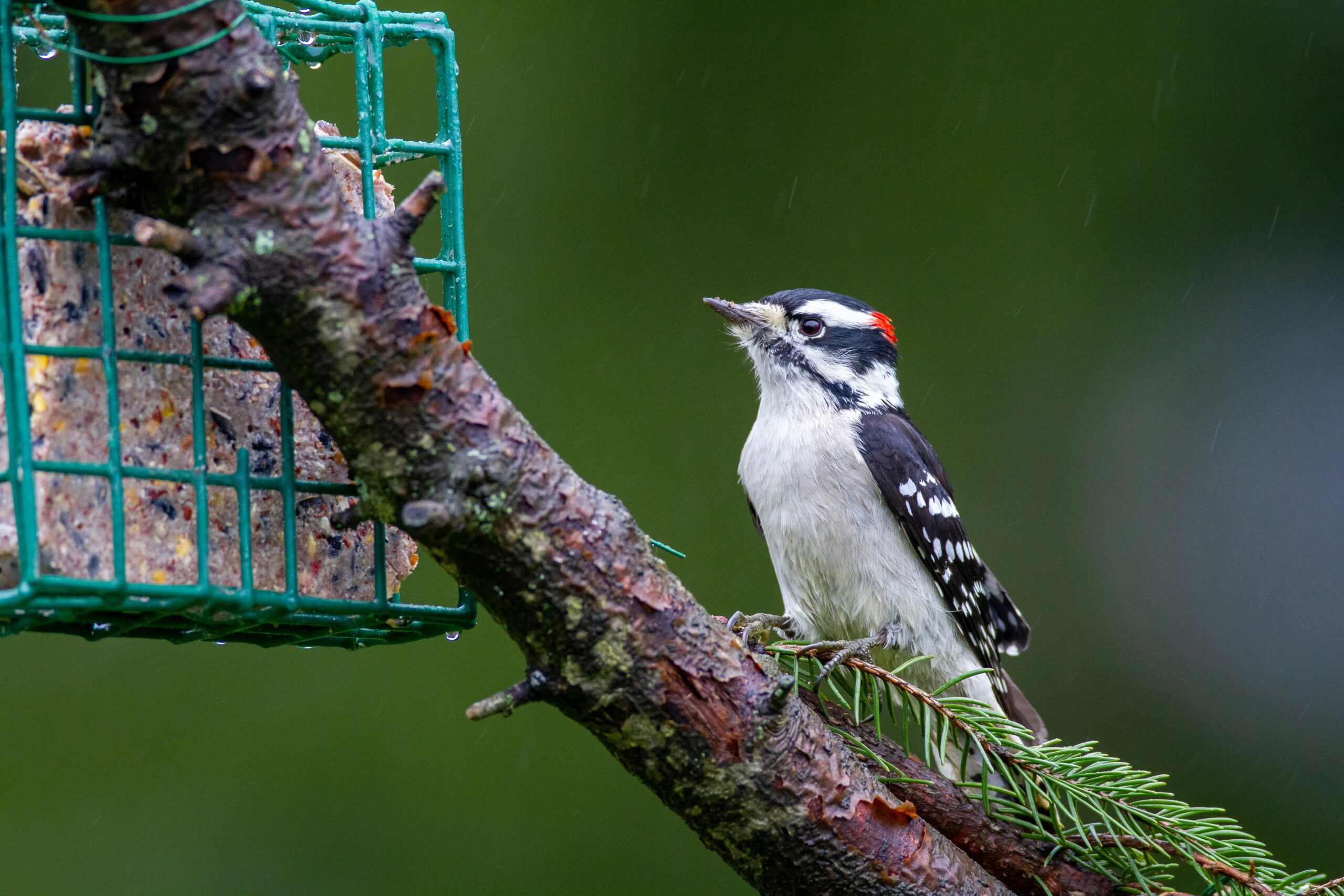

Delaware’s smallest woodpecker, the downy woodpecker, scientific name dryobates pubesceus, is one of the busiest birds you will see in your backyard. Found near woodlots and feeders all year, the downy woodpecker is easily recognizable.
Only about six inches tall and weighing around an ounce, the lifespan of the woodpecker is three to five years.
The bird has black-and-white plumage with males sporting a red patch on the back of the head. They have a short bill and white outer feathers that help distinguish it from the larger hairy woodpecker. The female has a black crown while the juvenile has a patchy red on the front.
Downy woodpeckers can be confused with hairy woodpeckers. The difference is that the hairy woodpecker has white outer tail feathers while the downy has black bars on those feathers. The hairy woodpecker is also less common at backyard feeders as they prefer forested areas.
Downy woodpeckers are frequent visitors to suet feeders where they can be seen clinging acrobatically to feed. They sometimes peek around posts and trees in what almost looks like a game of “peek-a-boo.”
Like most woodpeckers, the downy forages by tapping and probing tree bark for insects, preferring ants and beetle larvae. In addition to suet, they will also eat peanuts, peanut butter and sunflower seeds.
When courting, both male and female downy woodpeckers perform tapping and fluttering displays.
Nests are carved into dead wood where the pair excavates a cavity to raise their young. No additional material is added to the nest. The birds lay three to six white eggs which are incubated by both parents for about 12 days. The fledgling will leave the nest in about 20 to 25 days. Downy woodpeckers will also build nests in a nest box mounted on a tree or pole.
Found in parks, orchards, forest edges and backyards, they can often be heard before they are seen due to the rapid drumming of their beaks. Despite their size, downy woodpeckers can drum at over 20 beats per second, fast enough to rival many larger birds.
Predators are hawks, snakes, squirrels and cats.
The birds are friendly and energetic, enjoyed by many backyard birdwatchers.
Nest week, the ruby throated hummingbird.