


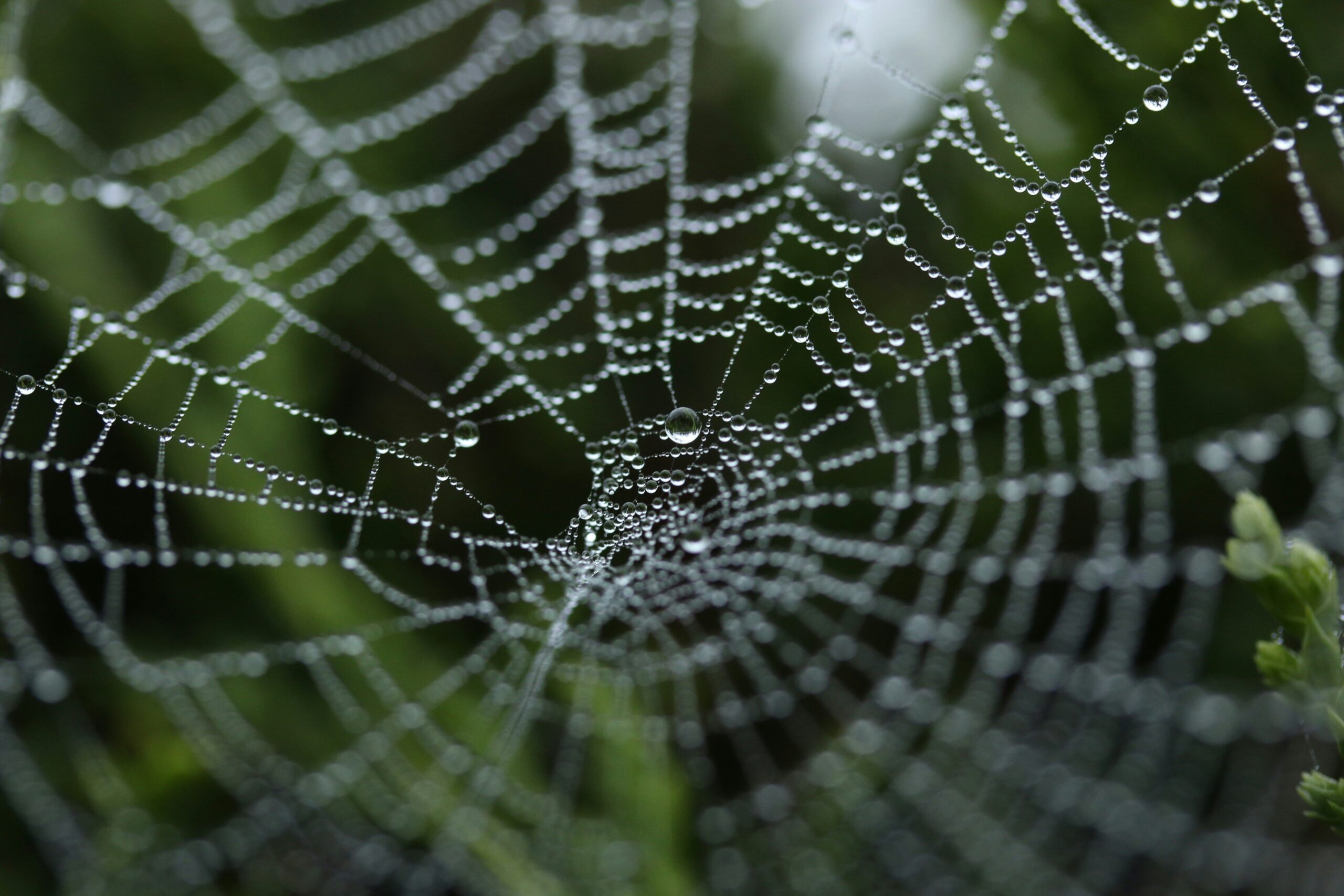

It happens almost overnight. You step onto the porch one September morning and discover an enormous spider web stretching between two bushes. Another appears beside the deck, and by evening, it may seem as though spiders have taken over the yard.
The good news is that there probably has not been a sudden spider invasion. Late summer and early fall are simply the time when many outdoor spiders—and their webs—become much easier to notice.
Many spiders hatch in the spring and spend the summer growing. By late summer and early fall, some species have reached their adult size, making both the spiders and the webs they construct considerably more noticeable. Among the most impressive are orb weavers, a group of spiders known for building the large, circular webs many people associate with the classic image of a spider web.
Orb weavers often construct webs between trees, shrubs, porch railings and other structures where flying insects are likely to pass. Some species rebuild portions—or even most—of their webs regularly. That can explain why a large web seems to appear where there was nothing the night before.
Although encountering a large spider in the yard can be startling, outdoor spiders provide a valuable service. Spiders are predators that feed on insects and other small creatures. Depending on the species, their prey can include flies, moths, mosquitoes and other insects found around homes and gardens. That means the spider occupying a corner of the garden is also providing free pest control.
Most spiders encountered outdoors would also much rather avoid people than interact with them. A web away from a doorway, walkway or other frequently used area can often simply be left alone.
You may wonder if you should remove the web and the answer is that location matters. A web stretched directly across the front steps is probably not going to survive the morning commute. But one tucked between shrubs or in an unused corner of the yard generally does not need to be removed.
Using pesticides simply because spiders are present outdoors is usually unnecessary and can also affect other insects in the yard. Instead, remove webs when they interfere with areas people regularly use and consider leaving those that are safely out of the way.
The highly visible spider activity of late summer and fall will not last forever. As temperatures drop and the seasons change, many adult spiders will reach the end of their life cycles, although eggs may remain protected until conditions are right for a new generation.
Until then, that giant web sparkling with morning dew might be worth appreciating before reaching for the broom.
Just remember to look for it before walking face-first through it.