





 The next in our series identifying commonly seen birds in local backyards features the house finch. Once native only to western states, the house finch has become a popular resident on the east coast as well. They are adaptable and have a fondness for urban areas.
The scientific name for the bird is haemothous mexicanus. They are between five and six inches tall and weigh about a half ounce. House finches were introduced to the east in the 1940s after a failed pet trade venture in New York and they quickly spread across the United States.
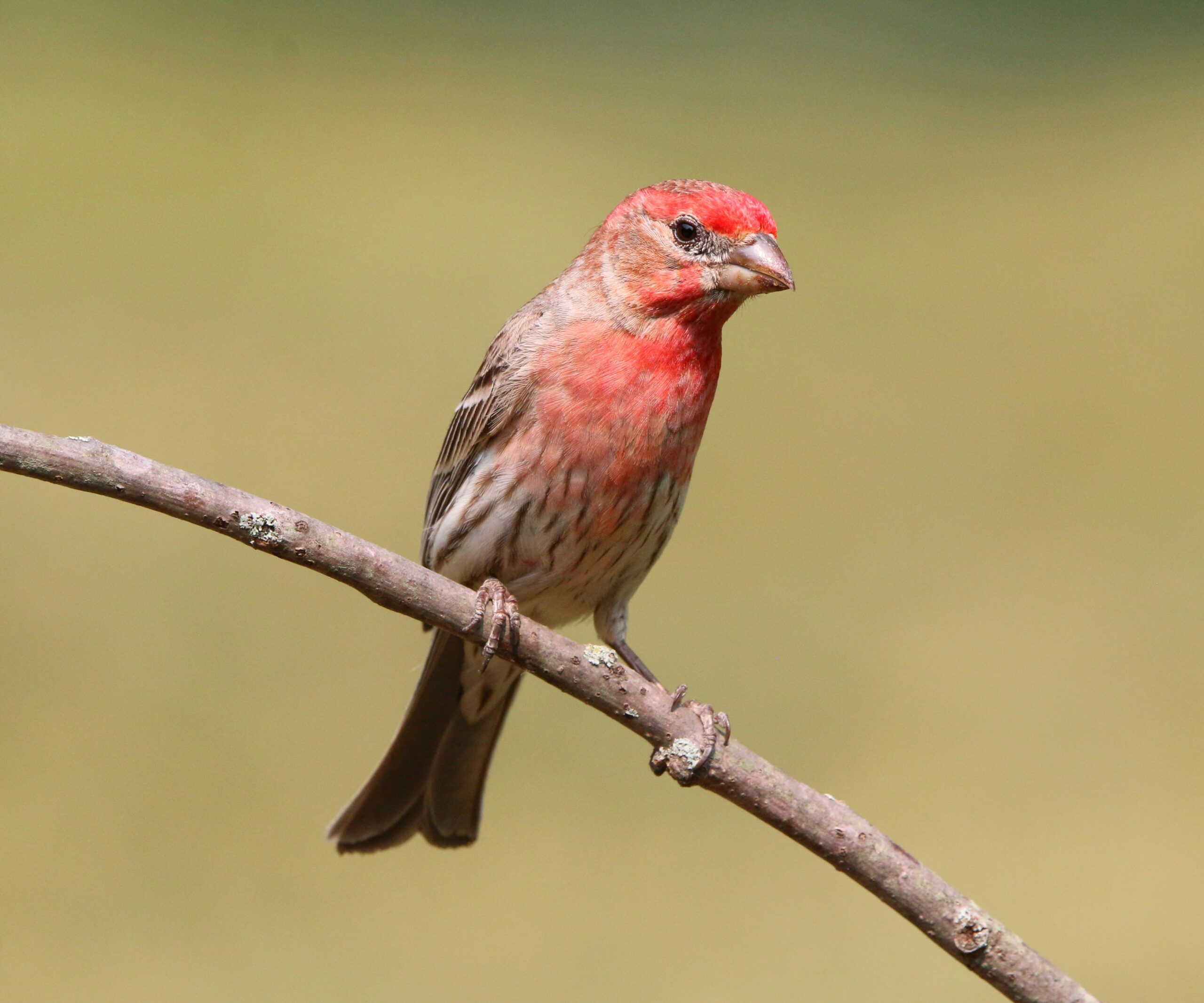
Males display rosy, red foreheads, throats and chests while females are streaky brown with no red. Juvenile house finches may appear to have small horns on their head.
The house finch is often seen before it is heard with a long, cheerful warble while perched on rooftops or trees.
This finch thrives in cities, towns and on farms, nesting in cavities or on ledges, including building fixtures, hanging planters and wreaths.
They lay two to six blue or greenish eggs two, sometimes three, times each year. Nests are usually found five to seven feet up, often on a building, looking like an open cup of grass. House finches will use a nest box. Eggs are incubated by the female for 13 to 14 days and fledglings leave the next at 12 to 15 days.
Their diet consists of seeds, buds and fruit. Buds of trees are important foods for them in the fall and winter Unlike most other vegetarian birds, house finches exclusively feed their nestlings plant-based foods, including seeds. Most other vegetarian birds still feed their young insects or bugs to keep their growing little ones full of protein.
They are seen at feeders all year. Although they adapt well to dry climates, house finches need a lot of water. On days when it is excessively hot, they can consume more than their own body weight in water.
Interestingly, the reddish orange plumage in a mature house finch male comes from the compounds in their food. Female finches are attracted to males with bigger and brighter red patches as they are signs of a well-fed male.
Highly social, they gather in noisy flocks. Often, one single house finch will appear at a feeder and within minutes, as many as a dozen will appear. Although they seem to be fairly passive, house finches can be very aggressive at feeders. They are one of the few birds that will chase house sparrows away. As the number of house finches increases in your backyard, the number of house sparrows will decrease.
House finches are susceptible to a contagious eye disease that can spread at dirty feeders, so if they appear at feeders in a yard, be sure to clean them often. Other predators are hawks, cats, crows and jays.
Next week, learn more about the house sparrow.