

Kwanzaa will be celebrated from December 26 through January 1, celebrating history, value, family, community and culture. Created in 1966by Maulana Ron Karenga, the holiday is an African American/Pan-African non-religious holiday.
Kwanzaa is based in Swahili principles of Umoja or Unity; Kujichagulia or self-determination; Ujima or collective work and responsibility; Ujamaa or cooperative economics; Nia or purpose; Kuumba or creativity; and Imani or faith. The word Kwanzaa is from a Swahili phrase “matunda ya kwanza, rooted in the first fruit celebrations found throughout Africa.
Karenga created the holiday to reaffirm and restore African heritage and culture and to introduce and reinforce the Nguzo Saba, or Seven Principles. It was also designed to serve as a nationally celebrated and communal, non-heroic day as an act of cultural self-determination. Using traditions found throughout Africa and African diaspora, Karenga combined those traditions into a celebration to honor the African American culture.
Karenga was part of the Black Power movement during the 1960s and created the celebration immediately after the 1965 Watt’s Riots in California. His goal was to give “Blacks an alternative to the existing holiday and give Blacks the opportunity to celebrate themselves and their history, rather than simply imitate the practice of the dominant society.”
The first Karamu Feast was held in 1973. Known as the “Feast of Faith,” it takes place on December 31, the sixth day of Kwanzaa. During a citywide movement of the Pan-African organization in Chicago, Hannibal Afrik of Shule ya Watoto felt it was a way to promote an educational campaign related to African American culture.
By the end of the 1970s, Kwanzaa began to move out of black nationalist circles and into mainstream black America. An article on the celebration appeared in ‘Essence in 1979 with others appearing in national magazines in 1983. The Smithsonian held the first Kwanzaa celebration in 1988 with some public-school systems adding information about Kwanzaa in their curriculum.
In 1997, Bill Clinton made the first mention of the holiday by a president.
“As America embarks on a season of renewal and reconciliation, the principles of Kwanzaa, unity, self-determination, collective work and responsibility, cooperative economics, purpose, creativity and faith,” Clinton said. “Ring true not only for African Americans but also for all Americans.”
The first Kwanzaa stamp, designed by Synthia Saint James, was issued by the United States Post Office in 1997 and a second released in 2004.
Although Kwanzaa is predominantly an African-American holiday, it is now celebrated worldwide. It was conceived as a nonpolitical and nonreligious holiday, and it is not considered to be a substitute for Christmas. It is not a religion but facilitates unity among African Americans regardless of their religion.
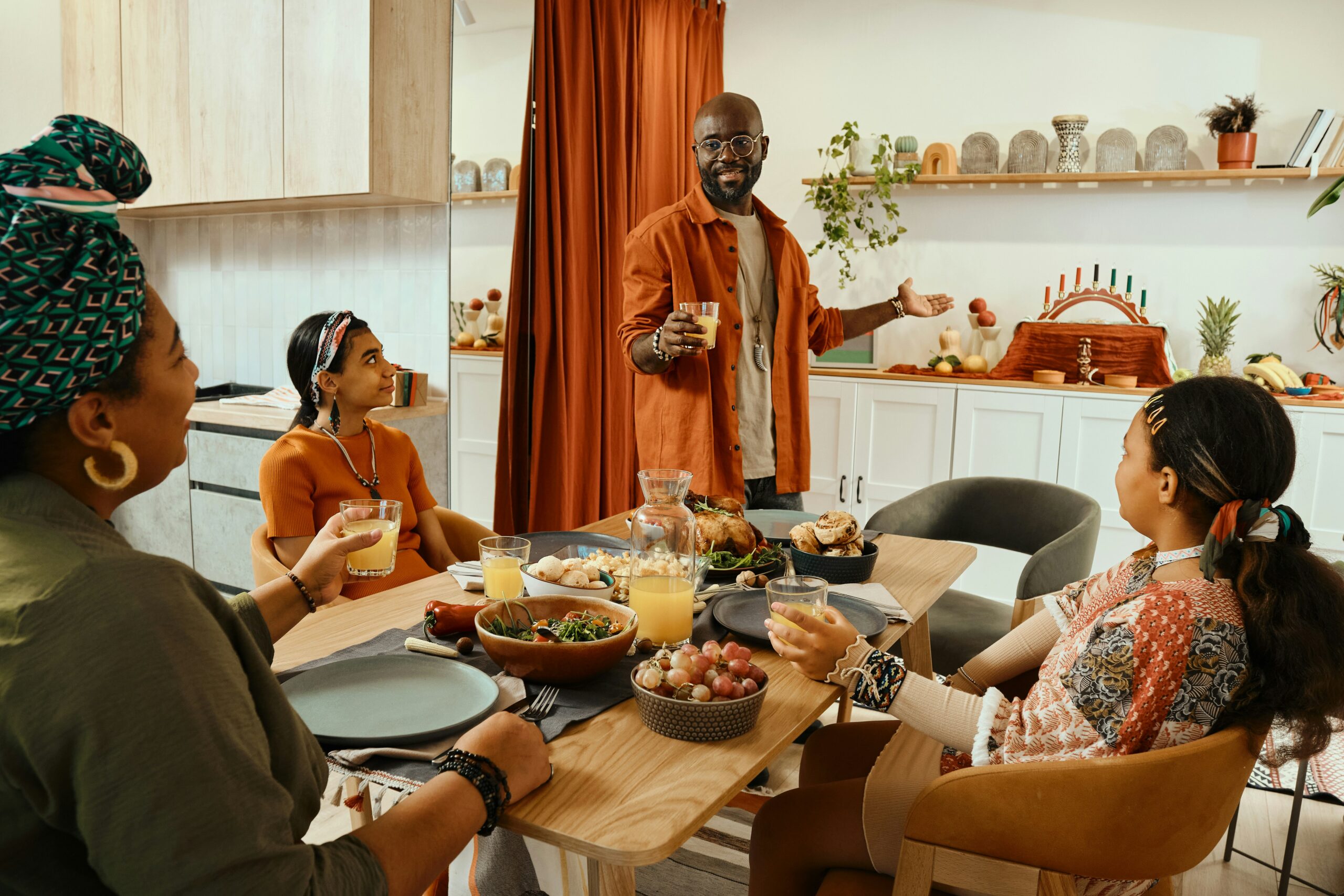
During the celebration, families and communities come together to share a feast, honor ancestors, affirm bonds between them and celebrate African American culture. Each day, a candle is lit to highlight the principle of the day and to breathe meaning into the activities which may include reciting the sayings or writings of great black thinkers and writers, recipient original poetry, African drumming or sharing a meal of African-inspired foods.
A Kinara is placed on a Mkeka, which is a straw mat, with Muhindi, an ear of corn to represent children, Mazao, which is fruit to represent the harvest and Zawadi, which are gifts. Candles are the color of the Pan-African flag. Red represents struggle, black represents the people and green represents the future. Those colors are also represented in the clothing worn during the celebration.
The first candle represents Umoja or unity. The second is Kujichagulia which represents self-determination. Third is Ujima which is designed to build and maintain the community and solve problems together as a unit. Next is Ujamaa which encourages people to build and maintain their own stores, shops and other businesses in order to profit together. Nia follows representing the building and developing of the community to restore greatness. Kuumba is next representing doing as much as possible to leave the community more beautiful and beneficial than when it was inherited. The final candle is Imani, representing to believe with all their hearts that the African American community is righteousness in victory over struggle.
Food plays a large part in the celebration as throughout the week favorite African American dishes are on the menu. Items like Jollof rice, okra stew and gumbo, collard greens, jerk chicken, sweet potatoes and black-eyed peas are served during the days of Kwanzaa. During Karamu, one-pot meals are popular, including peanut stew or Jambalaya. Molasses water, a mixture of molasses, lemon juice, water and fresh mint is common along with rum punch and sweet potato drinks are also served. Desserts include Akara, crispy black-eyed pea fritters, Calas, spiced rice cakes and coconut pecan cakes.