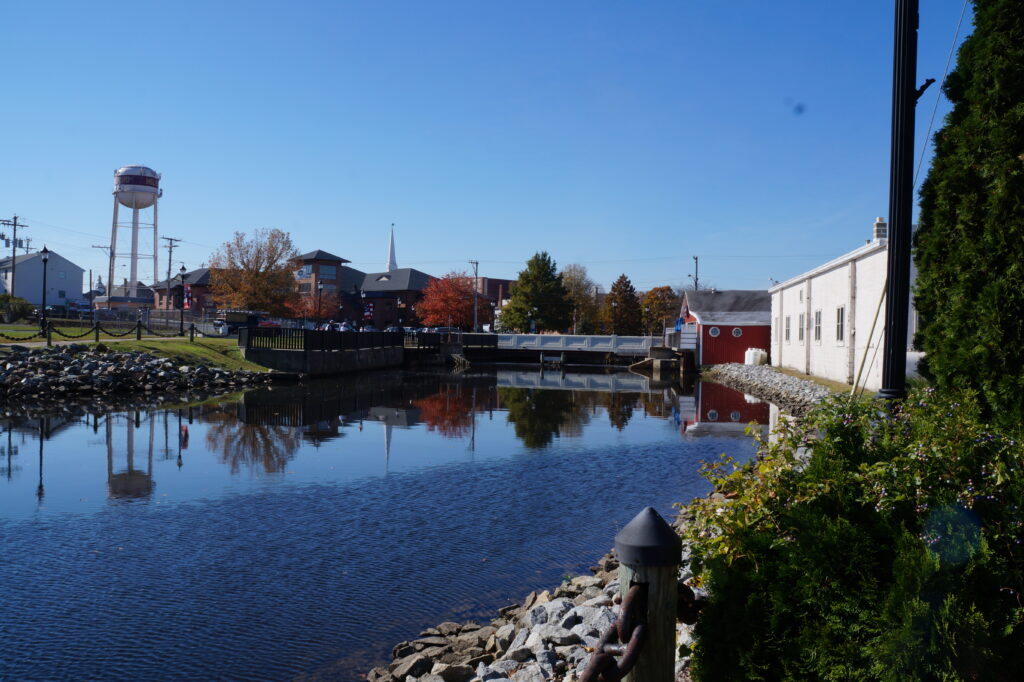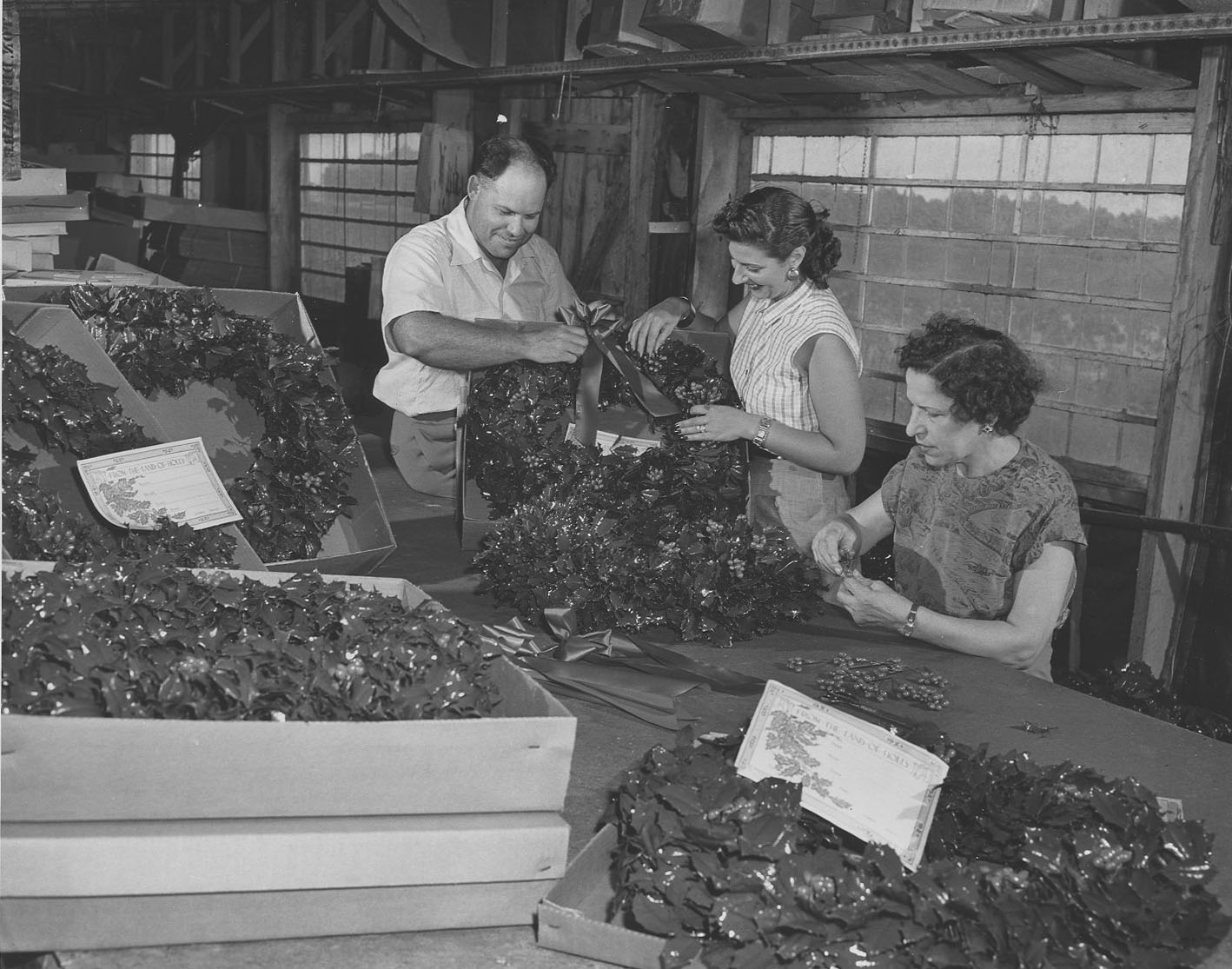


One little known fact about Milford and its sister town, Milton, is that in the 1930s and 1940s, the two towns were the Holly Wreath Capital of the world. As a result, the Pennsylvania Railroad train that transported the wreaths became known as the “Holly Express.”
The abundance of American Holly in the area contributed to the growth of the industry and, during the 1920s and 1930s, was a significant economic driver, supporting many families in the area. In 1939, the American Holly was named the Delaware State Tree.
Farmers found that holly, which was the last crop of the growing season, could be a lucrative business with families earning as much as $500, the equivalent of around $12,000 today. The families created wreaths between Thanksgiving and Christmas and, by 1938, the industry had grown to $1 million, the equivalent of $23.3 million today. When plastic wreaths were introduced in the 1940s, the industry died out.
Holly as a holiday icon has existed long before the Holly Wreath Capital was born. Ancient religions believed that holly kept bad spirits at bay so that the plant became a symbol of goodwill. Today, holly is an important part of the Delaware eco-system. Although it can be toxic to humans, it is an important source of nutrition and shelter to birds and other wildlife.