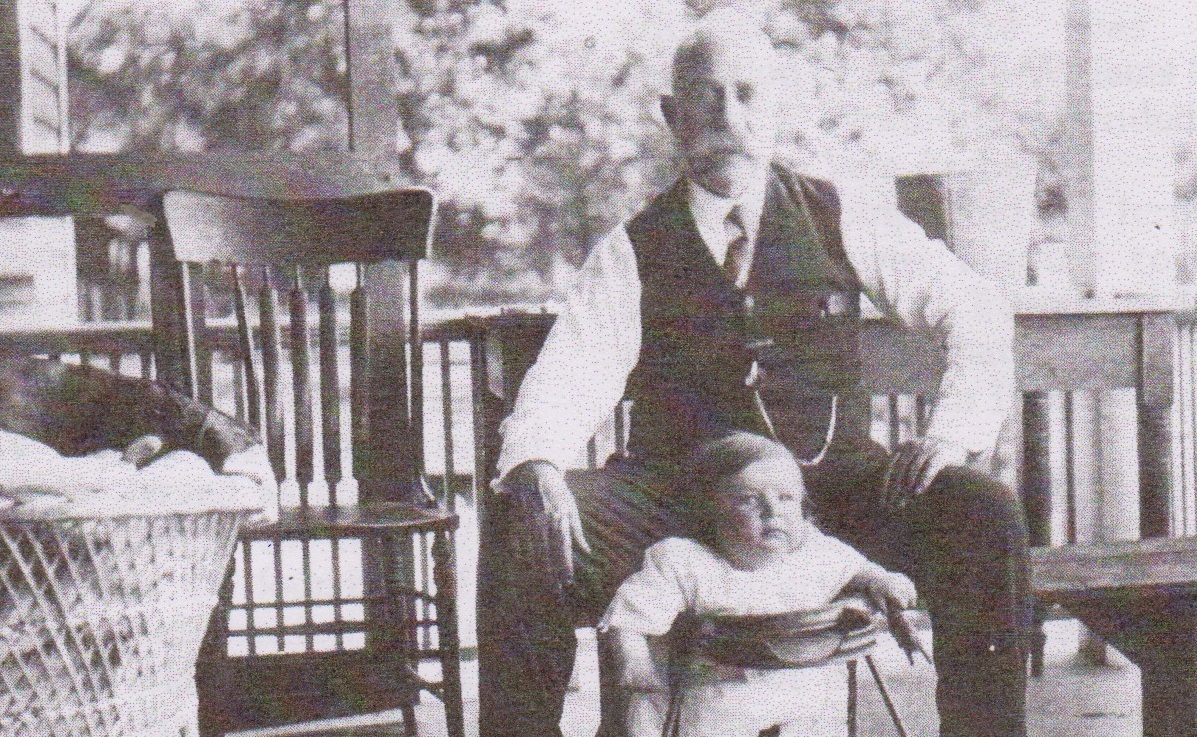


Ellerslie, the home of Governor Charles Polk, was home to another well-known Milford family, the Greco family. The Greco’s moved to the area from Pennsylvania, purchasing a 3,937-acre plot of land from William I. Simpson who purchased it from the Polk family in 1902.
There is no information about why Frank Greco moved to Delaware, but his daughter claimed he felt land was “cheap” in Delaware and had great potential for growing and selling produce in the Philadelphia market. Greco himself was wealthy, building a fortune with the railroad working on steam engines and heavy machinery.
Greco, and his wife, Emilia, paid $22,600 for the land, which would be over $737,000 today, which included 14 plots of land in Milford Neck. The first purchase was the Polk farm and Greco moved his family into the mansion. He immediately began a farming and canning business, constructing a water tower on the mansion property and adding barns, stables and sheds.
When he came to Delaware, Greco brought many Italian immigrants who lived on the property and did much of the manual labor required on a large farm before the invention of tractors and other machinery. They also worked in the cannery that Greco built.
One of the first farmers in the area to make use of locally mixed concrete, Greco used a mix of cement, lime and beach sand to create the foundations for his barns, wine cellar and cannery. Some may still be visible today even though the buildings are long gone. Many locals considered Greco an engineering genius as he often used modern methods on his farm.
In 1915, the Big Stone Cannery began operations and Greco soon realized he needed a method to get his canned goods to steamboats that docked along the bay. In 1910, he purchased a steam engine and began constructing a dredge with a mechanical shovel. This allowed him to start building a canal from the Mispillion Lighthouse to Big Stone Beach, a distance of nearly three miles through mosquito infested marshland. The canal still exists, a monument to the ingenuity and determination of Greco.
After the 1918 season, the cannery ceased operation due to low prices and political interference. Greco’s canal reached Big Stone Beach Road, but the legislators would not allow him to extend the canal across the road as it would require a drawbridge. In spite, Greco abandoned the steam dredge at the crossing point and it remained until it finally collapsed into the marsh in the 1960s.
By 1920, the Greco’s had given up farming and canning, buying a home on Cedar Beach Road near the former Humphrey’s Landing. Many saw Greco as a broken man after he moved from Ellerslie, reporting they often saw him staring out into space riding in the car driven by his wife. However, the Greco family still had considerable wealth.
In 1921, Greco purchased Parson Thorne Mansion along with 19 acres of land. There is no evidence he ever lived in the mansion, but it seemed he hoped to continue farming what was then called “The Draper Farm.” That never occurred and the property was returned to the previous owner, George H. Draper, Jr., after Greco defaulted on the loan.
Greco and his wife were staunch believers that God would cure all ills, and they shunned modern medicine. On September 27, 1923, the family ate what they thought were mushrooms but were actually poisonous toadstools and became very ill. A doctor was summoned, and he recommended ingesting salt water to induce vomiting. Both Frank and Emilia refused to follow the doctor’s orders, leading to the death of them both.
The couple had one daughter, Filomena, who had also eaten the toadstools. According to a local resident, Ellener Uhler, her brother, Harry Bowen, saved Filomena by forcing her to drink the salt water. Bowen lived directly across from the Greco’s at Bowen’s Landing, and they were friends. Filomena was only 12 at the time her parents passed away.
Filomena was sent to New York to live with an aunt. Her inheritance was controlled by a representative of the Equitable Trust. She graduated from Hunter College in New York City and then returned to Ellerslie. During her absence, the mansion had burned partially during a marsh fire and the fields were in a state of disrepair.

After moving back to Milford Neck, Filomena married William Muller, a teacher from Dover. Muller attempted to reinvigorate the farming operation, but the soil was poor, there was drought, and a lack of fertilizer doomed the operation. Muller and Filomena were separated by 1955 with Muller returning to Dover.
Filomena became a recluse with only her cats to keep her company. She struggled financially despite being land wealthy. In an effort to keep the tax collector at bay, Filomena began leasing hunting rights on her property. Many suggested she sell parts of the land in order to ease her financial burden but she refused. She also leased land along the beach, allowing people to construct waterfront cottages, although they did not own the land outright.
“A trust was imposed on my lands prior to my birth,” Filomena told those who tried to help. This prevented her from selling or altering the property. She believed it was her father’s wish that the lands remain undeveloped.
In 1991, Filomena was living in Courtland Manor Nursing Home in Dover where she was protected by State of Delaware Court of Chancery who appointed a guardian. The court agreed to sell the Polk farm to Delaware Wildlands, Inc. in 1991. Filomena died on April 10, 1991 and an executor was appointed to determine the fate of the remaining acreage. Eventually, the land was sold to the Delaware Nature Preserve, which is now the Nature Conservancy. Other portions of the land were taken over by the State of Delaware while Delaware Wild Lands contributes to the overall conservation efforts in Milford Neck.
Unfortunately, when the land was sold, owners of the cottages along the beach were told they would need to move the buildings within five years, or they would be destroyed. A court battle ensued, and it was discovered that the cottage owners on the south end of the beach had never paid lot rent to Filomena which gave them squatters rights. They were allowed to purchase the land and the buildings could remain. Those on the north side of the beach, however, were required to be moved or destroyed.
Today, other than the south end of the beach, Big Stone Beach and much of Milford Neck has returned to nature, just as Filomena wanted to continue her father’s legacy.