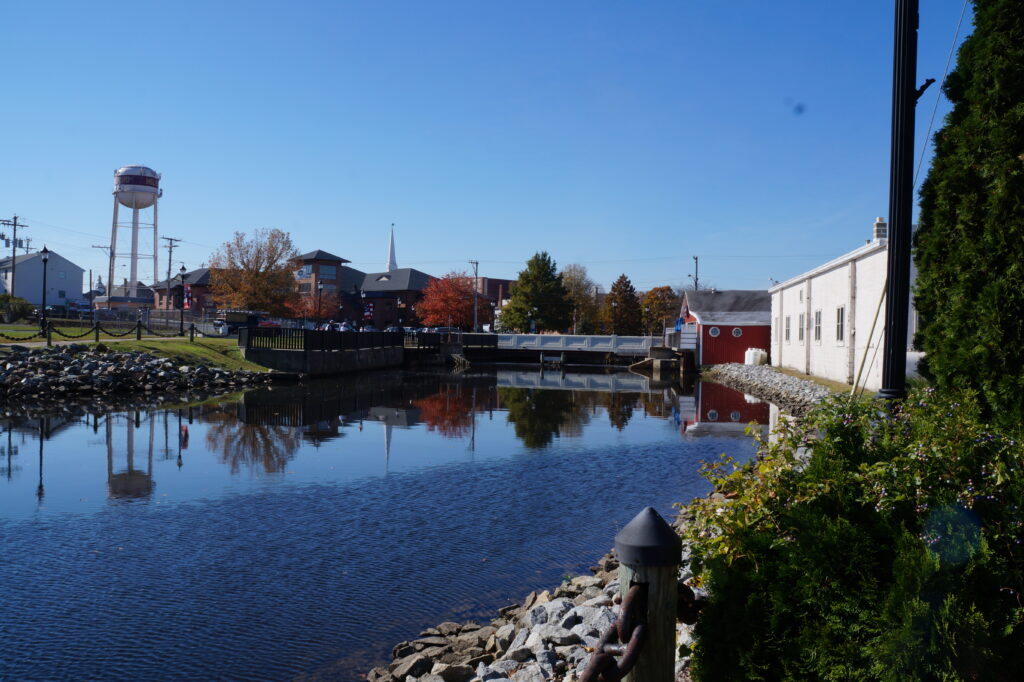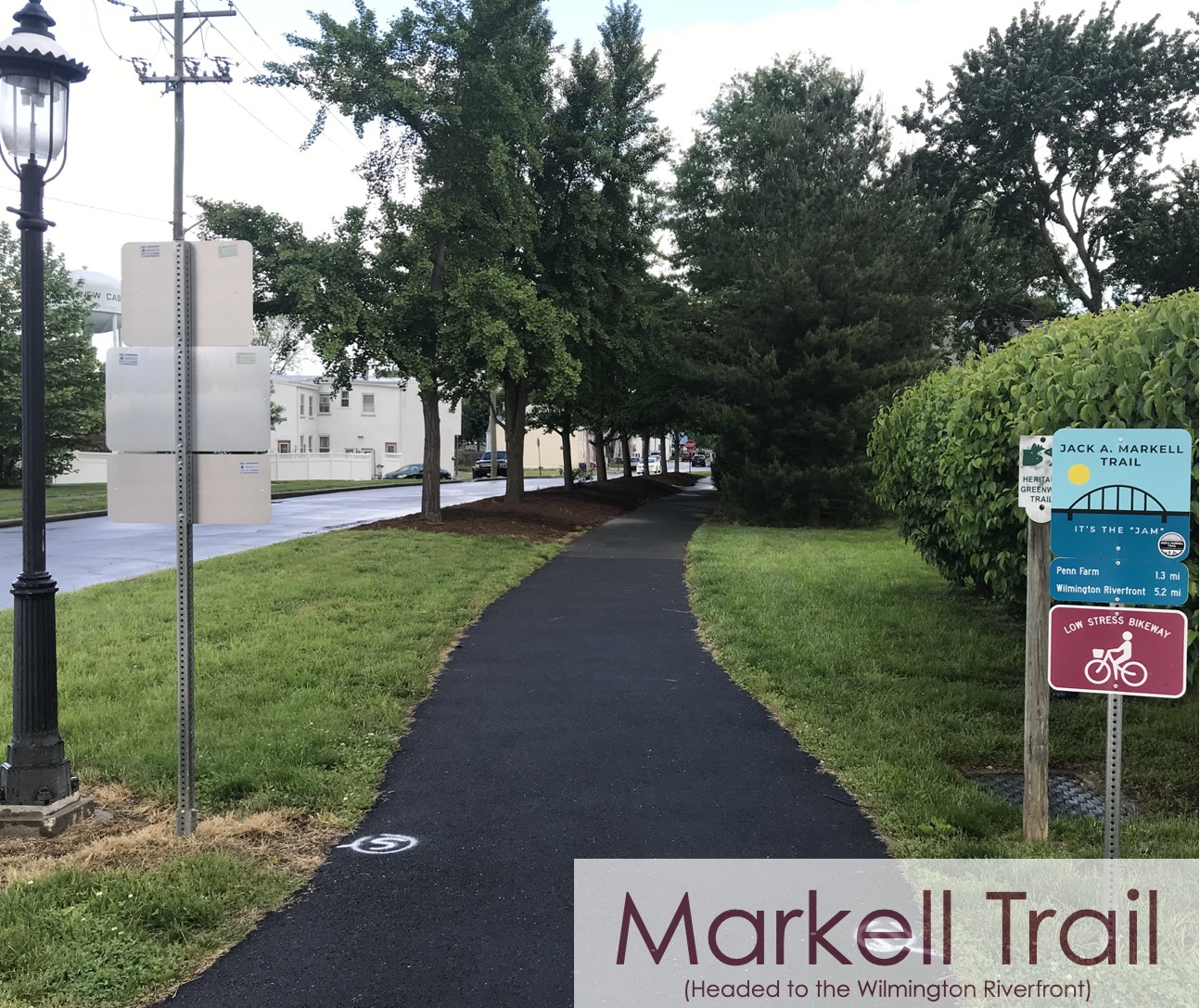


In 2021, the City of Milford adopted the Bicycle Master Plan after receiving a grant in 2019 from the state Department of Transportation to update the 2011 Bicycle and Pedestrian Master Plan. Over two years, the city conducted workshops, created a Bicycle Advisory Committee and engaged residents to identify key destinations, identify gaps and impediments in the existing network and make recommendations on proposed bicycle and pedestrian infrastructure. The official plans were adopted November 22, 2021.
This plan was part of the Bicycle-Friendly Delaware policy established in 2018. The vision of this plan was to create a bicycle network that was safe, comfortable and conveniently connected to places people want to go. The policy pushed all three counties and local municipalities to create bicycle master plans that would achieve this vision. As a result, several metropolitan planning organizations (MPO), including Dover/Kent County MPO and Salisbury-Wicomico MPO, to work with counties and municipalities to create these plans.
When the plan was presented to Milford City Council in November 2021, City Planner Rob Pierce explained that some of the costs for the project, which ranged from $1 to $5 million, would be covered by developers while others would be covered by DelDOT.
“Just remember that when the TAP project heading out the east side of Milford is done, that is going to be a big chunk of downtown,” Pierce said at the time. “The police station is going to construct a portion of the shared use path. DelDOT already has in their project list from Rehoboth Boulevard out to the overpass. So, a lot of this is in the works. Some of the site plans we have had in recent years, on Walnut Street as you get down to Simpson Crossing and Milford Ponds, their developments are constructing a shared use path from Milford Ponds all the way up to McCoy Street, so, there’s already large sections being constructed.”
A recent memorandum circulating on social media, dated March 31, 2022, and updated January 13, 2023, shows the areas where Milford may see bicycle paths installed by DelDOT. These include Beaver Dam Road, Cedar Beach Road, Elks Lodge Road, Evans Street, Johnson Road, Kirby Road, Marshall Street, North and South Rehoboth Boulevard, Wilkins Road and McCoy Street. The cost for the bike lanes alone is estimated at $21.6 million.
According to the memorandum, the shared-use path along Cedar Beach Road had some elements that would hinder a bicycle path, one of which was that there as not room for a five-foot buffer for the shared use path on one bridge. There were also wooden utility poles along the road, but that was not anticipated to be a hinderance. However, a feasibility study conducted by Dover/Kent County MPO found that there needed to be road improvements on Cedar Beach Road to bring it up to DelDOT standards before a shared use path could be considered.
Most of the roads noted in the 2023 memorandum were outside Milford city limits which means they are not under city control. Only four are within town limits – Marshall Street, North and South Rehoboth Boulevard as well as McCoy Street. However, portions of those roads are managed by DelDOT.
The City of Milford Bicycle Master Plan only covers roads within city limits although it does mention roads that our outside of the limits as they will connect with DelDOT’s planned shared use paths. The total estimated cost for all shared use paths within town limits is $29.3 million, but as Pearce explained, some of those costs will be covered by developers. In fact, according to the DelDOT TID website, the overall cost of the projects, which also includes intersection upgrades, is $91.1 million with developer contributions expected to be $27.3 million. Milford also implemented a 30 percent TID fee for building permits to cover some of the costs of road upgrades that will be required of developers.
The entire goal of the Bicycle Master Plan is to provide pedestrians and bicyclists with safer areas to walk and ride. Shared use paths offer health benefits due to increased physical activity and reduction of chronic illness. They also provide enhanced connectivity, linking communities and providing better access to schools and businesses. By separating pedestrians and cyclists from motorized vehicles, a safer environment is created for both, and additional transportation opportunities are created. A good system of shared use paths also reduces vehicle emissions, noise reduction and reduced traffic.
According to the League of American Bicyclists, Delaware is the ninth most bicycle friendly state in the country. In addition, Bike Delaware estimates that two out of every three people in Delaware are cyclists. However, about 60 percent of Delawareans are interested in cycling, but concerned that there is not a safe place to ride while 33 percent say they would never ride a bicycle due to safety concerns. Although the League of American Bicyclists found Delaware to be safe for cyclists, other studies indicate Delaware is one of the deadliest states for bike riders.
Much of the safety issues involve Delaware’s infrastructure for pedestrians and cyclists. There are still areas, even in Milford, without sidewalks, and bike lanes may be shared with buses. Drivers sometimes use the bike lane as a passing lane and cyclists must sometimes use roadways to travel as there is not enough shoulder space. Distracted driving can also cause a driver not to see a bicycle in the road.
State law has been implemented to improve cyclist safety. Drivers are now required to move into another lane when passing a bicycle in the roadway. One of the most misunderstood laws is the “Delaware Yield” where a cyclist can treat a stop sign as a yield sign. This means the cyclist does not have to stop but can slow down and yield instead. However, a cyclist cannot treat a stop sign as a yield sign if there is a motorized vehicle present. The purpose of the yield law is that it minimizes the time a cyclist remains in an intersection and makes them more visible to drivers.
The City of Milford Bicycle Master Plan can be viewed by visiting here. DelDOT’s Transportation Development District details can be found by visiting here.