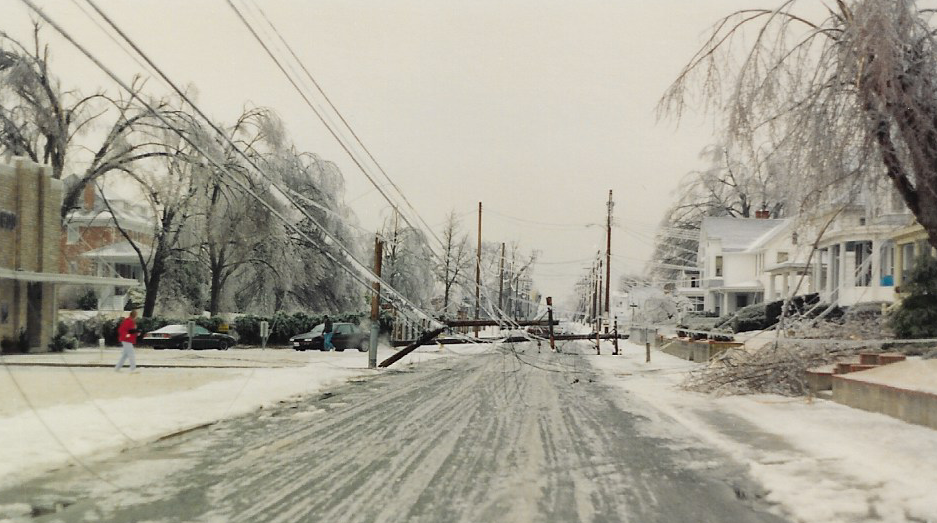


With two recent snowstorms that impacted power service in the Milford area, officials are reminding residents that when severe weather is predicted, preparation can go a long way toward managing should power be disrupted. It is also important to remember that power can be disrupted at any time, not just during severe weather.
“Power outages don’t just happen during major storms,” Lisa Bennett, an emergency preparedness expert said. “In the Milford area, a strong thunderstorm can bring down branches, a car accident can take down a utility pole, or a transformer can have an issue leading to a power outage. In most cases, such as the loss of a utility pole or a transformer, repairs can be relatively quick, but when there is severe weather, it can take days for power companies to restore power.”
Living in a coastal Delaware, storms like nor’easters cause significantly more damage than hurricanes as the cooler water off the Delaware coast often shifts hurricanes out to sea. That does not mean Delaware is immune from hurricane damage and when one is predicted, just like any severe weather, preparation prior to the storm is critical.
“You don’t want to wait until the storm is already here to prepare,” Bennett said. “It is true that just because severe weather is predicted doesn’t mean it will actually occur. Predicting weather on Delmarva is very difficult due to the three bodies of water that surround the peninsula. The bay and ocean often shifts storms one way or another, meaning we could get nothing or we could get significant wind, rain or snow.”
The first thing to do is to build a basic emergency kit that can support a household for up to 72 hours. Essential items such as flashlights, extra batteries, bottled water, nonperishable food, blankets and a battery-powered or hand-crank radio for weather updates should be included in the kit. Although candles will give off a little heat and add ambiance, they are discouraged due to the fire hazard. Instead, choose battery powered lanterns, candles or flashlights.
Purchase portable charging blocks and make sure they are charged ahead of the storm. When severe weather is predicted, fully charge all electronics. For those who depend on internet for work or school, invest in a portable Wi-Fi which should operate even if the electric goes out.
Try not to open the doors of a refrigerator or freezer. The USDA states that a refrigerator will continue to keep food cold for up to four hours while a freezer will maintain safe temperatures for up to 48 hours. One way to help keep the refrigerator or freezer cold longer is to freeze jugs of water and place them inside. In the winter, refrigerated food can also be stored in a cooler that seals well placed outside. Keep in mind that frozen food should not be kept at temperatures above 40 degrees as it will begin to thaw. It is better to leave frozen food in the freezer and not open the door rather than risk putting it outside. Be sure to place the cooler in a shady place or in a garage to avoid direct sunlight.
If you use a generator, never operate it indoors and keep them away from doors and windows. Cooking on a charcoal or propane grill is an option, but they should also never be used indoors.
If someone in your home needs electricity or water for a medical issue, talk to your medical provider about steps you should take to keep them safe. There may be battery options available, or your provider may suggest an alternate location where power will be available, such as a hospital or warming center. Keep a written list of emergency contacts and medications.
Don’t forget to prepare for your pets as well. Be sure to have extra food and water to take care of them. Consider pulling out a few old blankets or towels for pets as well should you lose electric.
If you have young children, gather books, board games, coloring books and other items that can keep them busy. Teach them games you may have played as a child, like jacks or marbles. The loss of electricity could begin new family traditions where everyone unplugs every now and then.
For those who live in rural areas and have wells and septic systems, fill bathtubs with water that you can then use to flush toilets. It is also recommended that you fill containers with water that can be heated and used for bathing or washing dishes. Also remember that even if your home is heated by gas or oil, your furnace lights using electric. This means you will likely not have heat should the electric be disrupted. Oil and gas users should consider alternate heating sources when bad weather is predicted.
Monitor weather forecasts and sign up for local alerts so that it is easier to prepare early. Many utility companies offer outage maps and text alerts that can help residents track restoration. During severe weather, utility companies ask that residents only call in an outage once and that they should never call 911 to report an outage. In Milford, residents are instructed to call the Milford Police Department non-emergency line, but it is likely the city is aware of outages immediately. Since some residents still use that line for emergencies, it is recommended that residents work with neighbors who are also without electric so that one call is placed rather than multiple for the same area.
Utility companies also remind residents that their employees must travel on snow- or ice-covered roads that may be blocked by downed trees and debris. This makes it difficult for line workers to get to outages. They remind residents to be patient as electric will be restored as quickly as possible. In fact, with the latest storm that dropped over a foot of snow in the Milford area, the City of Milford reported almost 4,000 customers were without power at 4:30 AM on Monday. All had been restored by 7 AM Tuesday.
While power outages can be inconvenient, preparation can turn uncertainty into manageable routine. By assembling supplies, making household plans and staying informed, you can be sure you will be ready if the lights go out.