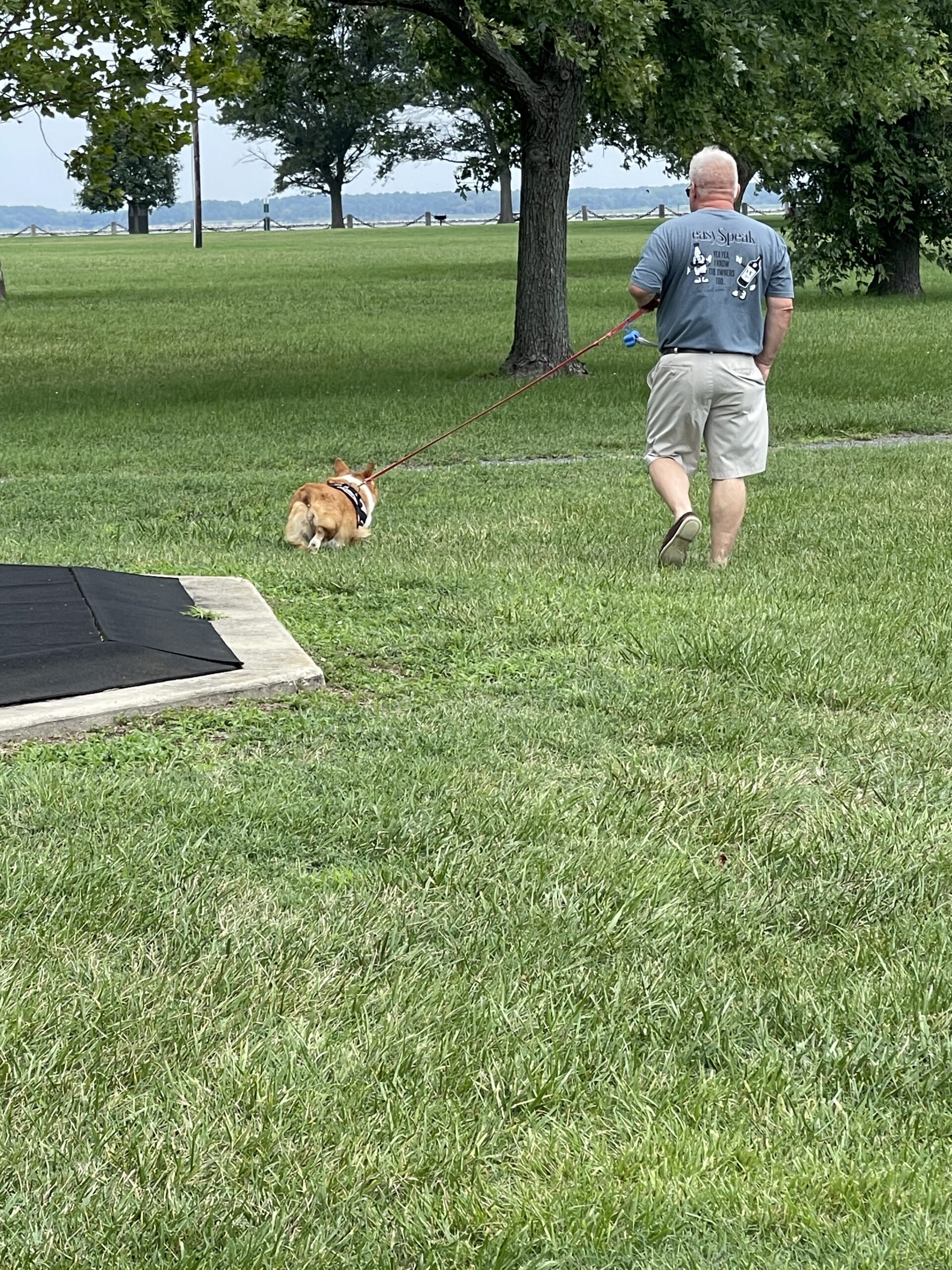

 On December 1, People for the Ethical Treatment of Animals (PETA), sent a letter to Delaware Senate Majority Leader Bryan Townsend to become the first state to pass legislation requiring dogs to receive a minimum of three walks each day with one being at least an hour long. The request asked Delaware, as the first state, to lead the pack, especially since the legislature had named the rescue dog as the state dog.
“Like humans, dogs need to empty their bladders and bowels regularly to avoid discomfort and health complications,” Ingrid Newkirk, Founder of PETA, wrote in the letter. “Holding urine can lead to complications like urinary tract infections and kidney stones, and in extreme cases, lead to the bladder bursting, a life-threatening emergency. Healthy adult dogs need to urinate at least three to five times a day, while puppies, smaller dogs and older dogs require more frequent opportunities. Imagine trying to “hold it” all day as some dogs are being forced to do.”
Newkirk continued, stating that regular walks are essential for a dog’s physical and mental health. Walking helps dogs maintain healthy joints and body weight, decreasing their risk of developing heart disease and diabetes, the letter stated. Newkirk stated that backyard play is a good source of exercise, daily walks ensure dogs are exposed to a variety of enriching sights, sounds and smells, reducing boredom, anxiety, depression and aggression.
“In Turin, Italy, guardians face fines of up to €500 (about $579) if they fail to walk their dogs three times a day,” Newkirk stated. “We hope you’ll agree it’s time to run with our suggestion and become the first state to guarantee the fundamental right of three walks per day for Delaware dogs.”
The only legislator to comment on social media about the request from PETA was Representative Bryan Shupe, who created the legislation making the rescue dog the official state dog of Delaware.
“You all know I’m a huge dog lover,” the post read. “But loving dogs doesn’t mean supporting government overreach. Mandating by law that people must walk their dogs three times a day goes too far. As of now, I’m not aware of any Delaware legislator who has chosen to sponsor this proposal.”
Many of the posts sharing the letter met with significant backlash from the public. Some supported PETA, stating that the law would be meant for dogs that did not currently have a fenced yard, chained or kept in a pen. However, the letter states that PETA was asking for the legislation to apply to all dogs in the state as “backyard play” does not expose dogs to unique sights sounds and smells.
“What bothers me the most about this is that this is even a thought in somebody’s mind,” Karen Braccia commented. “How on Earth would anyone think that this would make a difference in a positive way and that it would be able to be upheld?”
Barbara Fifer suggested PETA fight for stricter fines and repercussions for those who abandon or abuse animals. Some saw benefits to the proposal.
“As a dog owner, have trained and worked with various breeds, there is an underlying benefit here. Society will learn who actually cares for their canine companion, because sign number one will be aggressive behaviors, especially to other dogs, thus teaching you what canine owners properly socialized their dog,” Michael H. Wirtschafter said. “I’m sorry to say, but I know plenty of dog owners who should take the time for a walk; don’t just leave the responsibility to your kids. And lastly, you will also learn who is respectful too, the erspectrul dog owner will clean up after the dog, not just leave the pile.”
His response met with criticism from Candy Kane who stated she had been in the veterinary field for 30 years.
“Not one vet tech I know has the time for three walks a day, guess that makes us bad pet owners,” Kane said. “However, we get to see the dogs with burnt paws, brachycephalic breeds brought in due to heat stroke from well-meaning owners taking their pets for walks in the heat of the day.”
Kane is correct that not all breeds should be walked for an hour each day, especially in extreme weather. According to PetMD, how long to walk a dog depends on the breed, age and energy level. Most dogs can tolerate a daily walk of 20 to 30 minutes if they are healthy. PetMD also states that dogs in great physical shape could walk two hours or more and even take long hikes. However, overweight dogs may not be able to walk more than 10 minutes without taking many breaks.
PetMD recommends starting slow if you do want to start taking longer walks. Start with short, 5-minute walks and increase them as the dog seems to adapt. Watch for panting or stopping often to “sniff” as that can be a sign the dog is getting tired. If the dog is noticeably tired when you make the return trip, reduce the walk time until they are able to manage longer walks.
Veterinarians also warn that brachycephalic dogs, which are dogs with a short head, flattened face or shortened skull, should not be walked in extreme weather. Shih Tzus, pit bulls, bulldogs, pugs, huskies and mastiffs should not be walked when the weather is extremely hot while greyhounds, chihuahuas, whippets and dachshunds, who are short-coated with low body fat, should not be walked when it is extremely cold. When the weather is extreme, owners of these types of dogs should take them out for brief periods to go to the bathroom and then bring them back inside quickly.