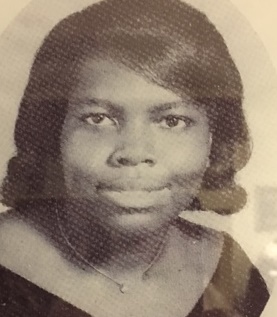


The first African American nursing student to graduate from Milford Memorial Hospital’s nursing school in 1965, Oveta Whaley Gray was no stranger to firsts. Gray was also a member of the Milford Seven, the first African American students to graduate from Milford High School and the only female in the group.
“There was a lot of prejudice in high school when we attended,” Gray said. “I dealt with a little more than the boys did because I had to ride a bus to school and the kids were not very nice. There were many racial jokes on that bus, but once I got to school, it was better. There was still racial ignorance. I was much more accepted in nursing school and was actually elected president of the Delaware Nursing Student Association.”
Gray wanted to be a nurse from the time she was a small child. She attended Benjamin Banneker, which during the segregated school era, provided education to black students through ninth grade. If Gray wanted to attend school past ninth grade, she would have had to go to Dover. She was aware that Milford attempted integration in 1954 and that it was not successful.
“By the time I was old enough to go to high school, times had changed, and the seven of us quietly started attending Milford High School in 1962,” Whaley said. “We graduated in 1965, the first black students to do so.”

In 1921, Milford Memorial Hospital, under the direction of Ruth Battles, began offering an 18-month nursing program. Originally, students lived on the upper floors of the hospital before a separate building opened next door. In 1947, the nursing students were moved to the Baynum Home on South Walnut Street, but when Gray attended, the students resided in what became administrative offices for the Bayhealth campus when it was on Clarke Street.
“Since I attended Milford High School, it was not difficult for me to get into nursing school,” Gray said. “Some of the students who attended black high schools did have problems because it was believed their education was inferior. We were taught bedside nursing care and it was much more patient hands-on than it is today. Now, many RNs have a more administrative role.”
Gray joined the United States Army after working as a nurse for a year in Delaware. She entered the Army Nurse Corps and then the Army Reserves. She left the military after having a child as her husband was military, and it was easier for her to find civilian employment with her nursing degree. The couple have been married almost 50 years and have two children.
“I returned to school after getting my RN, earning my bachelor’s in Case Management Certification,” Gray said. “I became a nurse because I wanted to help people and that has always been the best part of my job. Milford prepared me well for patient care and I have always been grateful for what I learned there. I almost say that it was a strong faith in God as well as a very supportive family, a strong mother and grandmother, who encouraged me to set goals high and achieve them.”
Initially, there were about a dozen black students who enrolled with Gray, but only the seven graduated. The others who were part of the Milford Seven included John Whalen, Timothy Duker, Josephus Clark, Gregory Showell and Charles Hammond. George Davis joined later in the year. All of the students attended Benjamin Banneker starting in first grade and Duker recalled the five young men sitting down and deciding they wanted to attend Milford High School.
“If we had not attended Milford, we would have had to go to either William Henry Comprehensive High School in Dover or William C. Jason High School in Georgetown,” Hammond said. “We knew we would have better opportunities if we went to Milford.”
According to the seven, they made the decision on their own and were not pressured by their parents nor did the district ask them to enroll. For the most part, the group was accepted by other students, although they did deal with some racism.
“We were often in the classroom alone,” Clark said. “The only black person in the room. We all had lunch together, though. A few days after school started, I was headed to lunch and a guy at a locker called out the “N” word. I got to lunch and mentioned it to the rest of them. One of the guys asked what he looked like and I told him and one of the other guys said “Oh yeah, he called me that, too.”
Clark recalled a time during an assembly when a group of students began calling out racial slurs. A few of the seven walked over to address the offenders and Clark recalled he figured he was about to get suspended when John Burris walked over with a group of white students.
“He said ‘Mickey, they aren’t worth it, they’re just ignorant,’ and I never forgot that,” Clark said. “He and the other students stood up for us and we all just went back to our seats.”
Former Senator Gary Simpson who graduated with the Milford Seven recalls that their appearance at school was no big deal.
“I worked with some of them over the summers, and they were my friends,” Simpson recalled. “I had the privilege of growing up in a non-racist home and my father’s best friend was African American. I think like most teenagers, I thought more about my own self than what others felt.”
Gwen Guerke, another graduate that year, said she was not told ahead of time that black students would be in classes with her, but that it really didn’t have an impact. Hammond commented that the seven quickly learned which students were allies, like Simpson and Guerke and which were not as accepting.
“I played basketball and track, but I wasn’t very good,” David Sockrider, who also graduated with the seven, said. “These guys were good. I remember making friends and you were just part of the group. I do remember that we played no other teams with blacks.”
Gray and her classmates stated that prejudice did not usually come from students, but the adults they dealt with. An umpire refused to allow Duker to use a black baseball glove and Hammond recalled a negative comment from a fireman in Chincoteague, Virginia, when he traveled with the band to a parade.
Not only did Gray have a distinguished career after her graduation from Milford High School and nursing school, all six of her classmates also had distinguished careers. Showell, Hammond and Duker attended Delaware State University, joined a fraternity and graduated together. The rest held distinguished careers as teachers, military officers and ministers.
“These guys are so humble, but they achieved so much,” Guerke said. “All of them went on to have every distinguished careers. They are very nice people but successful as well.”
When the new middle school is completed, a plaque is planned to recognize the Milford Seven as well as the Milford Eleven who made national headlines when the district unsuccessfully attempted integration in 1954.