

The Civil War was a difficult time in Milford, pitting neighbors against neighbors. When the war came to an end in 1865, there was an influx of new people coming from the north, looking for business opportunities and to purchase land that was less expensive.
“Some of these people prospered and their descendants are here today; others were inveigled into buying worthless farms by the newspaper advertisement of unscrupulous real estate agents and, giving up the hopeless struggle, left the state,” an account reads in A History of Milford, Delaware, compiled by the Milford Historical Society in 1962. “There were tales told about one such agent who put ice in the well and fish in the stream before he showed his prospective customer the farm he had for sale.”
During the 1870s through the early 1900s, Milford had what was then known as “high society.” Colonel Morrison, whose first name is not mentioned, settled near town. His daughter, Cora, was an accomplished horsewoman and riding became a popular pastime for young women in town.
Small industries began to succeed in Milford, but by 1880, they were providing increased employment. Businesses such as Curry & Davis, depended on water transport, but with the arrival of the railroad, shipyards became less active. In August of 1880, businesses listed included George S. Grier, a foundry and machine shop; Silver Lake Woollen Mills; Bark & Husk Mill; Causey’s Grist Mill; Steam saw Mill & Lumberyard; Matthew’s Foundry and Machine Shop, to name a few.
One business that was in existence in 1880 still thrives today. Then, it was known as Moore & Sipple Marble Works, but now is known as Sipple & Sons. The first bank opened in 1876. As businesses grew, so did activities focus on the growing wealth in the town.
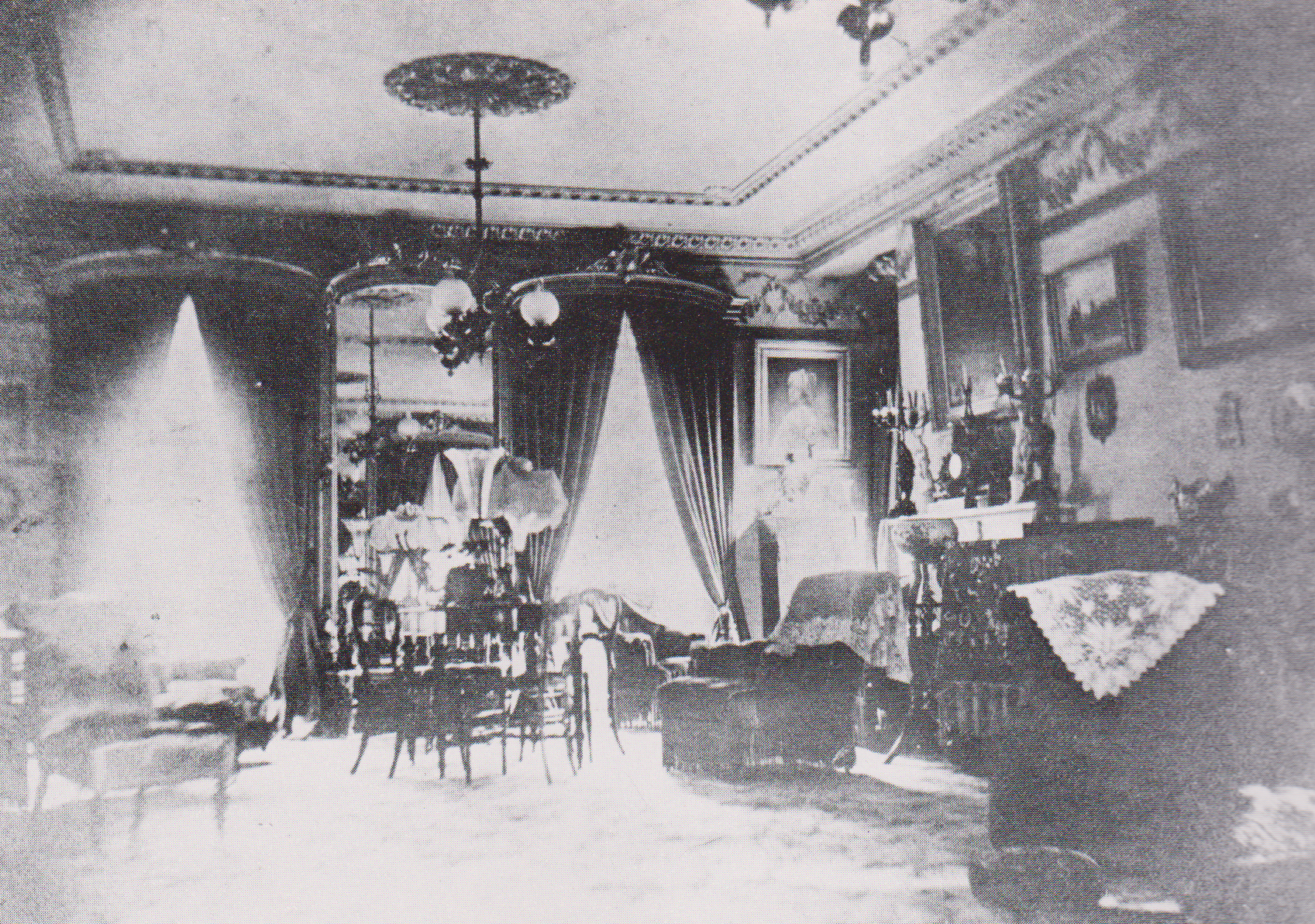
Society was more formal during this period. Drawing rooms were the site of many gatherings and some were of the caliber that an invitation was much sought after. The most famous was Anna Polk Causey, the wife of Frederick Causey. Another sought after invitation was to the drawing room of Mary Torbert, the wife of General Alfred T.A Torbert.

“[The drawing room of] Mrs. Causey possessed the quiet refinement and charming intimacy of antebellum society,” the Milford Historical Society wrote. “[The drawing room of] Mrs. Torbert, whose husband had been consul general at Paris, had a distinct flavour of French elegance and old-world atmosphere.”
The Torbert house, which was demolished in the 20th century, stood where the parking lot for the former M&T Bank stands now. Accounts are that the home was almost a small museum, and it had belonged to Mrs. Torbert’s parents, the Curry’s, who were also prominent in Milford. When the Torbert’s returned to Milford from France, they filled the home with French furniture, china, porcelain and a collection of paintings, among them a superb Fromentin. Eugene Fromentin was a well-known French artist.
“She also brought back with her an entire French wardrobe made by Worth, the famous couturier,” the book reads. “The effect of these magnificent gowns on the ladies of Milford may be imagined.” Today, it is known as the House of Worth.
Mrs. Torbert was a gracious hostess, according to accounts of the day. She worked tirelessly for the church and often helped friends who were in trouble or had fallen on hard times.
Another member of Milford’s prominent members was Rhoda Roudebush who hosted many events at The Towers. There is a stunning corner room that remains today where she held gatherings.
During this era, lawn tennis became popular with young people and grand tournaments were held on courts on the property of Causey Mansion. Silver cups were awarded and photos depict women wearing clothing that makes it difficult to understand how they could be so successful at the game.

“Miss Lizzie Wills, however, who was considered the belle of the town, managed to look very pretty even in faded photographs,” the book states.
New conveniences were arriving in town as well, including luxurious additions to dress and household decorations. Mrs. Sallie Reedy had a shop on Northwest Front Street where all sorts of objects were available. Some items purchased in Reedy’s shop may still sit on shelves in homes today.
As the new century arrived, there were Century Parties and great expectations about what the new century would bring. The Barto Shirt Factory, which stood where the old firehall stands today, provided employment to young women.
Although this was a period when society moved in a more formal manner, the names of those who were considered prominent at the turn of the century can be recognized today. Names like Grier, Marshall, Moore, Sipple, Howell, Rosa, Lofland, Sharp, Abbott, Carlisle, Scribner, Russell and Simpson are common in Milford over 100 years later and some of these families have streets named for them.