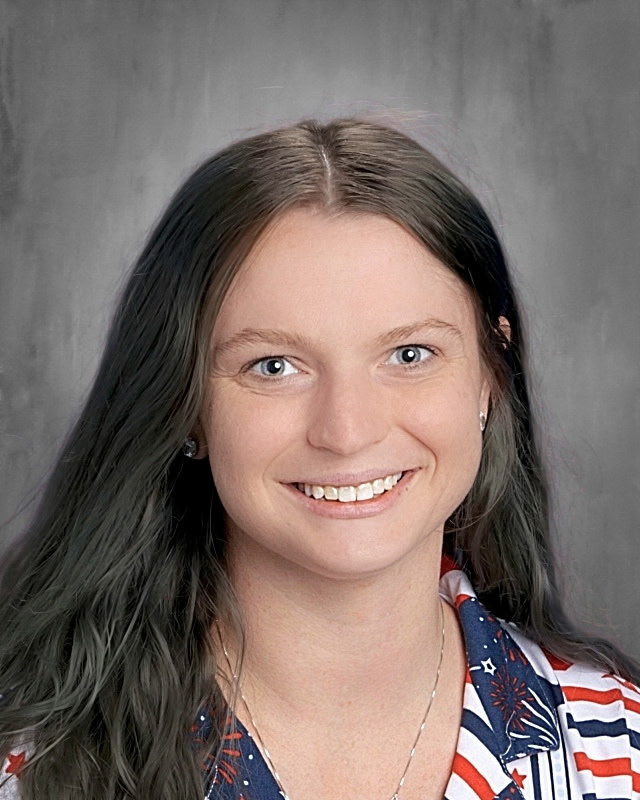

 Shea Parks, a Milford High School civics teacher, was recently recognized with the American Civic Education Teacher award. This is an annual award that recognize outstanding K-12 civics and government teachers in the United States for their expertise in motivating students to learn about the Constitution, government, and public policy. The awards are a joint program of the Center for Civic Education, the Center on Representative Government at Indiana University, and the National Education Association. Award winners are honored for demonstrating exceptional creativity, dynamism, and a commitment to preparing students to be knowledgeable and engaged citizens.
“Growing up I honestly had always wanted to be a lawyer after enough people put in my head that my inclination towards “arguing” would make me a great one. However, by the time I got to high school I had had a few rough school years and was pushed by some amazing teachers, some I’m still lucky to teach with today, that helped me redirect my frustrations and energy towards making meaningful changes for those around me,” Parks said. “Having those teachers, combined with one or two not so good ones, made me realize how important the work teachers do is outside of the classroom, and I immediately decided I wanted to contribute to that. What drew me to government specifically was the opportunities that civic knowledge and skills could open up for students who felt just as frustrated as I was in a system that they often feel excluded from.”
Parks was born and raised in Milford, attending Milford School District starting in kindergarten and graduating from Milford High School in 2014. She earned her Bachelor of Arts with majors in Political Science Education as well as Ancient Greek and Roman Studies. Parks began teaching at Milford High School in 2019 after graduating from the university with honors. In 2020, she took on the advisor role with the Student Government Association.
“After being awarded Delaware’s 2023 James Madison Fellowship, I started my Master of Science in Curriculum and Instruction, with a concentration in Civics Education at Kansas State University which I just completed this Spring.” Parks said. “I was honored as Milford High School’s Teacher of the Year in 2023 as well, before being named one of Delaware’s three recipients of the 2025 Governor’s Award for Excellence in Civics Education and one of three recipients for the ACETA award.”
Parks nominated herself for the ACETA award last year but was not selected. She decided to wait a few years before she applied again, but one of the individuals who reviewed applications last year reached out to her and suggested she reapply this year. Parks said it is ironic that this was similar to the story of how she was chosen for the 2025 Governor’s Award as well. When asked what the most challenging part of teaching civics was, Parks stated disillusionment with government was at the top of the list.
“Building students confidence and sense of efficacy. Students are coming to me often so disillusioned with our government and frustrated with issues they see as impossible to solve that they disengage from meaningful civic learning,” Parks said. “Before students can even learn the basic civic knowledge and skills, they need to be effective citizens, they first need support reinforcing civic dispositions which are not taught in a single class period, sometimes not even in a single school year.”
However, Parks also pointed out there are many rewards to her job as a civics teacher.
“Students feeling heard and building confidence in the power that their voice holds,” Parks said. “Along with watching them take steps on their own to make a change in their communities for the better. Whether it’s something small like making creative decorations for school events or huge like establishing non-profits or civic organizations that work to support others, they’re looking beyond themselves to support others in whatever way they can.”
Parks also has advice for those who are considering teaching, especially those who want to teach government.
“For those considering becoming a teacher and/or working in the political science field, the biggest piece of advice that I can give is to embrace your curiosity. Never assume that you’ll never be able to understand why students won’t complete their assignments or why some people hold extreme political beliefs,” Parks said. “Education, and really all human interaction, requires a willingness to understand others and that is especially true when it comes to understanding different perspectives about what the government should do.”