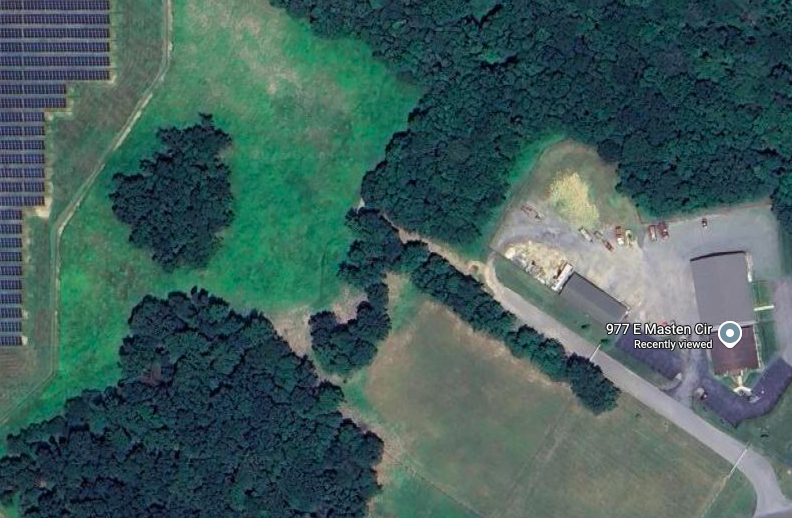


The City of Milford Board of Adjustments approved two variance requests from PUGS2 LLC at a recent meeting. The requests were for a reduction in setback in two areas of a lot whre they plan to construct a flex warehouse in the Milford Industrial Park on lands owned by Milford Housing Development Corporation.
“The applicant has submitted a preliminary site plan for Phase II of a 50,000 square foot office/warehouse building and a 21,450 square foot office and warehouse building,” City Planner Rob Pierce said. “The applicant is seeking a variance from 200 feet to 40 feet, a variance of 160 feet from the required road setback from the adjacent non-industrial boundary.”
Pierce explained that similar requests in the industrial park had been approved previously and that the applicant was interested in expanding the project behind the Milford Housing Development Corporation offices.
“Last year, we came before you to ask for variances on the northwest property boundary and now, for Phase II, we are asking for the same on the west and rear side of the property,” Alan Decker, engineer for the project, said. “It is because of this little corner that is a bit weird. The adjacent property is a solar facility and is not residential use. It is more industrial or commercial use. This setback should cause no negative impact along that side. There is also a drainage ditch, woods and wetlands which we are leaving alone. We are not asking for variances on that side.”
Decker explained that without the setback, the lot was unbuildable. The applicant had worked with Milford Housing Development Corporation on the lot line adjustments and the warehouse project would not be detrimental to the character of the neighborhood, the public welfare or other properties in the industrial park.
“Today, you are being asked to erase more than three-quarters of one of the most important protections in our industrial zoning code,” Julie Morris, who lives on Cedar Beach Road, said during the public hearing portion of the meeting. “The applicant wants to cut 200 feet of setback between industrial use and residential zoning down to just 45 feet in the rear and 40 feet on the side. This is not a minor adjustment. It’s the removal of a safeguard this board is supposed to defend the nature of the zone.”
Morris continued, stating that the 200-foot buffer existed for a reason.
“It is to shield homes from industrial noise, truck traffic, lighting and building mass,” Morris said. “This is one of the clearest compatibility standards in our code. Cutting it back by 75% destroys its effectiveness. The character of the area, the neighboring property is zoned R3 today, it might hold a solar farm, but zoning allows apartments, townhouses and single family homes in the future, if this variance is granted, those future residents will live with truck bays, loading docks, industrial walls, practically at their back door. Other industrial parcels in the same quarter keeps buffers ranging from 80 to 180 feet, still short of code, but far more respectful than this extreme proposal. Reducing the buffer leads less space for fire lanes, vegetative screening and stormwater management increases impervious surface right up against the property line, sending more runoff into neighboring lands.”
Morris felt that allowing the variance would result in industrial impacts, noise, glare and traffic closer to where people live, and contradicts the city’s planning goal of maintaining safe transitions between land uses, despite the fact that the property zoned residential currently held a large solar farm that supported the city’s electrical grid. Morris felt that the applicant was aware of the buffer when they purchased the property.
“The 200-foot buffer requirement was not a surprise. It was known in May when this was granted by this board. The 200-foot buffer requirement was not a surprise. It was known when the land was purchased and then the site plan was drawn,” Morris said. “Choosing a layout that violates that limit is a design choice, not an unavoidable hardship. The property can still be developed within the code, it just requires a different layout. If you approve this, like you did in May, you send the city a signal that our most important protective standards are negotiable, this will invite every future industrial applicant to demand the same treatment. And once a buffer is gone, you cannot get it back.”
After making her speech, Decker pointed out that the land next to the lot in the industrial park was a solar farm. Morris spoke up despite Chairperson Brendan Warfel asking her to sit down as her time was up, stating that there was a solar farm there now, but that it may not always be used for that purpose.
The Board of Adjustments approved the requests for both variances unanimously.