

In Delaware and throughout the country, people serve traditional holiday meals. This is true whether they celebrate Christmas, Hanukkah or Kwanzaa. But did you know that many of the foods we serve during this time are steeped in tradition?
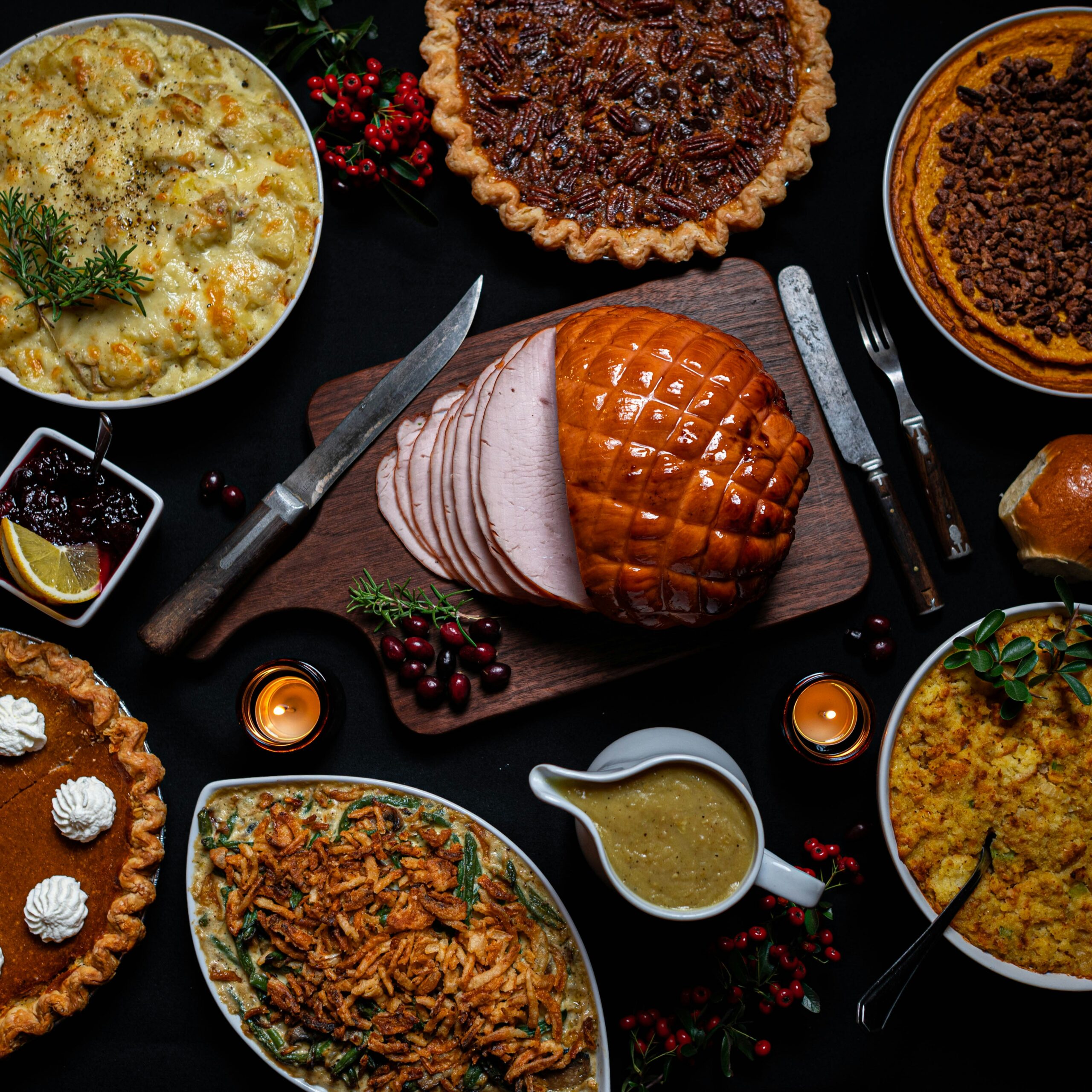
Christmas is often celebrated with ham, an ancient German and Norse pagan tradition which included feasting on wild boar during winter solstice which was later adapted by Christians to Christmas and St. Stephen’s Day. The boar was a symbol of good fortune. In the United States, ham was more accessible and, as the use of cured meats rose, a more popular option.
Others choose turkey for Christmas Day, a practice that has influences from the British Royal Family. King Henry VIII began the tradition, and it was continued by Queen Victoria. Turkey was also featured in “A Christmas Carol” by Dickens. Prior to the turkey, goose, duck and peacock were served at the holiday meal. In the United States, wild turkeys were plentiful which made it an easy option for a holiday meal.
One holiday staple that is either loved or hated, fruitcake, became a tradition simply because it lasted a long time. Created with rich, preserved fruit and alcohol, the tradition is English. It originally symbolized indulgence and good cheer since expensive dried fruit and spices were reserved for celebrations. Before refrigeration, fruitcake could last for months. When it arrived in this country, it was called Christmas pudding.
The distaste of fruitcake has its own interesting legends. According to a news report in 1985, one family had been passing down a fruitcake for over 30 years. The family story was that the cake had been made for George Washington in 1794 who sent the cake back with a note that read “unseemly for Presidents to accept gifts weighing more than 80 pounds even though they were only eight inches in diameter.”

One legend is that gingerbread arrived in Germany after the Crusades and was often molded into likenesses of saints. The bread was the used as a charm and to warm the chill of winter. However, another legend is that an Armenian monk, Gregory of Nicopolis, taught French bakers how to make the cookie. Queen Elizabeth I is often credited with popularizing the gingerbread man. For one formal dinner, she had gingerbread made to resemble foreign dignitaries and her royal court.
Eggnog evolved from a medieval British drink called “posset.” It was hot curdled milk with ale, wine or beer, served in celebration or for health. During that period, eggs, milk and spirits like sherry or brandy were luxuries. Therefore, eggnog was a drink of aristocracy. When it arrived in the United States, eggs and milk were plentiful while the expensive spirits were replaced with cheaper rum.
Those who celebrate Hanukkah also eat foods that are steeped in tradition. Latkes, or potato pancakes, sufganiyou, which are jelly-filled donuts, brisket as well as applesauce or sour cream are often served in Jewish households. Fried foods commemorate the miracle of the oil that lasted eight days in the temple. The choice of latkes and brisket are traditions from Ashkenazi which are common among Jewish families in the United States.
Applesauce and sour cream both compliment latkes, but applesauce works with meat meals while sour cream is a dairy. Under kosher rules, meat and dairy must be eaten separately. Therefore, to cut the richness of the oil, applesauce is considered neutral under kosher rules while sour cream cannot be served with meat.

Under the ancient cheese-pancake tradition, Judith, a legendary heroine from the Book of Judith, which is part of the Apocrypha, not the Hebrew Bible, saved her people from the Assyrian general Holofernes by using her beauty to get him drunk and beheading him. This allowed the Israelites to defeat Holofernes army and save Jerusalem. Her story is celebrated as symbol of triumph over oppression.
In celebration of Kwanzaa which will occur December 26 through January 1, dishes trace back to West and Central Africa. The event is inspired by African harvest festivals, so food is to reflect abundance and community. Foods served include Jollof rice, collard greens, black-eyed peas, yams and fried plantains. For many, Kwanzaa honors African roots disrupted by slavery.
The Karamu feast celebrated during Kwanzaa represents communal sharing, unity and collective responsibility. The meal is usually held December 31, known as the sixth knight, to honor black culture, heritage and the principle of Kuumba and Imani. Kuumba is creativity and Imani is faith. The meal includes African drums, music, storytelling and poetry, featuring dishes from across Africa. Karamu means “Feast of Faith” or “Feast for the 7th Day.” During the celebration, a unity cup, called the Kikombe cha Umoja, is shared with Pan-African decorations adoring homes.