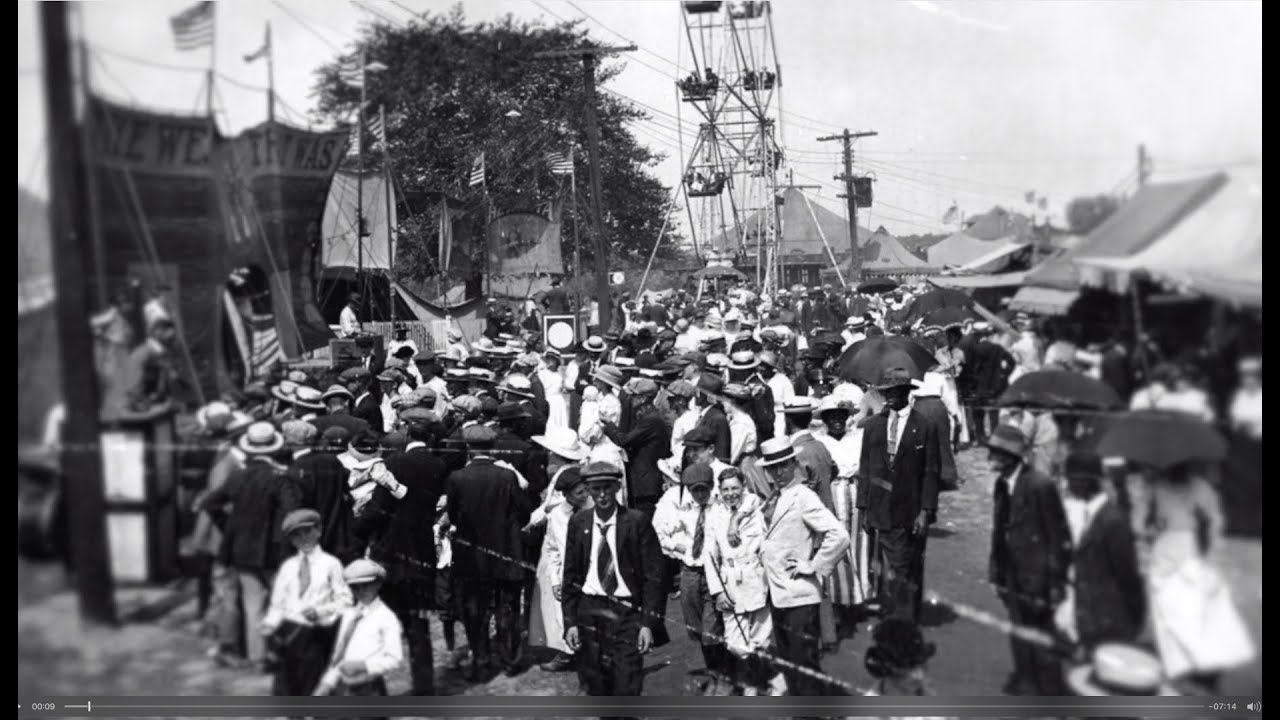

 The Delaware State Fair will end this Saturday after a week and a half of celebrations, concerts, rides and food. This year, the fair celebrated its 105th year, growing significantly from humble beginnings.
Delaware State Fair is mentioned in newspaper accounts as far back as 1869 in Wilmington. In 1878, the Delaware State Fair was moved to Fairview Park Fairgrounds in Dover with great fanfare, but by 1917, the fair was moved to Elsmere after the fair association purchased land within the town limits.
Sitting around a potbelly stove at the Harrington railroad station, a group of residents began discussing a fair in the area as early as 1919. The idea spread throughout the town and meetings were held with strong community support to start a fair in southern Delaware. The support was so great the meetings had to move to the Harrington Fire Company hall.
Initially, the plan was a fair and exposition to highlight agriculture while also providing local families with entertainment and the opportunity to display their own talents. On February 17, 1920, 30 acres of land were purchased for $6,000 with a grandstand and racetrack laid out soon after. The first fair, then known as the Kent and Sussex County Fair, opened on July 27, 1920, with an admission of 25 cents for children and 50 cents for adults. Cars were charged 25 cents for parking.
The first year, fair highlights included the Big Motorcycle Race, harness racing and exhibits, earning a profit of $43.90, the equivalent of $704.14 in today’s dollars. Because they earned a profit, organizers immediately began planning for the following year with the theme of “Bigger and Better than Ever.”
In 1924, the Delaware State Fair in Elsmere went bankrupt, and their assets were sold. A new association formed and opened what was named the Wilmington Fair on the Elsmere property, but sometimes was still referred to as the Delaware State Fair. That fair disbanded in either 1927 or 1928.
Until 1962, the fair in Harrington was known as the Kent and Sussex County Fair until it was officially renamed Delaware State Fair due to its popularity throughout the state. During the Great Depression, expenses had to be cut for the fair, but many used the event as a distraction from difficult economic times. Attractions at the time included the Great Zacchini and the Human Cannonball.
 The only break in the fair was 1942 and 1943 due to World War II. German prisoners were housed there during the war. When it reopened in 1944, admission was free for anyone who purchased War Bonds on the grounds during the fair. Every night, school bands played starting in 1950, and that tradition continued for many years. The admission price was raised to 75 cents in 1953 with grandstand seats rising to one dollar that year.
The first major entertainer at the fair were the mariners, a TV and radio quartet. Attendance increased by 10 percent that year. The first time the fair ran for a full week was 1961 and Dion was the featured artist, bringing $1.75 for reserved, top-level seats. A country music show featuring Roy Acuff, Minnie Pearl, Tex Ritter, Kitty Wells along with Johnny and Jack Wright was another highly attended show.
The same year the fair was renamed Delaware State Fair, a twister struck the fairgrounds, blowing away signs, collapsing tents and mangling the Ferris wheel. Despite the damage, volunteers pitched in and repaired what they could so the fair could continue.
The fair continued to add events that were popular, including the Demolition Derby in 1966 and an all-girl automobile thrill show in 1969. Tragedy struck again in 1986at the fair when a collapsed screen in a water well pump combined with a failed water pump caused the fair to lose all water service. The Harrington Fire Company stepped in and used tankers to water livestock and create a relay system to get water from the town of Harrington to the fairgrounds. Water was established at the fairgrounds by Wednesday of fair week.
 In 1993, the Delaware State Fair became the first inductee into the Delaware Tourism Hall of Fame. In 2004, to promote the theme “Once Upon a Time,” Pam and Paul Galyean won a fairytale wedding at the fair, riding in a horsedrawn carriage and holding a wedding ceremony under the grandstand at the courtyard gazebo.
Today, the Delaware State Fair brings over $10 million in economic benefit to the area. It also provides a venue to highlight and celebrate Delaware’s agricultural community and celebrate the talents of local artisans.