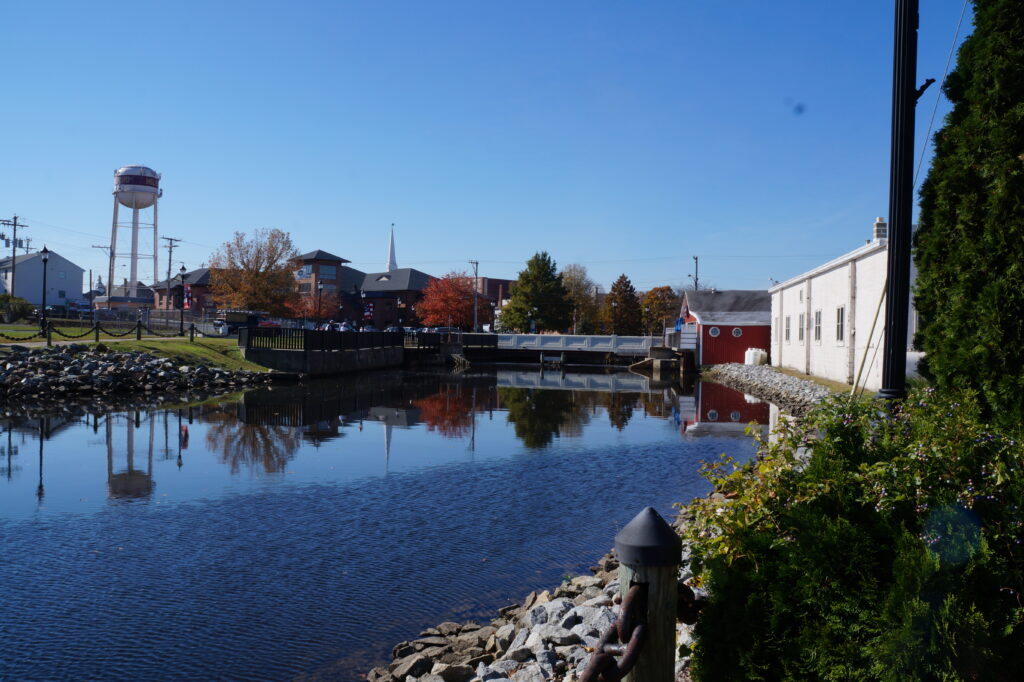


Once a popular summer vacation area for Milford residents, Slaughter Beach is now a quiet fishing village located on the Delaware Bay. The town is almost 350 years old, originally part of land grants and patents from the Duke of York and William Penn.
There are many stories about how the town got its name but early maps of the area show “Slaughter Creek” exiting into the Delaware Bay at the north end of the beach in what is now Prime Hook. The land between Cedar Creek and Prime Hook has been known as Slaughter Neck since the land grants were awarded by the Duke of York between 1676 and 1679. No early landowners were named Slaughter so it is likely when the area became popular for summer visitors after the Civil War, the name Slaughter Beach was given as the uplands were known as Slaughter Neck.
The area is made up of several land grants including “Hart’s Delight,” a 600 acre tract on the north side of Cedar Creek. This land was surveyed in 1680 and warranted by what was then known as the Whorekill Court. This portion of Slaughter Beach extends from Harrison Avenue to Cedar Beach. Lands to the south were granted to Thomas Skidmore but resurveyed as 933 acres for Henry Bowman and named “Little Graves End.”
In 1680, Alexander Draper was granted a trat of 2,000 acres which became known as “Little Boulton” and those lands are known today as Slaughter Neck. Many of the lands are still owned by descendants of the Draper, Davis and Bennett families.
At one time, Cedar Creek emptied into the Delaware Bay south of the Mispillion River, but by 1780, the mouth of the creek silted in and the state called for the “cutting of a canal to betin at Lewis’ ditch and to run into the Delaware Bay or Mispillion Creek.” The canal was not completed until 1848 when George R. Fisher formed the Cedar Creek navigation company and connected the creek to the Mispillion Lighthouse point. Today, the creek bed forms a boundary for Shephard’s Island, a wildlife area owned by the state.

In 1869, Fisher also dug a canal connecting Slaughter Creek, located south of Fowler’s Beach, to Cedar Creek. The canal was used to transport goods from farms in Slaughter Neck to the deep-water port at the lighthouse.
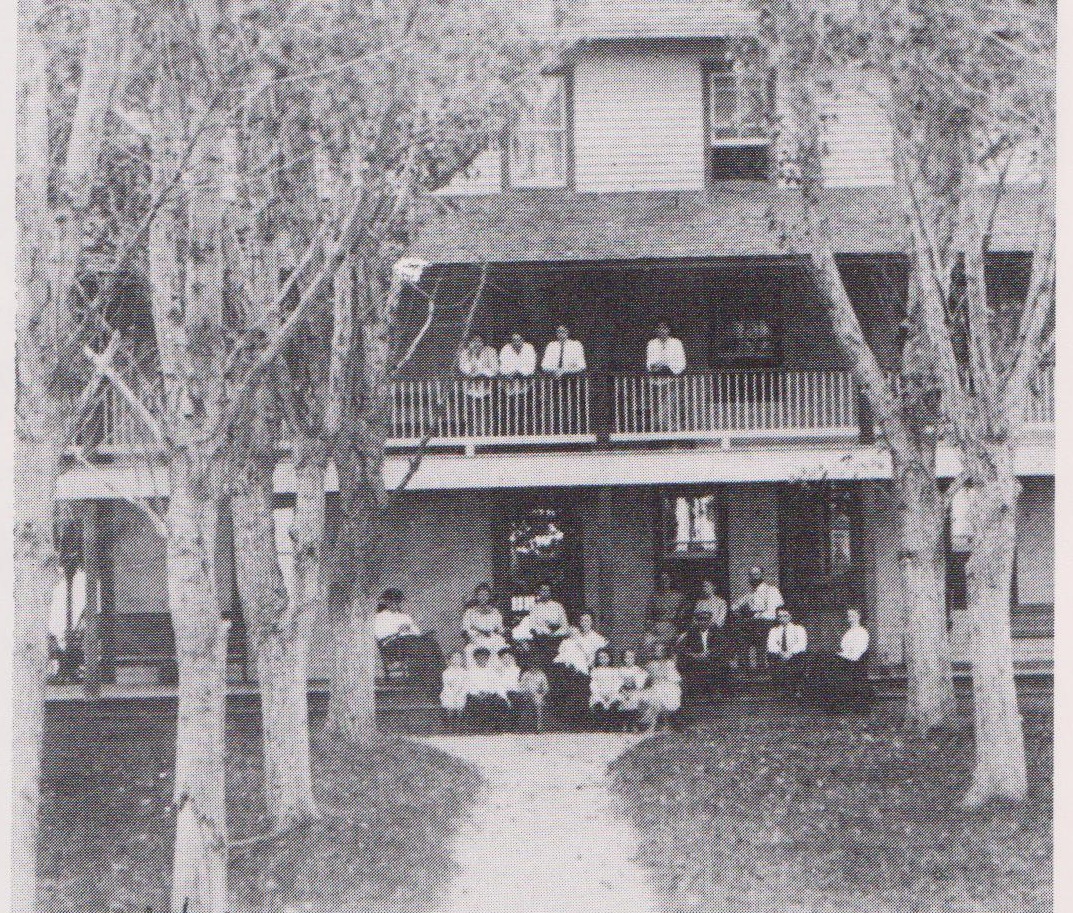
The first permanent structure build on the beach was around 1865, known as the Cedar Beach Hotel. The first record of the hotel, built by Joseph G. Morgan, appears on the Beers Atlas in 1868 while a detailed map of Sussex County published by Price & Ray shows the shoreline from the hotel southward as uninhabited.
Morgan died in 1871 without a will and the Sussex County Orphan’s Court appointed five local freeholders to divide the farm and holdings between his wife and children. The 145-acre farm was divided into a 70-acre tract for Morgan’s wife, Julia, and a 69½ acre plot which wa sold in 1872 at auction to Charles Todd. That plot had a hotel sitting on 16 acres of tillable land. The hotel remained intact for more than 125 years despite multiple owners.
In 1876, the hotel was purchased by George W. Male and, in the first edition of the “Milford Chronicle” an advertisement was placed for the “Willow Grove Motel in Slaughter Beach.” The advertisement stated that the hotel was a summer resort with first class accommodations.” It also mentioned gunning and fishing, indicating that waterfowlers used the hotel in the winter while fishermen used it in the summer.
The first reference to other structures in Slaughter Beach was not until 1885 when a lease for Frank Rickards and S.N Gray of Milford was established. These leases were for 99 years from Male. The lots were 100 feet wide and 175 long with a northern property line 42 feet from the northeast corner of the cottage of, “said parties.” Rent was five cents and renewable in 99 years for one dollar. The cottage was built in 1885.
Three days later, Dr. George W. Marshall recorded another 99-year lease with Male for a 50-foot lot located just to the south of the Rickards-Gray lot. All leases had a clause that no business could be conducted in the cottages. The Marshall cottage was sold to Dr. Joshua Ellegood in 1914 and Dr. Samuel M.D. Marshall, George Marshall’s son, built another cottage two lots to the south of his fathers in 1922.
The next leases were given in 1886 to J. Stanley Short and Charles Barker, also of Milford, followed in 1887 by David H. Holland. Cottages began to crop up along the beach over the next few years with Thomas and Lena Reynolds, who were partners in the Milford Chronicle, Jacob Y. Foulk, a druggist, and the Sherwood family all recording leases in order to build. In 1886, George H. Teas of Pennsylvania purchased four tracts which included a large portion of marshland. William Bennett purchased that lot in 1896 and, in 1917, his son, Elmer C. Bennett purchased an additional 175 acres of marsh and beach. Elmer Bennett sold the land to Charles E. Reed in 1922. Blanche Bennett, the daughter of Elmer, married Reed and the couple controlled a large portion of Slaughter Beach.
Reports in the Milford Chronicle indicated that Slaughter Beach was becoming a popular location during the summer. Many Fourth of July celebrations were advertised and many Milfordians escaped the summer heat in the village.

“Slaughter Beach has been crowded with people for the past two weeks,” a notice in the July 14, 1890, edition of the Chronicle read. “Fourteen young ladies of Milford have been occupying one of the cottages during this time and they have proved an attraction that has drawn many scores of their friends to the hotel, which has kept every room full during their whole stay.”
By 1921, the hotel was owned by William Isaac “Ike” Simpson, owner of a phosphate company that later became Milford Fertilizer. He established a small fertilizer plant near the beach where he processed horseshoe crabs into fertilizer for local farms. The hotel property was again sold in 1921 to Tom Simpson who began selling new lot leases along the beach near the original seven cottages. These cottages were located where the current Slaughter Beach Fire Company is located today. The area was known as “Simpson’s Annex to Slaughter Beach.” In addition to Dr. Sam Marshall, a lot was sold to David. H. Holland and C. Donnan Holzmueller. Holzmueller was a prominent insurance agent in Milford and later became one of the original commissioners when Slaughter Beach was chartered in 1931.
Simpson only held the hotel property for seven months before selling to the Slaughter Beach Corporation, owned by George T. Reed, George Grier and William Smith. Simpson also sold additional lots to Reed, a banker, Arthur Derrickson, a clothing store owner, Peter Coffin, Wilbert Deputy, Charles Swain and Willis Hammond. In 1924, Simpson sold his own cottage to George H. Draper, Jr. who passed the cottage to his son, Frank. Frank Draper served as mayor of Slaughter Beach from 1933 to 1943.
There is a legend that the first two cottages on the south end of the beach became a dance hall and barroom. The rumor continued that the cottages were dragged to the bayfront and cut into two parts by the Slaughter Beach Corporation around June 1922, but research shows the move was actually made by George H. Draper and Tom Reed in 1924.

By 1931, residents saw a need to form a town and administer their own regulations. The leaders of this effort were Harry Mulholland, Tom Simpson, George T. Reed, Charles E. Reed and others. In March 1931, the legislature approved the charter for the Town of Slaughter Beach. At the first meeting, Mulholland was elected president; Herman Johnson, treasurer; Holzmueller, secretary.
The first order of business was to survey the various sections of Slaughter Beach and Captain Johnson was authorized to move the pavilion to the west end of the beach. During the 1930s, Slaughter Beach was a primary vacation retreat for Milfordians, but it was also for fishermen from Pennsylvania and New Jersey.
In 1930, Lemuel C. “Scorchy” Hitchens moved to the area and opened a store in Slaughter Beach, selling groceries, bait, tackle, ice and general merchandise. There were rumors that Scorchy sold “bootleg” liquor but there was no “proof.”
Today, Slaughter Beach is still a popular summer spot to relax, enjoy cool bay breezes and relax. It is still a small fishing village with many coming to the beach to surf fish as well.