
 During the public comment section of the December 8 Milford City Council meeting, Matt Feindt, whose development on Truitt Avenue was denied by council two weeks ago, stated that he felt council had not done their due diligence and had listened to false information provided by others.
“Most of you probably said they are sitting there thinking, “Oh, he’s not complaining about what happened here two weeks ago.” And I have my thoughts and different things on what happened here last week, and I’m gonna express a few of those things,” Feindt said. “First thing I’d like to thank the two council members that did their due diligence, Councilman Wilson and Councilman James, did their due diligence in looking at our project fairly as to what it was. The rest of you, I’m not sure you did, and I don’t think that was fair.”
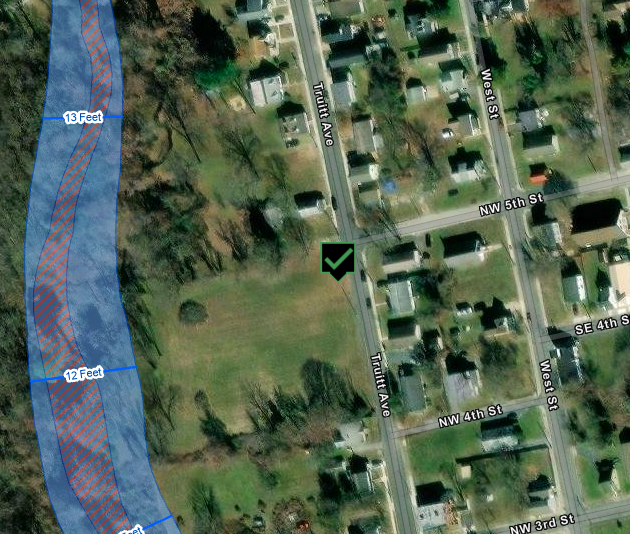
Feindt stated that he had created a plan three years ago that he felt would benefit the entire community. The plan consisted of 39 townhomes that would be sold on a plot of vacant land on Truitt Avenue. At the public hearing for the project, several neighbors spoke in favor of the project. Only one who lived nearby had concerns. All others who spoke against the project did not live close to the area.
“The majority of the members of this council can stand up here and say they want affordable housing, but when it comes down to it, they made it very clear that’s not what they want,” Feindt said. “The back and forth that went toward all the different things of not enough parking, not enough street width to being told at the end of the meeting “maybe you should build the apartments.” That would be double the amount of parking, double the amount of traffic on Truitt Avenue that a lot of people didn’t want to see.”
Feindt felt council could do better and that after going through this process for eight or nine months, there needed to be changes.
“People are allowed to stand up here and say, under oath, untrue things,” Feindt said. “Now, I don’t really know how it works for the solicitor or mayor are able to determine who’s telling the truth and who’s not, but I know I didn’t get the opportunity to go back and straighten things out. What was said wrong, what was untrue.”
Feindt felt council should hold workshops to get public input on the process, stating that he had ideas he was willing to share either personally, privately or a council meeting.
“I am very disappointed with the decision, but moreover, it proved to me that many of you have stood up here and said you want affordable housing,” Feindt said. “After sitting through the workshop five days ago, listening to all the questions and everything back and forth about needing affordable housing and all the different things, you guys have made it clear that is not what you guys want.”
According to Feindt, the decision placed himself, his wife and his family in a position that they had to protect themselves and what they set out to do.
“So, the end results may not be what you want or what the community wants, but we tried, and, at the end of the day, we did not succeed,” Feindt said. “I think there are a lot of things that need to be looked at with the process because it was very unfair and I feel that we should have been able to express the truth when people were able to stand up here and say things that were completely untrue, spin their narratives to what they want. What is really disturbing to me is that, as members of council, I don’t think many of you did your due diligence in looking into and understanding the project. Two members did. They understood it. They may not have agreed with every part of it, but I felt they understood it. They made the attempt that I wish all the rest of you had.”
During public comment, council is not permitted to respond to the speaker, so there was no response to Feindt’s allegations.