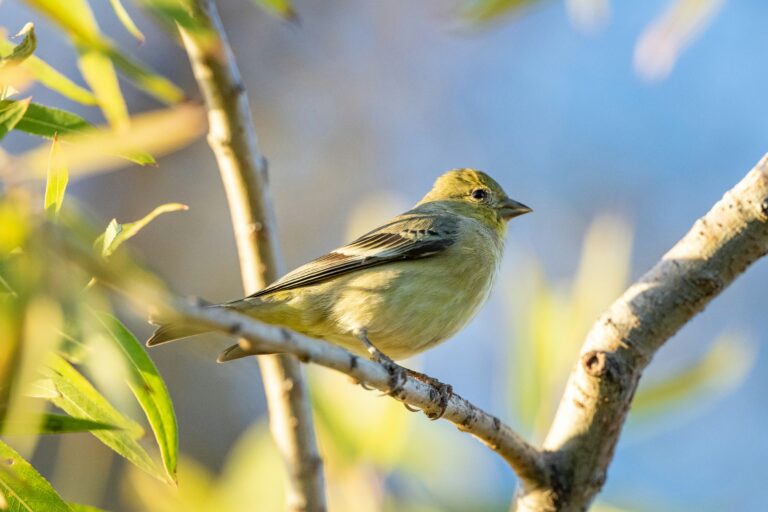






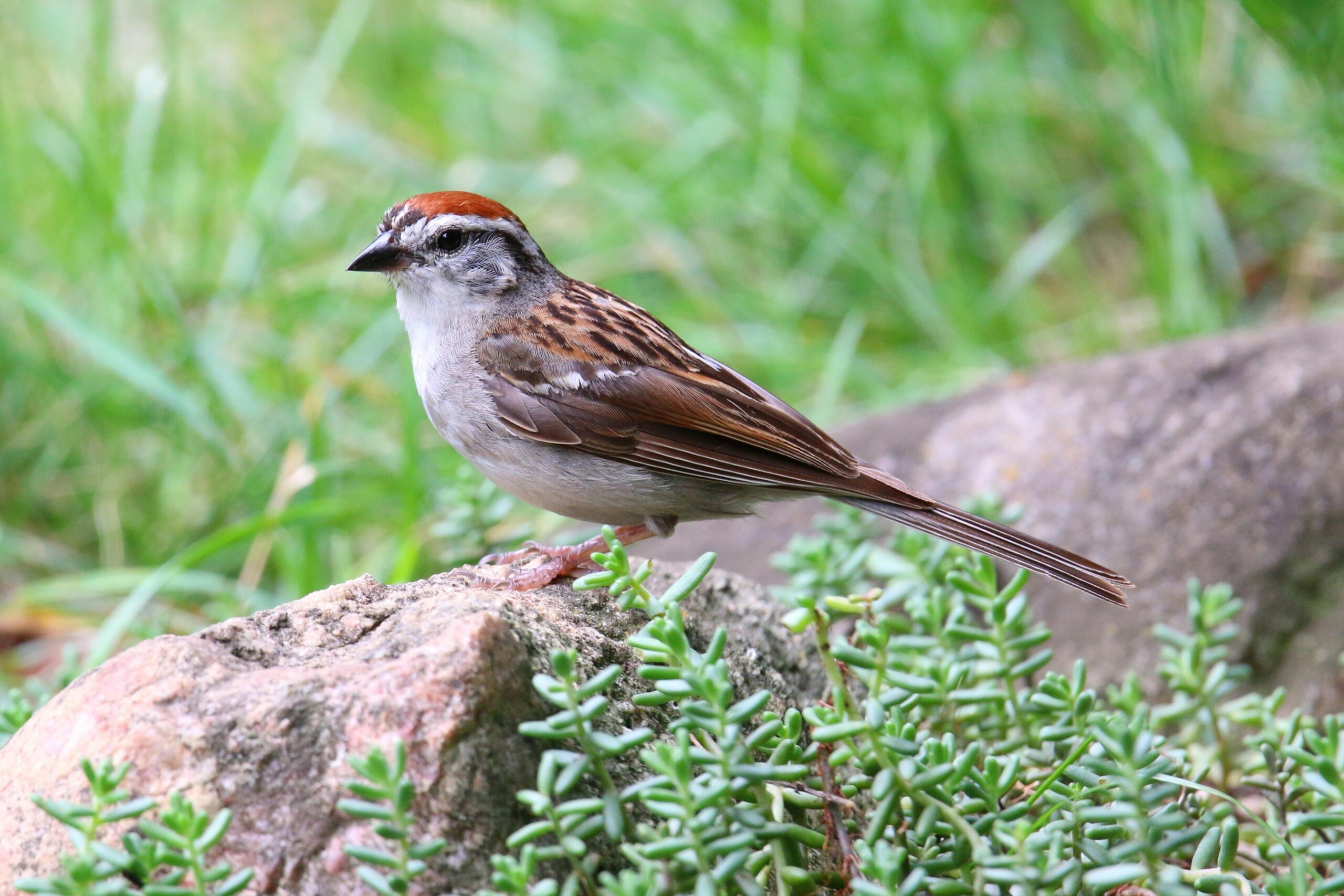
The chipping sparrow can be found in many backyards, hopping among the grass searching for food. It loves open areas with scattered trees and is a very popular bird around backyard feeders.
Slender and well-proportioned with a fairly long tail, chipping sparrows have a dark eye line that extends from the bill to behind the eye. A breeding adult has a chestnut cap that almost looks like a toupee, gray face and white eyebrow. The winter adult has a streaked crown with some rufous, a buff face and eyebrow while the juvenile, which is seen into October, has prominently streaked underparts. The male and female birds look similar.
The birds are about six inches tall and their song is a rattling call that sounds like “trip.”
Chipping sparrows are widespread across the area, found in parks, on golf courses, in orchards and around farmland. They prefer breeding grounds in open woodlands, especially near pine woods, forest edges and clearings.
The sparrows are migratory and spend winters in the southern part of the United States, although they can be found in the mid-Atlantic during the winter. They normally migrate mid-March to mid-May and again in late August to early November.
The chipping sparrow diet mostly consists of insects in the summer. They sometimes catch insects in midair after a short chase but usually are gathered on the ground. In winter, they forage on the ground for wild grass and seeds.
Chipping sparrows are common around backyard feeders and may be seen in small flocks. They prefer the seed scattered on the ground but may visit a platform feeder. Their preferred seed is black oil sunflower seeds, millet and cracked corn.
Nests are a conifer shape in a tree, shrub or vine tangle, usually 5 to 20 feet above the ground. Nests appear to be flimsy, made up of grasses and rootlets.
Chipping sparrows lay around four eggs which are incubated by the female for 10 to 15 days. Fledglings leave the nest at about 9 to 12 days. The birds hatch two broods per year.
Next is the scarlet tanager.