





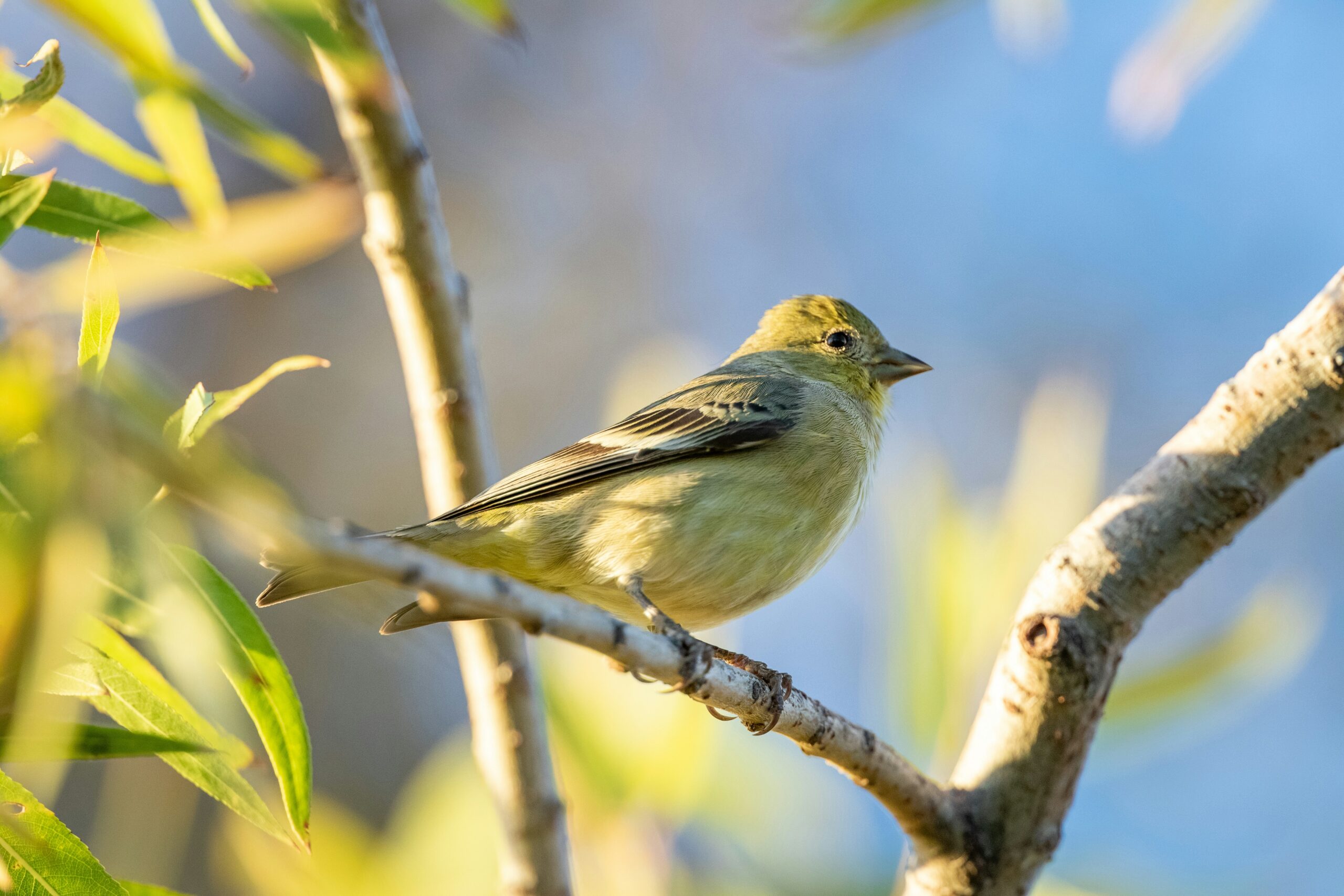
The yellow-throated warbler, scientific name Setophaga dominica, has a particular fondness for Spanish moss and choose that for nesting when it is available. Since Spanish moss is not an option in Delaware, the birds choose areas near swamps, woodlands and forests.
One of the most uncommon birds found at backyard feeders, the yellow-throated warbler tends to find areas with a forest canopy. It can often be seen creeping along pine limbs and branches. This warbler prefers tall trees like sycamores, pines or cypress.
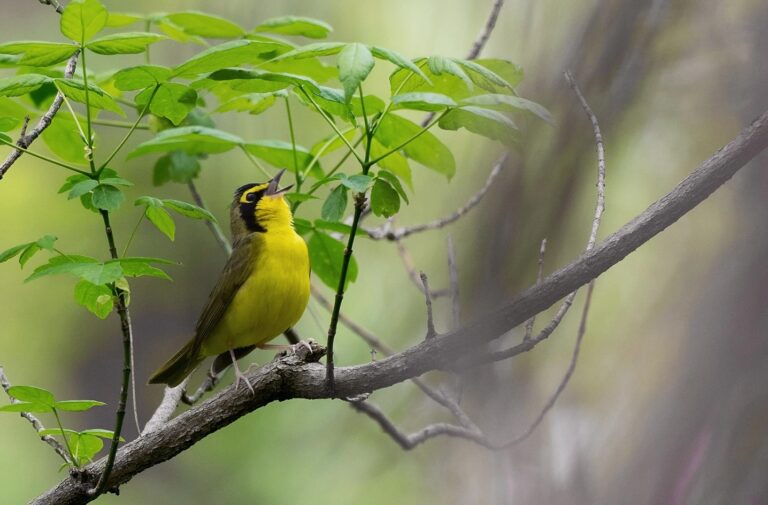
The birds have a bright yellow throat, crisp white underparts, and bold black-and-white facial markings. The blue-gray upper markings make the yellow-throated warbler look sleek. The birds are about five inches tall and weigh less than a half ounce. The sexes are similar.
Yellow-throated warblers tend to forage high in the wooded canopy for food. Their diet consists of insects, caterpillars and spiders.
The song is a sweet, rising trill that sounds like “teeew-teeew-teeew-teeew-tew-tew-twi.”
A migrating bird, yellow-throated warblers return to the area in early spring to pine woods and cypress swamps. They winter in Florida and other tropical areas. They are one of the earliest migrating birds to arrive, often appearing in March.
It is more common in southern Delaware.
The birds do breed locally and build cup nests high in trees. They are agile climbers. Yellow-throated warblers lay three to five dullish gray to white eggs with spots of purple, red and brown. The yellow-throated warbler lays four to five eggs which are incubated by the female for about 12 to 13 days. Both parents feed the nestlings, and they normally have two broods per year.
With their vivid markings and tree-top behavior, the yellow-throated warbler is a delight for bird watchers.
The lifespan of the bird is three to five years. Predators are snakes, raccoons and blue jays.
Next in the series is the chipping sparrow.