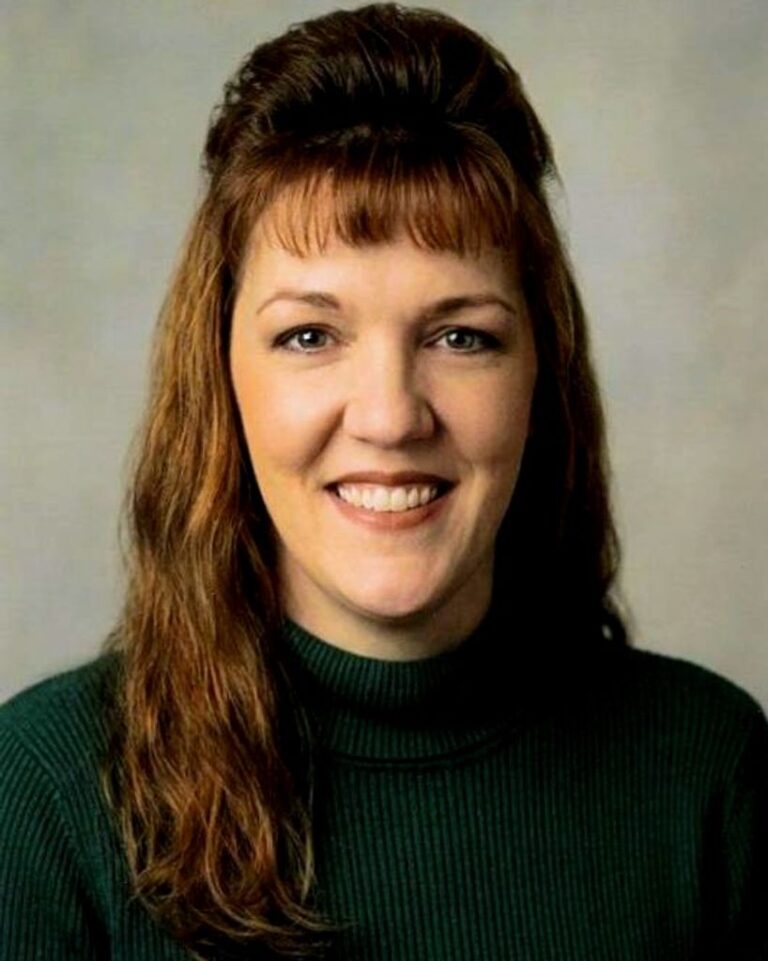








Eugenia Thornton is seeking her second and final term as Kent County Recorder of Deeds. She faces Ramona Bracy in the General Election on November 3. Below are questions we asked Thornton and the responses are in her own words.
 What experience and qualifications do you bring to the office of Recorder of Deeds, and what would be your top priorities if re-elected?
I am a Certified Public Records professional through American University and a retired U.S. Army Colonel with 27 years of experience managing records, personnel, and complex organizations. I have a master’s degree in public administration. I serve on a National Property Records Industry Association committee and am helping the Uniform Law Commission develop legislation addressing deed fraud.
Before becoming Recorder, I served 13 years as a Kent County Planning Commissioner and five years on the Delaware Public Archives Board. My public service record spans more than five decades.
Voters do not have to speculate about how I would perform; they can look at my record.
I came to the job with several clear objectives, such as speeding up the recording process and establishing a property fraud alert program. I gave myself a mission statement: make recording property records faster, safer, and more convenient for everyone. If a task didn’t support this mission statement, I ignored it.
I didn’t get embroiled in politics or show my face in public unless it fit the mission statement. I focused on Deeds 100%. That is why professionals of both political parties who work consistently with my office urged me to run for a second term and stood with me as I filed for re-election.
My priorities for the next four years are 1) procuring the next generation of recording technology, 2) allowing HOA foundation documents to be recorded without a fee once residents take control from the developer, 3) helping Delaware strengthen its response to fraudulent property records, and 4) developing a privately funded way to help people of modest means resolve fraudulent or tangled titles.
Property fraud and deed fraud have become concerns as technology makes it easier to create convincing fraudulent documents. Kent County currently offers a free Property Fraud Alert service that notifies registered property owners when documents are recorded in their names. What steps would you take as Recorder of Deeds to protect Kent County property owners from fraud while remaining within the legal authority of the office?
Property fraud is an emerging threat to the integrity of public land records, particularly as artificial intelligence makes forged documents and false identities easier to create.
I launched Kent County’s free Property Fraud Alert program in June 2023, and more than 5,000 people have registered. But an alert does not prevent fraud; it provides early notification so a property owner can act quickly to minimize damage.
Under Delaware law, a Recorder cannot refuse a legally recordable document. Courts make legal determinations about ownership. That is why I am working beyond the alert system.
The Uniform Law Commission invited me to help develop a national Deed Fraud Act. The project is considering stronger notification programs, title freezes, known-filer programs, and stronger verification procedures. My direct involvement will give me firsthand knowledge to help Delaware legislators evaluate those protections when the Act is completed.
Locally, I will continue expanding Property Fraud Alert enrollment through libraries and community organizations, educate residents about fraud prevention, train staff to recognize warning signs, and work with law enforcement, attorneys, and title professionals.
The goal is to use every lawful tool available to protect Kent County’s property records without exceeding the Recorder’s legal authority.
Residents and real estate professionals increasingly expect government records and services to be available electronically. What technological improvements, if any, would you make to the Recorder of Deeds office, and how would you balance convenience with security and reliability?
About 80 percent of our property documents arrive electronically, and the other 20 percent that come in on paper are converted to digital. We have no paper files in our office. We either reject a document when it is presented, or we record it. We are 100 percent transparent.
Technology is essential to my office’s efficient recording of about 2,000 documents a month. But land records are permanent records. Any system must be secure, reliable, searchable, and easy for the public and professionals to use.
The current recording-system contract was renewed for five years before I became Recorder. During my second term, I expect to conduct a competitive procurement for its successor. Before selecting a system, I would involve the people who use it: staff, attorneys, title searchers, real estate professionals, and members of the public.
My priorities would include intuitive public searching, strong cybersecurity and backup capability, reliable electronic recording, preservation and migration of historical data, compatibility with industry standards, and sufficient training before conversion.
The next Recorder will oversee a major technology procurement while remaining responsible for the accuracy, security, and permanent preservation of Kent County’s land records. AI will most likely play a role in our next recording system, and while it can be a valuable tool, automation makes experienced human oversight even more important.
I bring decades of public records experience and nearly four years of direct experience administering this office, along with professional records-management credentials, and I do not hold another Delaware government job. My opponent currently holds a position with the Delaware Office of the State Treasurer while seeking this office.
Voters can decide for themselves how important full-time availability and direct Recorder experience are as we make this transition.
As property records become increasingly automated, experienced oversight will become more—not less—important in evaluating the systems we rely upon and anticipating the technology, security, and public-access challenges ahead.
The Recorder of Deeds is responsible for maintaining public property records, some of which date back centuries. What should the office do to make these records easier for residents, researchers, attorneys and other users to search and access?
These records belong to the public.
During my first term, I greatly expanded the Recorder’s website with fact sheets, forms, educational materials, news articles, and direct links to record searches. I retained access to historical record books and maintained after-hours access for professional title searchers.
I regularly show citizens how to find their property records online, whether at civic meetings, churches, veterans’ groups—or sometimes over dinner at a local eatery.
Daily feedback from citizens and professionals tells me they appreciate the accessibility and service my staff provides.
But access means more than keeping a building open. County building hours and administrative support are not established unilaterally by the Recorder. That is why I have focused on making records and information available beyond the hours the County building is open.
I recently partnered with the Kent County Public Library to train librarians to navigate our website so they can assist residents who cannot visit our office during workday hours or lack reliable internet access at home. Evening and weekend library hours effectively extend access beyond County building hours.
We are not merely storing documents; we are preserving Kent County’s landownership history for future generations. Citizens can visit my office from 8 a.m. to research their property’s history using our public-access computers and historic books on hand.
That said, most of our work comes from professionals on behalf of citizens, not from the citizens themselves. Our job is to post legal documents online without altering their content.
Kent County charges fees for recording documents and for certain copies and downloads of property records. What is your view of the current fee structure, and how would you balance the cost of operating and modernizing the office with the principle that public records should remain readily accessible to the public?
Public records should be readily accessible, and I have worked to keep the cost of recording and accessing them reasonable while other fees were raised in Kent County.
State law or County ordinance, rather than the Recorder alone, sets recording charges. However, the Levy Court agreed with my recommendation to keep Kent County-controlled fees flat during my term and eliminated the automatic imposition of certain rejection and noncompliance fees by making them discretionary when appropriate.
My approach is straightforward: charge what is legally required, avoid unnecessary fees, explain charges clearly, and make as much public information available as practical without charge.
Anyone can search and view our electronic property records online for free, 24 hours a day. Charges apply only when someone wants to print or download an unwatermarked copy, with subscription options available for frequent users. People do not have to pay simply to research Kent County’s property records.
Access to the public record should not depend upon someone’s ability or willingness to purchase a copy. Both research and education on how to search are free and will remain so as long as I remain the Recorder.
The Recorder of Deeds maintains a large amount of valuable public information, while older documents may also contain personal identifying information that would not be included in records today. What steps should the office take to protect its electronic systems and sensitive personal information while maintaining legally required public access?
Public access and privacy are not opposites. The responsibility is to understand what the law requires to remain public and what it permits or requires us to protect.
Cybersecurity: Kent County experienced a network breach in 2023. I received considerable praise for how I handled the crisis. Throughout the six-week disruption and recovery, I kept customers and stakeholders informed and had postcards printed directing property owners to our vendor’s website so they could continue checking their records. When internet service was restored to our office, my staff processed 2,647 waiting documents and quickly returned to normal operations.
The experience reinforced the importance of continuity planning, backups, vendor security, staff training, and recovery preparation. Those principles were already ingrained in me through 27 years as an Army officer: establish priorities, communicate, adapt, have a contingency plan, and keep the mission moving. That is what I did.
Redaction of Private or Illegal Information: I also revised our approach to redaction. Older deeds can contain Social Security numbers, financial information, and unlawful discriminatory restrictive covenants. In Feb. 2024, I developed a new section of our website explaining Delaware’s protections and how citizens can request appropriate redaction and publicized those protections through local media. We have since implemented newer protections governing personal information involving certain public officials and employees.
Cybersecurity therefore operates on several levels: protecting the network, preserving the integrity and availability of the permanent record, protecting information the law says should be protected, and maintaining public access to information the law says should remain public.
No system is risk-free. The responsibility is to reduce risk, prepare for failure, and recover when something goes wrong. I have already done that—in my first eight months as Recorder—and I did it well.
Buying a home, transferring property or dealing with a lien or mortgage may be one of the few times a resident interacts with the Recorder of Deeds office. What would you do to improve customer service and help residents better understand the office, property records and the services available to them?
Most Kent County residents rarely need to interact directly with the Recorder of Deeds. But those who do come to us personally often need clear information and individual assistance most.
During my first term, I expanded our website with plain-language fact sheets, fillable forms, educational articles, and professional resources. I give community presentations and remain available to residents and professionals by telephone and email throughout the workday.
One comment I hear frequently is surprise that an elected official returns a telephone call or answers an email the same day. I do not hold another Delaware government job; I devote myself fully to serving as Recorder of Deeds.
Public education is equally important. I helped bring Transfer on Death Deeds to Delaware and developed educational materials explaining the new law. Since December 2025, Kent County has recorded almost 600. I use our website, local media, community presentations, and educational videos to help citizens understand this new estate-planning option.
Likewise, I conducted an extensive public-information campaign about our Property Fraud Alert program. More than 5,000 Kent County residents have registered since we launched it in June 2023. By comparison, New Castle County has about 6,000 registrants despite its much larger population and its program being established many years before ours.
It is no surprise that I could communicate effectively with citizens: on active duty, I served at US Cabinet level in public affairs as a major; as a colonel, I headed strategic public affairs planning for the Secretary of the Army. When I was not working in public affairs, I was working in Administration, which included public records keeping.
Good customer service means safety, speed, and convenience. Our standard is simple: in before 3, recorded by 5 for nearly every recordable document. Most of our recording volume comes through the professional real-estate community, and I regularly hear appreciation for how quickly we record documents.
There is also an important boundary: we can explain recording requirements—which are clearly defined, with examples, on our website—and identify why a document cannot be accepted, but we cannot tell someone how to rewrite a legal document. We cannot practice law.
Customers may find it frustrating when a document must be corrected and returned for recording, but they rarely need to correct it more than once. When a document meets Delaware’s recording requirements, our job is to record it promptly and accurately. These documents become part of the permanent public record, so they must meet legal and formatting requirements.
Customers frequently compliment the time and attention my staff gives them. In fact, all four of my clerks have been named Kent County Employee of the Month because of the many compliments we receive.
At the end of a four-year term, what specific accomplishments or improvements would you want Kent County residents to use in determining whether you had been an effective Recorder of Deeds?
I believe voters should measure an elected official by verifiable results. Promises and glittering generalities are easy to make. My record gives voters results they can evaluate.
When I assumed office nearly four years ago, I developed this mission statement: Make recording property records safer, faster, and more convenient for everyone.
In this interview, voters can see how the Property Fraud Alert program and PII redaction policy made records safer; my same-day recording policy and development of fillable forms made them faster; and opening access, teaching people how to use the database, and Transfer on Death Deeds, Good Deeds Updates, etc. made them more convenient. In fact, everything I did for the last 3 years—and everything I will do in my next 4—will adhere to my mission statement, or it will not be done. Period.
I was selected as the 2024 Stars of Delaware Readers’ Choice winner in the Public Official category and recognized by the City of Dover with a Citation. I have been quoted by AARP and others in national publications, serve on a national Property Records Industry Association committee, and was invited to participate in the Uniform Law Commission’s national work addressing deed fraud. I value those recognitions because they demonstrate not only that I accomplished a great deal, but that I did it well.
At the end of a second and final term, I want voters to see additional results: a successful transition to new recording technology; stronger protections against property fraud; continued timely recording and clean audits; improved access to our records; free recording of HOA foundation documents once residents take control; and a privately funded way to help people of modest means address fraudulent or tangled titles.
These projects are already underway, but they will not all be completed before January 2027. I am asking the people of Kent County for one final term to finish that work—continuing my mission to make recording property records safer, faster, and more convenient for everyone.
The General Election will be held November 3, 2026. We have reached out to Bracy with the same questions and will publish those answers when we receive them.